
2026 Reading Plan Reflections - Day 252
Comfort That Carries Us
2 Corinthians 1
“Bless the God and Father of our Lord Jesus Christ! The Father is merciful and God of all comfort. He comforts us in all our trouble so that we can comfort other people who are in every kind of trouble.” 2 Corinthians 1:3-4 CEB
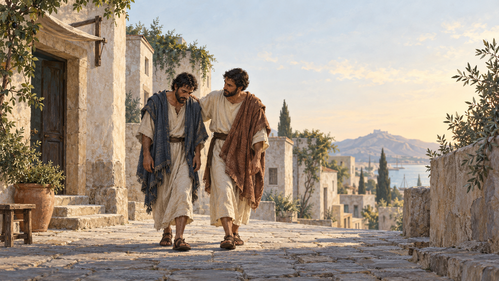
Paul doesn’t ease into 2 Corinthians. After his greeting, he begins with suffering. That tells us something about where Paul is as he writes.
Since the letter we finished yesterday, his relationship with the Corinthian church has become even more complicated. There has been a painful visit, strained relationships, criticism of Paul’s ministry, and continued division within the church. This letter will become an appeal for reconciliation, but Paul doesn't begin by defending himself or rehearsing everything the Corinthians have done wrong. He begins with God.
“Bless the God and Father of our Lord Jesus Christ! The Father is merciful and God of all comfort. He comforts us in all our trouble so that we can comfort other people who are in every kind of trouble” (2 Corinthians 1:3–4 CEB).
The word comfort appears again and again in these opening verses. But Paul means something deeper than making someone feel a little better. God meets people in their suffering, draws near, strengthens them, and gives them what they need to keep moving faithfully. And notice what happens to that comfort. It doesn’t stop with us. God comforts us so that we can comfort others.
That’s an important picture of Christian community. Grace flows through the Body of Christ. What God has done in us becomes something God can use through us. The encouragement we once needed may become the encouragement we can now offer. The prayer someone prayed over us may teach us how to pray for another person. Even the places where we have been hurt can become places from which we learn to love more deeply.
Paul isn’t romanticizing suffering. He certainly isn’t telling the Corinthians that pain is secretly enjoyable or that Christians should pretend everything is fine. His own description is raw and honest. “We were so utterly, unbearably crushed that we despaired of life itself.” (v. 8) Whatever happened to Paul in Asia, it brought him to the end of himself. He believed he was going to die.
Then Paul tells us what that experience did within him: “This happened so that we would have confidence in God, who raises the dead, instead of ourselves” (v. 9). That sentence may be one of the keys to understanding the whole letter. Paul had preached resurrection. In the previous letter, he had written to the Corinthians declaring that Christ has been raised and death will not have the final word. Now he was learning to trust resurrection personally.
Sometimes we know a truth before we discover how deeply we need it. Paul discovered that resurrection wasn’t only something God had done for Jesus or something God would someday do for believers. The resurrection revealed the character of the God Paul was learning to trust right now. When his own strength ran out, God remained faithful.
That doesn’t mean God always removes the suffering. Paul’s life doesn’t support that conclusion. Instead, Paul discovers that our hope ultimately rests somewhere stronger than our circumstances, our plans, our abilities, or even our ability to hold ourselves together.
We trust “the God who raises the dead.” That confidence becomes especially important as Paul begins addressing his strained relationship with Corinth. Some of them apparently believed his changed travel plans showed that he was unreliable—saying “yes” one moment and “no” the next. Paul answers by pointing beyond his itinerary to the faithfulness of God: “All of God’s promises have their yes in him. That is why we say Amen through him to the glory of God” (v. 20).
Our circumstances change. Plans change. Relationships become complicated. We sometimes reach places where we don’t know what happens next. But God’s faithfulness has been revealed decisively in Jesus Christ.
Paul says the Holy Spirit is already at work within us as God’s seal and the guarantee of what is still coming. The God who raised Jesus has not abandoned the work of new creation. God is forming us, strengthening us, and leading us toward the life Christ has opened for us. That means our suffering doesn’t have to become wasted pain.
Received in the grace of God, even the hardest places of our lives can deepen our dependence upon God and enlarge our capacity to love others.
We don’t have to pretend the trouble doesn’t hurt. We can bring it honestly before the God of all comfort. And when that comfort finds us, we can carry it with us.
Since the letter we finished yesterday, his relationship with the Corinthian church has become even more complicated. There has been a painful visit, strained relationships, criticism of Paul’s ministry, and continued division within the church. This letter will become an appeal for reconciliation, but Paul doesn't begin by defending himself or rehearsing everything the Corinthians have done wrong. He begins with God.
“Bless the God and Father of our Lord Jesus Christ! The Father is merciful and God of all comfort. He comforts us in all our trouble so that we can comfort other people who are in every kind of trouble” (2 Corinthians 1:3–4 CEB).
The word comfort appears again and again in these opening verses. But Paul means something deeper than making someone feel a little better. God meets people in their suffering, draws near, strengthens them, and gives them what they need to keep moving faithfully. And notice what happens to that comfort. It doesn’t stop with us. God comforts us so that we can comfort others.
That’s an important picture of Christian community. Grace flows through the Body of Christ. What God has done in us becomes something God can use through us. The encouragement we once needed may become the encouragement we can now offer. The prayer someone prayed over us may teach us how to pray for another person. Even the places where we have been hurt can become places from which we learn to love more deeply.
Paul isn’t romanticizing suffering. He certainly isn’t telling the Corinthians that pain is secretly enjoyable or that Christians should pretend everything is fine. His own description is raw and honest. “We were so utterly, unbearably crushed that we despaired of life itself.” (v. 8) Whatever happened to Paul in Asia, it brought him to the end of himself. He believed he was going to die.
Then Paul tells us what that experience did within him: “This happened so that we would have confidence in God, who raises the dead, instead of ourselves” (v. 9). That sentence may be one of the keys to understanding the whole letter. Paul had preached resurrection. In the previous letter, he had written to the Corinthians declaring that Christ has been raised and death will not have the final word. Now he was learning to trust resurrection personally.
Sometimes we know a truth before we discover how deeply we need it. Paul discovered that resurrection wasn’t only something God had done for Jesus or something God would someday do for believers. The resurrection revealed the character of the God Paul was learning to trust right now. When his own strength ran out, God remained faithful.
That doesn’t mean God always removes the suffering. Paul’s life doesn’t support that conclusion. Instead, Paul discovers that our hope ultimately rests somewhere stronger than our circumstances, our plans, our abilities, or even our ability to hold ourselves together.
We trust “the God who raises the dead.” That confidence becomes especially important as Paul begins addressing his strained relationship with Corinth. Some of them apparently believed his changed travel plans showed that he was unreliable—saying “yes” one moment and “no” the next. Paul answers by pointing beyond his itinerary to the faithfulness of God: “All of God’s promises have their yes in him. That is why we say Amen through him to the glory of God” (v. 20).
Our circumstances change. Plans change. Relationships become complicated. We sometimes reach places where we don’t know what happens next. But God’s faithfulness has been revealed decisively in Jesus Christ.
Paul says the Holy Spirit is already at work within us as God’s seal and the guarantee of what is still coming. The God who raised Jesus has not abandoned the work of new creation. God is forming us, strengthening us, and leading us toward the life Christ has opened for us. That means our suffering doesn’t have to become wasted pain.
Received in the grace of God, even the hardest places of our lives can deepen our dependence upon God and enlarge our capacity to love others.
We don’t have to pretend the trouble doesn’t hurt. We can bring it honestly before the God of all comfort. And when that comfort finds us, we can carry it with us.
Faith In Action
Think of one way God has comforted, strengthened, or sustained you during a difficult season. Ask God to bring one person to mind who may need that same kind of encouragement today, then reach out to them.
Today's Prayer
God of all comfort, when our strength runs thin and circumstances feel heavier than we can carry, teach us to rely more deeply on you. Thank you for meeting us in our suffering rather than abandoning us there. Root our hope in Jesus Christ, crucified and risen, and remind us that your promises find their “Yes” in him. Through the Holy Spirit, continue forming us into people who receive your grace and freely share it with others. Take even the painful places of our lives and use them to deepen our love, strengthen our faith, and make us more attentive to those who are hurting around us. Amen.
Posted in Bible Reading Plan 2026
Recent
2026 Reading Plan Reflections - Day 252
September 9th, 2026
2026 Reading Plan Reflections - Day 251
September 8th, 2026
2026 Reading Plan Reflections - Day 250
September 7th, 2026
2026 Reading Plan Reflections - Day 249
September 6th, 2026
2026 Reading Plan Reflections - Day 248 - Bonus Post
September 5th, 2026
Categories
Archive
2026
January
My Word for the Year... LIGHT2026 Reading Plan Reflections - Day 12026 Reading Plan Reflections - Day 22026 Reading Plan Reflections - Day 32026 Reading Plan Reflections - Day 42026 Reading Plan Reflections - Day 5Welcome to 2026 - New Resources2026 Reading Plan Reflections - Day 62026 Reading Plan Reflections - Day 72026 Reading Plan Reflections - Day 8New Year Prayer Focus2026 Reading Plan Reflections - Day 92026 Reading Plan Reflections - Day 102026 Reading Plan Reflections - Day 112026 Reading Plan Reflections - Day 122026 Reading Plan Reflections - Day 132026 Reading Plan Reflections - Day 142026 Reading Plan Reflections - Day 152026 Reading Plan Reflections - Day 16Darkness and Light2026 Reading Plan Reflections - Day 172026 Reading Plan Reflections - Day 182026 Reading Plan Reflections - Day 192026 Reading Plan Reflections - Day 202026 Reading Plan Reflections - Day 212026 Reading Plan Reflections - Day 222026 Reading Plan Reflections - Day 232026 Reading Plan Reflections - Day 242026 Reading Plan Reflections - Day 252026 Reading Plan Reflections - Day 262026 Reading Plan Reflections - Day 272026 Reading Plan Reflections - Day 282026 Reading Plan Reflections - Day 292026 Reading Plan Reflections - Day 30Together as the Body of Christ2026 Reading Plan Reflections - Day 31
February
2026 Reading Plan Reflections - Day 322026 Reading Plan Reflections - Day 332026 Reading Plan Reflections - Day 342026 Reading Plan Reflections - Day 352026 Reading Plan Reflections - Day 362026 Reading Plan Reflections - Day 37This Shouldn’t Need to Be Said...2026 Reading Plan Reflections - Day 382026 Reading Plan Reflections - Day 392026 Reading Plan Reflections - Day 402026 Reading Plan Reflections - Day 412026 Reading Plan Reflections - Day 422026 Reading Plan Reflections - Day 432026 Reading Plan Reflections - Day 442026 Reading Plan Reflections - Day 452026 Reading Plan Reflections - Day 462026 Reading Plan Reflections - Day 472026 Reading Plan Reflections - Day 482026 Reading Plan Reflections - Day 492026 Reading Plan Reflections - Day 502026 Reading Plan Reflections - Day 512026 Reading Plan Reflections - Day 522026 Reading Plan Reflections - Day 532026 Reading Plan Reflections - Day 542026 Reading Plan Reflections - Day 552026 Reading Plan Reflections - Day 562026 Reading Plan Reflections - Day 572026 Reading Plan Reflections - Day 582026 Reading Plan Reflections - Day 59
March
2026 Reading Plan Reflections - Day 602026 Reading Plan Reflections - Day 612026 Reading Plan Reflections - Day 622026 Reading Plan Reflections - Day 632026 Reading Plan Reflections - Day 642026 Reading Plan Reflections - Day 652026 Reading Plan Reflections - Day 662026 Reading Plan Reflections - Day 672026 Reading Plan Reflections - Day 682026 Reading Plan Reflections - Day 692026 Reading Plan Reflections - Day 702026 Reading Plan Reflections - Day 712026 Reading Plan Reflections - Day 722026 Reading Plan Reflections - Day 732026 Reading Plan Reflections - Day 742026 Reading Plan Reflections - Day 752026 Reading Plan Reflections - Day 762026 Reading Plan Reflections - Day 772026 Reading Plan Reflections - Day 782026 Reading Plan Reflections - Day 792026 Reading Plan Reflections - Day 802026 Reading Plan Reflections - Day 812026 Reading Plan Reflections - Day 822026 Reading Plan Reflections - Day 832026 Reading Plan Reflections - Day 84
April
2026 Reading Plan Reflections - Days 85 & 862026 Reading Plan Reflections - Day 872026 Reading Plan Reflections - Day 882026 Reading Plan Reflections - Day 892026 Reading Plan Reflections - Day 902026 Reading Plan Reflections - Day 912026 Reading Plan Reflections - Day 922026 Reading Plan Reflections - Day 932026 Reading Plan Reflections - Day 942026 Reading Plan Reflections - Day 95
No Comments