
2026 Reading Plan Reflections - Day 274
More Than We Can Imagine
Ephesians 3
“Glory to God, who is able to do far beyond all that we could ask or imagine by his power at work within us…” Ephesians 3:20–21 CEB
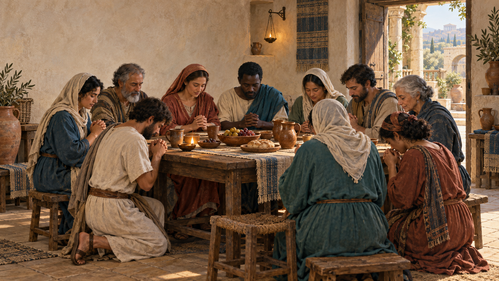
Paul is writing from prison, but he doesn't sound trapped. His circumstances are restricted, but his vision is enormous. Paul has been entrusted with what he calls a mystery—not a puzzle that only a few clever people can solve, but something that had been hidden and has now been revealed by God. The mystery is this: through Jesus Christ, Gentiles are welcomed fully into the family of God. They are “coheirs, members of the same body, and partners in the promise in Christ Jesus through the gospel” (Ephesians 3:6 CEB). That may sound familiar to us because we’re reading it nearly two thousand years later. But Paul understood how radical this was.
God’s saving purpose was bigger than anyone had imagined. Those who had once been considered outsiders were not being invited to stand at the edge of God’s people. They weren’t second-class members of the family. In Christ, they shared the inheritance. They belonged to the same body. They received the same promise. And Paul says this isn’t some last-minute adjustment to God’s plan. This was God’s purpose all along, now revealed and accomplished through Christ.
Then Paul takes it one step further. God intends for this wisdom to be made known “through the church” (3:10). Think about that for a moment. The church itself is meant to reveal something about God. Not only our preaching. Not only our worship services. Not only our statements of belief. Our shared life is supposed to tell the truth about what God has done in Christ.
When people who would normally be separated by background, ethnicity, culture, social position, history, or personality become one family in Jesus, the church becomes living evidence of the reconciling power of the gospel. That doesn’t mean Christian community will always be easy. Paul’s letters make it painfully clear that churches can struggle with division, pride, jealousy, conflict, and prejudice. But those struggles also reveal why Paul’s vision matters so much.
The church isn’t held together because we naturally fit together. We are held together by Christ. That means Christian unity is more than being friendly with people who already think, look, worship, vote, speak, or live like we do. The gospel creates a family whose deepest identity is found in Jesus.
Paul has spent the first half of the chapter describing this enormous purpose of God. Then he does something that might seem surprising. He kneels. “For this reason, I kneel before the Father…” (3:14). Paul doesn’t respond to God’s great mission by immediately developing another strategy. He prays.
He prays that believers will be strengthened through the Spirit. He prays that Christ will dwell deeply within them. He prays that they will be rooted and grounded in love. He prays that together they will begin to grasp the immeasurable dimensions of Christ’s love.
Then he asks that they would be “filled entirely with the fullness of God” (3:19). This is where God’s enormous purpose meets ordinary discipleship.
If the church is going to become the kind of community Paul has described, we need more than good intentions. We need the Spirit to strengthen us. We need Christ to shape us. We need the love of God to become the soil in which our lives are rooted.
Holiness isn't learning to appear more religious. It is the Holy Spirit forming the character of Christ within us so deeply that the love of Christ begins to shape how we live with one another. That kind of community becomes part of God’s witness to the world. And that brings Paul to the words many of us know best: “Glory to God, who is able to do far beyond all that we could ask or imagine by his power at work within us” (3:20).
We often hear that verse individually, as though Paul were encouraging us to dream bigger dreams for our personal lives. But Paul has spent three chapters talking about something much larger. God is creating a new humanity in Christ. Enemies can become family. Outsiders can become coheirs. Divided people can become one body. Ordinary believers can be filled with the love and presence of God. The church can become a living witness to the wisdom of God. That is the “far beyond” Paul has in mind.
And notice where the power is already working. “Within us.” God’s grace is not waiting somewhere in the distance for us to become impressive enough to receive it. The Spirit is already at work, strengthening, forming, reconciling, and drawing the church more deeply into the life of Christ.
Maybe our imagination needs to expand. Not because we need bigger personal ambitions, but because God’s purpose for the church is far greater than simply gathering once a week.
God is forming a holy people whose shared life reveals the reconciling love of Jesus. And by God’s grace, that work is already underway.
God’s saving purpose was bigger than anyone had imagined. Those who had once been considered outsiders were not being invited to stand at the edge of God’s people. They weren’t second-class members of the family. In Christ, they shared the inheritance. They belonged to the same body. They received the same promise. And Paul says this isn’t some last-minute adjustment to God’s plan. This was God’s purpose all along, now revealed and accomplished through Christ.
Then Paul takes it one step further. God intends for this wisdom to be made known “through the church” (3:10). Think about that for a moment. The church itself is meant to reveal something about God. Not only our preaching. Not only our worship services. Not only our statements of belief. Our shared life is supposed to tell the truth about what God has done in Christ.
When people who would normally be separated by background, ethnicity, culture, social position, history, or personality become one family in Jesus, the church becomes living evidence of the reconciling power of the gospel. That doesn’t mean Christian community will always be easy. Paul’s letters make it painfully clear that churches can struggle with division, pride, jealousy, conflict, and prejudice. But those struggles also reveal why Paul’s vision matters so much.
The church isn’t held together because we naturally fit together. We are held together by Christ. That means Christian unity is more than being friendly with people who already think, look, worship, vote, speak, or live like we do. The gospel creates a family whose deepest identity is found in Jesus.
Paul has spent the first half of the chapter describing this enormous purpose of God. Then he does something that might seem surprising. He kneels. “For this reason, I kneel before the Father…” (3:14). Paul doesn’t respond to God’s great mission by immediately developing another strategy. He prays.
He prays that believers will be strengthened through the Spirit. He prays that Christ will dwell deeply within them. He prays that they will be rooted and grounded in love. He prays that together they will begin to grasp the immeasurable dimensions of Christ’s love.
Then he asks that they would be “filled entirely with the fullness of God” (3:19). This is where God’s enormous purpose meets ordinary discipleship.
If the church is going to become the kind of community Paul has described, we need more than good intentions. We need the Spirit to strengthen us. We need Christ to shape us. We need the love of God to become the soil in which our lives are rooted.
Holiness isn't learning to appear more religious. It is the Holy Spirit forming the character of Christ within us so deeply that the love of Christ begins to shape how we live with one another. That kind of community becomes part of God’s witness to the world. And that brings Paul to the words many of us know best: “Glory to God, who is able to do far beyond all that we could ask or imagine by his power at work within us” (3:20).
We often hear that verse individually, as though Paul were encouraging us to dream bigger dreams for our personal lives. But Paul has spent three chapters talking about something much larger. God is creating a new humanity in Christ. Enemies can become family. Outsiders can become coheirs. Divided people can become one body. Ordinary believers can be filled with the love and presence of God. The church can become a living witness to the wisdom of God. That is the “far beyond” Paul has in mind.
And notice where the power is already working. “Within us.” God’s grace is not waiting somewhere in the distance for us to become impressive enough to receive it. The Spirit is already at work, strengthening, forming, reconciling, and drawing the church more deeply into the life of Christ.
Maybe our imagination needs to expand. Not because we need bigger personal ambitions, but because God’s purpose for the church is far greater than simply gathering once a week.
God is forming a holy people whose shared life reveals the reconciling love of Jesus. And by God’s grace, that work is already underway.
Faith In Action
Read Ephesians 3:14–21 slowly today. As you pray Paul’s prayer, name one relationship or area of church life where you want Christ’s reconciling love to take deeper root. Ask the Holy Spirit to begin that work in you.
Today's Prayer
Father, thank you for the grace that has welcomed us into your family through Jesus Christ. Strengthen us through your Spirit so that Christ may dwell deeply within us and your love may become the foundation of our lives. Forgive us when we settle for shallow community, comfortable divisions, or small expectations of what your grace can do. Form us into a holy people whose life together reveals the reconciling love of Jesus. Expand our imagination for your church, and accomplish within us what we could never accomplish by our own strength. May your glory be seen in the church and in Christ Jesus. Amen.
Recent
2026 Reading Plan Reflections - Day 274
October 1st, 2026
2026 Reading Plan Reflections - Day 273
September 30th, 2026
2026 Reading Plan Reflections - Day 272
September 29th, 2026
2026 Reading Plan Reflections - Day 271
September 28th, 2026
2026 Reading Plan Reflections - Day 270
September 27th, 2026
Categories
Archive
2026
January
My Word for the Year... LIGHT2026 Reading Plan Reflections - Day 12026 Reading Plan Reflections - Day 22026 Reading Plan Reflections - Day 32026 Reading Plan Reflections - Day 42026 Reading Plan Reflections - Day 5Welcome to 2026 - New Resources2026 Reading Plan Reflections - Day 62026 Reading Plan Reflections - Day 72026 Reading Plan Reflections - Day 8New Year Prayer Focus2026 Reading Plan Reflections - Day 92026 Reading Plan Reflections - Day 102026 Reading Plan Reflections - Day 112026 Reading Plan Reflections - Day 122026 Reading Plan Reflections - Day 132026 Reading Plan Reflections - Day 142026 Reading Plan Reflections - Day 152026 Reading Plan Reflections - Day 16Darkness and Light2026 Reading Plan Reflections - Day 172026 Reading Plan Reflections - Day 182026 Reading Plan Reflections - Day 192026 Reading Plan Reflections - Day 202026 Reading Plan Reflections - Day 212026 Reading Plan Reflections - Day 222026 Reading Plan Reflections - Day 232026 Reading Plan Reflections - Day 242026 Reading Plan Reflections - Day 252026 Reading Plan Reflections - Day 262026 Reading Plan Reflections - Day 272026 Reading Plan Reflections - Day 282026 Reading Plan Reflections - Day 292026 Reading Plan Reflections - Day 30Together as the Body of Christ2026 Reading Plan Reflections - Day 31
February
2026 Reading Plan Reflections - Day 322026 Reading Plan Reflections - Day 332026 Reading Plan Reflections - Day 342026 Reading Plan Reflections - Day 352026 Reading Plan Reflections - Day 362026 Reading Plan Reflections - Day 37This Shouldn’t Need to Be Said...2026 Reading Plan Reflections - Day 382026 Reading Plan Reflections - Day 392026 Reading Plan Reflections - Day 402026 Reading Plan Reflections - Day 412026 Reading Plan Reflections - Day 422026 Reading Plan Reflections - Day 432026 Reading Plan Reflections - Day 442026 Reading Plan Reflections - Day 452026 Reading Plan Reflections - Day 462026 Reading Plan Reflections - Day 472026 Reading Plan Reflections - Day 482026 Reading Plan Reflections - Day 492026 Reading Plan Reflections - Day 502026 Reading Plan Reflections - Day 512026 Reading Plan Reflections - Day 522026 Reading Plan Reflections - Day 532026 Reading Plan Reflections - Day 542026 Reading Plan Reflections - Day 552026 Reading Plan Reflections - Day 562026 Reading Plan Reflections - Day 572026 Reading Plan Reflections - Day 582026 Reading Plan Reflections - Day 59
March
2026 Reading Plan Reflections - Day 602026 Reading Plan Reflections - Day 612026 Reading Plan Reflections - Day 622026 Reading Plan Reflections - Day 632026 Reading Plan Reflections - Day 642026 Reading Plan Reflections - Day 652026 Reading Plan Reflections - Day 662026 Reading Plan Reflections - Day 672026 Reading Plan Reflections - Day 682026 Reading Plan Reflections - Day 692026 Reading Plan Reflections - Day 702026 Reading Plan Reflections - Day 712026 Reading Plan Reflections - Day 722026 Reading Plan Reflections - Day 732026 Reading Plan Reflections - Day 742026 Reading Plan Reflections - Day 752026 Reading Plan Reflections - Day 762026 Reading Plan Reflections - Day 772026 Reading Plan Reflections - Day 782026 Reading Plan Reflections - Day 792026 Reading Plan Reflections - Day 802026 Reading Plan Reflections - Day 812026 Reading Plan Reflections - Day 822026 Reading Plan Reflections - Day 832026 Reading Plan Reflections - Day 84
April
2026 Reading Plan Reflections - Days 85 & 862026 Reading Plan Reflections - Day 872026 Reading Plan Reflections - Day 882026 Reading Plan Reflections - Day 892026 Reading Plan Reflections - Day 902026 Reading Plan Reflections - Day 912026 Reading Plan Reflections - Day 922026 Reading Plan Reflections - Day 932026 Reading Plan Reflections - Day 942026 Reading Plan Reflections - Day 95
No Comments