
2026 Reading Plan Reflections - Day 284
Clothed in Christ
Colossians 3
“Therefore, as God’s choice, holy and loved, put on compassion, kindness, humility, gentleness, and patience. Be tolerant with each other and, if someone has a complaint against anyone, forgive each other. As the Lord forgave you, so also forgive each other. And over all these things put on love, which is the perfect bond of unity.” Colossians 3:14–16, CEB
In yesterday’s reading, Paul reminded the Colossians that they are complete in Christ. They don't need additional religious requirements, secret knowledge, or extraordinary spiritual experiences to become acceptable to God. Everything they need for salvation and new life is found in Jesus.
But that raises an important question: If we already belong to Christ, how should that change the way we live? Colossians 3 is Paul's answer.
He begins by reminding believers of something that has already happened: they have died and been raised with Christ. Their old lives no longer define them, and their new lives are now rooted in him. "So seek the things that are above, where Christ is seated at God's right side" (Colossians 3:1, CEB).
Paul isn't encouraging Christians to withdraw from everyday life or become so focused on heaven that they neglect the world around them. In fact, the rest of the chapter moves in exactly the opposite direction. Our new life in Christ is meant to transform how we live right here, in the relationships and responsibilities that fill our days. And that transformation begins with a change of identity.
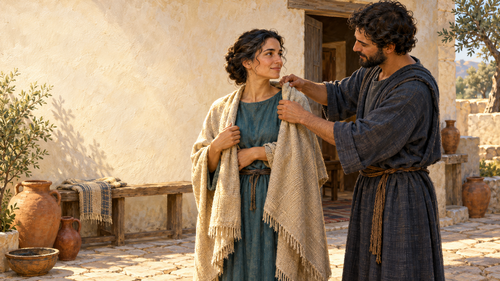
Paul uses the familiar image of changing clothes. Believers are to take off the old patterns of life and put on the character of Christ. The things we're called to remove aren't insignificant. Paul names sexual immorality, greed, anger, abusive language, and dishonesty. These are behaviors that damage both our relationship with God and our relationships with one another.
It's worth noticing that Paul gives considerable attention to the way we speak. We might be quick to recognize certain behaviors as sinful while excusing our own impatience, gossip, resentment, or harsh words. But Paul doesn't give us that option. The same new life that calls us to purity also calls us to speak truthfully and treat one another with grace. Holiness reaches into every part of who we are.
Then, beginning in verse 12, Paul turns from what we're taking off to what we're putting on: "Therefore, as God's choice, holy and loved, put on compassion, kindness, humility, gentleness, and patience" (Colossians 3:12, CEB). Notice the order.
Paul doesn't tell us to become compassionate, kind, and patient so that God might someday choose to love us. He begins by declaring that we are already chosen, holy, and loved. Our new way of living grows out of what God has already done for us in Christ.
We believe God's grace does more than forgive our sins. Through the Holy Spirit, God continues the work of transforming our hearts and lives, restoring us in the image of our Creator. But this isn't a project of spiritual self-improvement where we try harder until we finally become good enough. It's a life of responding to grace, surrendering what belongs to our old way of living, and allowing the Spirit to form Christlike love within us.
And Paul makes clear that this love is intended to shape our life together. He tells believers to bear with one another, forgive one another, and above all, put on love, which binds everything together in perfect unity. Those words sound beautiful until we have to practice them.
It's one thing to talk about forgiveness. It's another to forgive someone who has genuinely hurt us. It's easy to appreciate patience until we're dealing with someone who continually tests ours. And humility can sound admirable until it requires us to set aside our pride and acknowledge that we were wrong.
This is where holiness becomes visible. Not primarily in how much Scripture we know, how confidently we speak about our faith, or how carefully we observe religious practices, but in whether our lives increasingly reflect the character of Jesus.
Paul then brings that same vision into the household. He addresses husbands and wives, parents and children, and even masters and enslaved people within the social structures of his day. We shouldn't overlook the difficulty of that final relationship or pretend Paul is describing a social arrangement we should preserve. Slavery was a deeply unequal institution, and this passage does not offer its abolition. Yet Paul's insistence that earthly masters are themselves accountable to Christ challenges the assumption that human authority is absolute.
Throughout these instructions, the larger point remains: our relationship with Christ must shape how we treat the people closest to us, particularly when responsibility or authority is involved. Love cannot remain something we profess at church while disappearing at home or at work.
The chapter's central instruction may be found in verse 17: "Whatever you do, whether in speech or action, do it all in the name of the Lord Jesus and give thanks to God the Father through him." Whatever we do. Not only when we're worshiping, praying, or studying Scripture. Our ordinary conversations, difficult relationships, work, family responsibilities, and decisions are all places where our new life in Christ is meant to take shape.
Yesterday, Paul reminded us that we are rooted and complete in Christ. Today, he shows us what grows from those roots. We belong to Christ, and by grace, we're becoming more like him.
So as we move through today, perhaps we should pay closer attention to what we're wearing spiritually. Are we still reaching for the familiar habits of our old lives? Or are we allowing the Holy Spirit to clothe us in the compassion, humility, patience, forgiveness, and love of Jesus? After all, the people around us should be able to recognize something of Christ in the way we live.
But that raises an important question: If we already belong to Christ, how should that change the way we live? Colossians 3 is Paul's answer.
He begins by reminding believers of something that has already happened: they have died and been raised with Christ. Their old lives no longer define them, and their new lives are now rooted in him. "So seek the things that are above, where Christ is seated at God's right side" (Colossians 3:1, CEB).
Paul isn't encouraging Christians to withdraw from everyday life or become so focused on heaven that they neglect the world around them. In fact, the rest of the chapter moves in exactly the opposite direction. Our new life in Christ is meant to transform how we live right here, in the relationships and responsibilities that fill our days. And that transformation begins with a change of identity.
Paul uses the familiar image of changing clothes. Believers are to take off the old patterns of life and put on the character of Christ. The things we're called to remove aren't insignificant. Paul names sexual immorality, greed, anger, abusive language, and dishonesty. These are behaviors that damage both our relationship with God and our relationships with one another.
It's worth noticing that Paul gives considerable attention to the way we speak. We might be quick to recognize certain behaviors as sinful while excusing our own impatience, gossip, resentment, or harsh words. But Paul doesn't give us that option. The same new life that calls us to purity also calls us to speak truthfully and treat one another with grace. Holiness reaches into every part of who we are.
Then, beginning in verse 12, Paul turns from what we're taking off to what we're putting on: "Therefore, as God's choice, holy and loved, put on compassion, kindness, humility, gentleness, and patience" (Colossians 3:12, CEB). Notice the order.
Paul doesn't tell us to become compassionate, kind, and patient so that God might someday choose to love us. He begins by declaring that we are already chosen, holy, and loved. Our new way of living grows out of what God has already done for us in Christ.
We believe God's grace does more than forgive our sins. Through the Holy Spirit, God continues the work of transforming our hearts and lives, restoring us in the image of our Creator. But this isn't a project of spiritual self-improvement where we try harder until we finally become good enough. It's a life of responding to grace, surrendering what belongs to our old way of living, and allowing the Spirit to form Christlike love within us.
And Paul makes clear that this love is intended to shape our life together. He tells believers to bear with one another, forgive one another, and above all, put on love, which binds everything together in perfect unity. Those words sound beautiful until we have to practice them.
It's one thing to talk about forgiveness. It's another to forgive someone who has genuinely hurt us. It's easy to appreciate patience until we're dealing with someone who continually tests ours. And humility can sound admirable until it requires us to set aside our pride and acknowledge that we were wrong.
This is where holiness becomes visible. Not primarily in how much Scripture we know, how confidently we speak about our faith, or how carefully we observe religious practices, but in whether our lives increasingly reflect the character of Jesus.
Paul then brings that same vision into the household. He addresses husbands and wives, parents and children, and even masters and enslaved people within the social structures of his day. We shouldn't overlook the difficulty of that final relationship or pretend Paul is describing a social arrangement we should preserve. Slavery was a deeply unequal institution, and this passage does not offer its abolition. Yet Paul's insistence that earthly masters are themselves accountable to Christ challenges the assumption that human authority is absolute.
Throughout these instructions, the larger point remains: our relationship with Christ must shape how we treat the people closest to us, particularly when responsibility or authority is involved. Love cannot remain something we profess at church while disappearing at home or at work.
The chapter's central instruction may be found in verse 17: "Whatever you do, whether in speech or action, do it all in the name of the Lord Jesus and give thanks to God the Father through him." Whatever we do. Not only when we're worshiping, praying, or studying Scripture. Our ordinary conversations, difficult relationships, work, family responsibilities, and decisions are all places where our new life in Christ is meant to take shape.
Yesterday, Paul reminded us that we are rooted and complete in Christ. Today, he shows us what grows from those roots. We belong to Christ, and by grace, we're becoming more like him.
So as we move through today, perhaps we should pay closer attention to what we're wearing spiritually. Are we still reaching for the familiar habits of our old lives? Or are we allowing the Holy Spirit to clothe us in the compassion, humility, patience, forgiveness, and love of Jesus? After all, the people around us should be able to recognize something of Christ in the way we live.
Faith In Action
Read Colossians 3:12–14 again. Choose one characteristic Paul names—compassion, kindness, humility, gentleness, patience, forgiveness, or love—and prayerfully consider one relationship where that characteristic needs to become more visible. Take one intentional step today to demonstrate it.
Today's Prayer
Gracious God, thank you for the new life you've given us through Jesus Christ. We confess that even as we seek to follow him, we sometimes return to old habits, attitudes, and ways of treating one another. Continue your transforming work in us through the Holy Spirit. Help us surrender what no longer belongs in our lives and grow in the compassion, kindness, humility, patience, and love of Christ. Teach us to forgive as we've been forgiven and to recognize the opportunities for holiness in our ordinary relationships. May our words and actions reflect the grace we've received, so that others might see something of Jesus in us. Amen.
Posted in Bible Reading Plan 2026
Recent
Categories
Archive
2026
January
My Word for the Year... LIGHT2026 Reading Plan Reflections - Day 12026 Reading Plan Reflections - Day 22026 Reading Plan Reflections - Day 32026 Reading Plan Reflections - Day 42026 Reading Plan Reflections - Day 5Welcome to 2026 - New Resources2026 Reading Plan Reflections - Day 62026 Reading Plan Reflections - Day 72026 Reading Plan Reflections - Day 8New Year Prayer Focus2026 Reading Plan Reflections - Day 92026 Reading Plan Reflections - Day 102026 Reading Plan Reflections - Day 112026 Reading Plan Reflections - Day 122026 Reading Plan Reflections - Day 132026 Reading Plan Reflections - Day 142026 Reading Plan Reflections - Day 152026 Reading Plan Reflections - Day 16Darkness and Light2026 Reading Plan Reflections - Day 172026 Reading Plan Reflections - Day 182026 Reading Plan Reflections - Day 192026 Reading Plan Reflections - Day 202026 Reading Plan Reflections - Day 212026 Reading Plan Reflections - Day 222026 Reading Plan Reflections - Day 232026 Reading Plan Reflections - Day 242026 Reading Plan Reflections - Day 252026 Reading Plan Reflections - Day 262026 Reading Plan Reflections - Day 272026 Reading Plan Reflections - Day 282026 Reading Plan Reflections - Day 292026 Reading Plan Reflections - Day 30Together as the Body of Christ2026 Reading Plan Reflections - Day 31
February
2026 Reading Plan Reflections - Day 322026 Reading Plan Reflections - Day 332026 Reading Plan Reflections - Day 342026 Reading Plan Reflections - Day 352026 Reading Plan Reflections - Day 362026 Reading Plan Reflections - Day 37This Shouldn’t Need to Be Said...2026 Reading Plan Reflections - Day 382026 Reading Plan Reflections - Day 392026 Reading Plan Reflections - Day 402026 Reading Plan Reflections - Day 412026 Reading Plan Reflections - Day 422026 Reading Plan Reflections - Day 432026 Reading Plan Reflections - Day 442026 Reading Plan Reflections - Day 452026 Reading Plan Reflections - Day 462026 Reading Plan Reflections - Day 472026 Reading Plan Reflections - Day 482026 Reading Plan Reflections - Day 492026 Reading Plan Reflections - Day 502026 Reading Plan Reflections - Day 512026 Reading Plan Reflections - Day 522026 Reading Plan Reflections - Day 532026 Reading Plan Reflections - Day 542026 Reading Plan Reflections - Day 552026 Reading Plan Reflections - Day 562026 Reading Plan Reflections - Day 572026 Reading Plan Reflections - Day 582026 Reading Plan Reflections - Day 59
March
2026 Reading Plan Reflections - Day 602026 Reading Plan Reflections - Day 612026 Reading Plan Reflections - Day 622026 Reading Plan Reflections - Day 632026 Reading Plan Reflections - Day 642026 Reading Plan Reflections - Day 652026 Reading Plan Reflections - Day 662026 Reading Plan Reflections - Day 672026 Reading Plan Reflections - Day 682026 Reading Plan Reflections - Day 692026 Reading Plan Reflections - Day 702026 Reading Plan Reflections - Day 712026 Reading Plan Reflections - Day 722026 Reading Plan Reflections - Day 732026 Reading Plan Reflections - Day 742026 Reading Plan Reflections - Day 752026 Reading Plan Reflections - Day 762026 Reading Plan Reflections - Day 772026 Reading Plan Reflections - Day 782026 Reading Plan Reflections - Day 792026 Reading Plan Reflections - Day 802026 Reading Plan Reflections - Day 812026 Reading Plan Reflections - Day 822026 Reading Plan Reflections - Day 832026 Reading Plan Reflections - Day 84
April
2026 Reading Plan Reflections - Days 85 & 862026 Reading Plan Reflections - Day 872026 Reading Plan Reflections - Day 882026 Reading Plan Reflections - Day 892026 Reading Plan Reflections - Day 902026 Reading Plan Reflections - Day 912026 Reading Plan Reflections - Day 922026 Reading Plan Reflections - Day 932026 Reading Plan Reflections - Day 942026 Reading Plan Reflections - Day 95
No Comments