
2026 Reading Plan Reflections - Day 230
The Gospel Makes A People
Romans 16
“...according to my gospel and the proclamation of Jesus Christ... made known to all the nations to bring about faithful obedience.” Romans 16:25-26 CEB
Romans has carried us through some of the deepest questions of the Christian faith: sin and grace, justification and faith, life in the Spirit, suffering and hope, Israel and the nations, worship, community, mission. And then Paul ends the letter with a list of names.
Phoebe. Prisca and Aquila. Epaenetus. Mary. Andronicus and Junia. Ampliatus. Urbanus. Stachys. Apelles. Rufus. Julia. Timothy. Tertius. Gaius. Erastus. It would be easy to hurry through these verses because we know so little about most of these people. But perhaps that is part of what makes the ending so important.
The gospel Paul has spent fifteen chapters explaining has become visible in actual lives. These aren't theological abstractions. They are women and men who served, traveled, opened their homes, supported ministry, endured hardship, worked alongside one another, and became family in Christ.
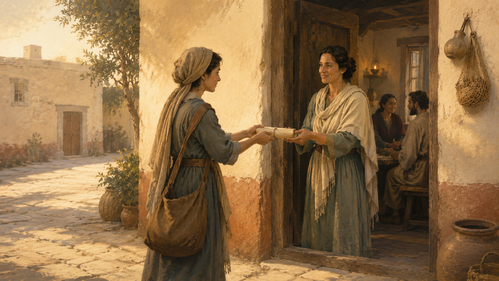
Paul begins by commending Phoebe, a deacon of the church at Cenchreae and a generous supporter of many believers, including Paul himself. She appears to be the person entrusted with carrying this remarkable letter to Rome. Priscilla and Aquila have risked themselves for Paul and opened their lives to the church. Others are remembered because they worked hard, suffered faithfully, or were deeply loved. Some held prominent roles. Some apparently didn't. Paul remembers them all.
That's a fitting conclusion to Romans because the gospel Paul has proclaimed does more than reconcile individual sinners to God. Grace creates a people. People who belong to Christ begin belonging to one another. That's why Paul's abrupt warning in verses 17–20 isn't actually a change of subject. He has spent the chapter naming relationships built by the gospel, and now he warns the church against teaching that would fracture them.
Christian unity doesn't mean believing that every idea is equally faithful. Paul tells the Romans to be discerning about teaching that contradicts what they have received. But discernment isn't permission to become suspicious of everyone who thinks differently from us either. Paul wants the church to become “wise about what is good and innocent about what is bad." That takes maturity.
We need enough humility to listen and enough wisdom to recognize error. We need enough grace to distinguish between disagreements Christians can faithfully live with and teachings that actually pull us away from Jesus and the gospel. And notice where Paul's confidence finally rests. Not in the church becoming clever enough to identify every danger. “The God of peace will soon crush Satan under your feet.” The church must remain watchful, but victory belongs to God.
Then Paul finishes where he began. Near the opening of Romans, Paul described his calling as bringing about “the obedience of faith” among the nations. Now, in the final sentences, he says the gospel has been revealed to all nations so that they might live in “faithful obedience." Romans has come full circle.
Grace isn't opposed to obedience. Grace makes obedience possible. God's saving work in Jesus creates a people whose faith takes shape in the way they live: loving one another, serving faithfully, resisting what destroys the church, carrying the gospel outward, and allowing the Holy Spirit to form the life of Christ among them. That is what all those names at the end of Romans represent. Most of them disappeared from history. We don't have their sermons, biographies, or accomplishments. But God knew their faithfulness, and Paul had seen enough of it to call them by name.
Most Christian faithfulness still looks like that. Opening a home. Encouraging another believer. Giving generously. Teaching faithfully. Serving when few people notice. Remaining steady through difficulty. Carrying the gospel a little farther than it had gone before.
Romans ends with glory given “to the only wise God, through Jesus Christ.” And between Paul's opening announcement of the gospel and that final word of praise stands a community of ordinary people who received grace and learned to live faithfully within it.
Two thousand years later, we stand among them. We have received the same gospel. We depend upon the same grace. And now our names belong to the continuing story of a people God is forming through Jesus Christ for the sake of the world.
Phoebe. Prisca and Aquila. Epaenetus. Mary. Andronicus and Junia. Ampliatus. Urbanus. Stachys. Apelles. Rufus. Julia. Timothy. Tertius. Gaius. Erastus. It would be easy to hurry through these verses because we know so little about most of these people. But perhaps that is part of what makes the ending so important.
The gospel Paul has spent fifteen chapters explaining has become visible in actual lives. These aren't theological abstractions. They are women and men who served, traveled, opened their homes, supported ministry, endured hardship, worked alongside one another, and became family in Christ.
Paul begins by commending Phoebe, a deacon of the church at Cenchreae and a generous supporter of many believers, including Paul himself. She appears to be the person entrusted with carrying this remarkable letter to Rome. Priscilla and Aquila have risked themselves for Paul and opened their lives to the church. Others are remembered because they worked hard, suffered faithfully, or were deeply loved. Some held prominent roles. Some apparently didn't. Paul remembers them all.
That's a fitting conclusion to Romans because the gospel Paul has proclaimed does more than reconcile individual sinners to God. Grace creates a people. People who belong to Christ begin belonging to one another. That's why Paul's abrupt warning in verses 17–20 isn't actually a change of subject. He has spent the chapter naming relationships built by the gospel, and now he warns the church against teaching that would fracture them.
Christian unity doesn't mean believing that every idea is equally faithful. Paul tells the Romans to be discerning about teaching that contradicts what they have received. But discernment isn't permission to become suspicious of everyone who thinks differently from us either. Paul wants the church to become “wise about what is good and innocent about what is bad." That takes maturity.
We need enough humility to listen and enough wisdom to recognize error. We need enough grace to distinguish between disagreements Christians can faithfully live with and teachings that actually pull us away from Jesus and the gospel. And notice where Paul's confidence finally rests. Not in the church becoming clever enough to identify every danger. “The God of peace will soon crush Satan under your feet.” The church must remain watchful, but victory belongs to God.
Then Paul finishes where he began. Near the opening of Romans, Paul described his calling as bringing about “the obedience of faith” among the nations. Now, in the final sentences, he says the gospel has been revealed to all nations so that they might live in “faithful obedience." Romans has come full circle.
Grace isn't opposed to obedience. Grace makes obedience possible. God's saving work in Jesus creates a people whose faith takes shape in the way they live: loving one another, serving faithfully, resisting what destroys the church, carrying the gospel outward, and allowing the Holy Spirit to form the life of Christ among them. That is what all those names at the end of Romans represent. Most of them disappeared from history. We don't have their sermons, biographies, or accomplishments. But God knew their faithfulness, and Paul had seen enough of it to call them by name.
Most Christian faithfulness still looks like that. Opening a home. Encouraging another believer. Giving generously. Teaching faithfully. Serving when few people notice. Remaining steady through difficulty. Carrying the gospel a little farther than it had gone before.
Romans ends with glory given “to the only wise God, through Jesus Christ.” And between Paul's opening announcement of the gospel and that final word of praise stands a community of ordinary people who received grace and learned to live faithfully within it.
Two thousand years later, we stand among them. We have received the same gospel. We depend upon the same grace. And now our names belong to the continuing story of a people God is forming through Jesus Christ for the sake of the world.
Faith In Action
Think of one person whose quiet faithfulness has helped you follow Jesus. Contact them today and thank them specifically for the way God has used their life to strengthen yours.
Today's Prayer
Lord Jesus, thank you that your gospel does more than give us truths to believe. By your grace, you bring us into a people and teach us to belong to one another. Thank you for the faithful women and men whose obedience has carried the good news from generation to generation and for those whose lives have strengthened our own faith. Give us wisdom to recognize what is true, humility in our disagreements, courage to resist what would divide or distort your Church, and grace to serve faithfully even when no one notices. Form your life in us so that our faith becomes obedient love and our life together gives glory to God. Amen.
Posted in Bible Reading Plan 2026
Recent
Categories
Archive
2026
January
My Word for the Year... LIGHT2026 Reading Plan Reflections - Day 12026 Reading Plan Reflections - Day 22026 Reading Plan Reflections - Day 32026 Reading Plan Reflections - Day 42026 Reading Plan Reflections - Day 5Welcome to 2026 - New Resources2026 Reading Plan Reflections - Day 62026 Reading Plan Reflections - Day 72026 Reading Plan Reflections - Day 8New Year Prayer Focus2026 Reading Plan Reflections - Day 92026 Reading Plan Reflections - Day 102026 Reading Plan Reflections - Day 112026 Reading Plan Reflections - Day 122026 Reading Plan Reflections - Day 132026 Reading Plan Reflections - Day 142026 Reading Plan Reflections - Day 152026 Reading Plan Reflections - Day 16Darkness and Light2026 Reading Plan Reflections - Day 172026 Reading Plan Reflections - Day 182026 Reading Plan Reflections - Day 192026 Reading Plan Reflections - Day 202026 Reading Plan Reflections - Day 212026 Reading Plan Reflections - Day 222026 Reading Plan Reflections - Day 232026 Reading Plan Reflections - Day 242026 Reading Plan Reflections - Day 252026 Reading Plan Reflections - Day 262026 Reading Plan Reflections - Day 272026 Reading Plan Reflections - Day 282026 Reading Plan Reflections - Day 292026 Reading Plan Reflections - Day 30Together as the Body of Christ2026 Reading Plan Reflections - Day 31
February
2026 Reading Plan Reflections - Day 322026 Reading Plan Reflections - Day 332026 Reading Plan Reflections - Day 342026 Reading Plan Reflections - Day 352026 Reading Plan Reflections - Day 362026 Reading Plan Reflections - Day 37This Shouldn’t Need to Be Said...2026 Reading Plan Reflections - Day 382026 Reading Plan Reflections - Day 392026 Reading Plan Reflections - Day 402026 Reading Plan Reflections - Day 412026 Reading Plan Reflections - Day 422026 Reading Plan Reflections - Day 432026 Reading Plan Reflections - Day 442026 Reading Plan Reflections - Day 452026 Reading Plan Reflections - Day 462026 Reading Plan Reflections - Day 472026 Reading Plan Reflections - Day 482026 Reading Plan Reflections - Day 492026 Reading Plan Reflections - Day 502026 Reading Plan Reflections - Day 512026 Reading Plan Reflections - Day 522026 Reading Plan Reflections - Day 532026 Reading Plan Reflections - Day 542026 Reading Plan Reflections - Day 552026 Reading Plan Reflections - Day 562026 Reading Plan Reflections - Day 572026 Reading Plan Reflections - Day 582026 Reading Plan Reflections - Day 59
March
2026 Reading Plan Reflections - Day 602026 Reading Plan Reflections - Day 612026 Reading Plan Reflections - Day 622026 Reading Plan Reflections - Day 632026 Reading Plan Reflections - Day 642026 Reading Plan Reflections - Day 652026 Reading Plan Reflections - Day 662026 Reading Plan Reflections - Day 672026 Reading Plan Reflections - Day 682026 Reading Plan Reflections - Day 692026 Reading Plan Reflections - Day 702026 Reading Plan Reflections - Day 712026 Reading Plan Reflections - Day 722026 Reading Plan Reflections - Day 732026 Reading Plan Reflections - Day 742026 Reading Plan Reflections - Day 752026 Reading Plan Reflections - Day 762026 Reading Plan Reflections - Day 772026 Reading Plan Reflections - Day 782026 Reading Plan Reflections - Day 792026 Reading Plan Reflections - Day 802026 Reading Plan Reflections - Day 812026 Reading Plan Reflections - Day 822026 Reading Plan Reflections - Day 832026 Reading Plan Reflections - Day 84
April
2026 Reading Plan Reflections - Days 85 & 862026 Reading Plan Reflections - Day 872026 Reading Plan Reflections - Day 882026 Reading Plan Reflections - Day 892026 Reading Plan Reflections - Day 902026 Reading Plan Reflections - Day 912026 Reading Plan Reflections - Day 922026 Reading Plan Reflections - Day 932026 Reading Plan Reflections - Day 942026 Reading Plan Reflections - Day 95
No Comments