
2026 Reading Plan Reflections - Day 233
God Gives the Growth
1 Corinthians 3
“I planted, Apollos watered, but God made it grow. Because of this, neither the one who plants nor the one who waters is anything, but the only one who is anything is God who makes it grow.” 1 Corinthians 3:6-7 CEB
The Corinthians thought they were becoming spiritually mature. Paul looked at the way they were treating one another and reached a very different conclusion. “As long as there is jealousy and conflict among you, aren’t you unspiritual and living by human standards?” (1 Corinthians 3:3 CEB). We might say that is a difficult measure of maturity...
They were fascinated by wisdom, gifted teachers, impressive speech, and the sort of sophistication their culture admired. Some identified themselves with Paul. Others preferred Apollos. What probably felt to them like discernment about who was the better teacher had become rivalry within the church. Paul names it as spiritual immaturity.
His concern isn’t that Christians appreciate faithful leaders or learn from different teachers. Paul clearly respects Apollos. The problem comes when the servants of Christ become competing centers of loyalty, and the church starts organizing itself around personalities rather than Jesus. So Paul changes the picture.
“What then is Apollos? What is Paul? They are servants through whom you came to believe” (3:5). Then he gives them an image from the field: “I planted, Apollos watered, but God made it grow” (3:6). Paul planted. Apollos watered. Both had a role. Both had work God had given them to do. But neither could produce life. God gives the growth. How does that change how we think about ministry and about the church?
We can become attached to the person who planted something in us—the pastor who first made Scripture understandable, the teacher who helped us grow, the mentor who walked beside us, the church tradition that formed us. Those relationships are gifts, and gratitude is appropriate. But servants are still servants...
The grace comes from God. The life comes from God. The growth comes from God.
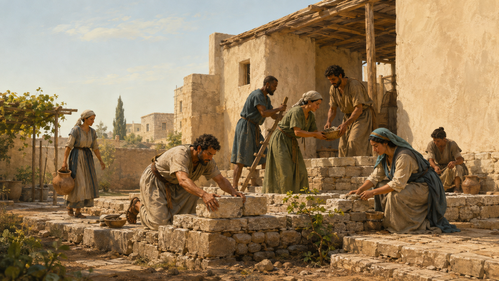
Paul then moves from the field to a construction site. He had laid a foundation in Corinth, but he wants to be clear that the foundation wasn’t Paul himself. “No one can lay any other foundation than the one that is already laid, which is Jesus Christ” (3:11). Everything the church becomes must be built there–on Jesus. Not on a pastor, personality, or preferred style; and definitely not on our particular group, clique, or faction within the congregation.
Christ is the foundation, and what we build upon Christ matters because Paul eventually reveals what sort of building he has been describing: “Don’t you know that you are God’s temple and God’s Spirit lives in you?” (3:16). The “you” here is the church together. Paul is confronting a divided congregation by reminding them what grace has made them. They are not competing groups gathered around preferred leaders. Together they are the place where God has chosen to dwell by the Spirit. That makes division more serious than a personality conflict.
When jealousy, pride, comparison, gossip, or rivalry tear at the fellowship of believers, we’re damaging something God calls to be holy. When we encourage one another, serve without needing recognition, forgive, make room for someone different from us, speak well of another servant of Christ, and place Jesus above our preferences, we participate in God’s work of building the church. This is a core part of Christian maturity.
Maturity isn’t measured by how much Christian information we’ve accumulated or how confidently we can defend our preferences. The Holy Spirit forms a people whose lives increasingly resemble Jesus—humble, holy, loving, and committed to one another.
The Corinthians were settling for something far smaller. They were saying, “I belong to Paul” or “I belong to Apollos.” Paul turns the whole thing around: “All things are yours… you belong to Christ, and Christ belongs to God” (3:21, 23). They didn't need to make themselves important by attaching themselves to the right personality. Their identity was already secure in Christ.
We can honor those who plant and those who water. We can respect those who serve obediently. We can receive their gifts gratefully. But our hope isn’t ultimately in any of them.
Christ is the foundation. God gives the growth. And by the Spirit, God is building us together into something holy.
They were fascinated by wisdom, gifted teachers, impressive speech, and the sort of sophistication their culture admired. Some identified themselves with Paul. Others preferred Apollos. What probably felt to them like discernment about who was the better teacher had become rivalry within the church. Paul names it as spiritual immaturity.
His concern isn’t that Christians appreciate faithful leaders or learn from different teachers. Paul clearly respects Apollos. The problem comes when the servants of Christ become competing centers of loyalty, and the church starts organizing itself around personalities rather than Jesus. So Paul changes the picture.
“What then is Apollos? What is Paul? They are servants through whom you came to believe” (3:5). Then he gives them an image from the field: “I planted, Apollos watered, but God made it grow” (3:6). Paul planted. Apollos watered. Both had a role. Both had work God had given them to do. But neither could produce life. God gives the growth. How does that change how we think about ministry and about the church?
We can become attached to the person who planted something in us—the pastor who first made Scripture understandable, the teacher who helped us grow, the mentor who walked beside us, the church tradition that formed us. Those relationships are gifts, and gratitude is appropriate. But servants are still servants...
The grace comes from God. The life comes from God. The growth comes from God.
Paul then moves from the field to a construction site. He had laid a foundation in Corinth, but he wants to be clear that the foundation wasn’t Paul himself. “No one can lay any other foundation than the one that is already laid, which is Jesus Christ” (3:11). Everything the church becomes must be built there–on Jesus. Not on a pastor, personality, or preferred style; and definitely not on our particular group, clique, or faction within the congregation.
Christ is the foundation, and what we build upon Christ matters because Paul eventually reveals what sort of building he has been describing: “Don’t you know that you are God’s temple and God’s Spirit lives in you?” (3:16). The “you” here is the church together. Paul is confronting a divided congregation by reminding them what grace has made them. They are not competing groups gathered around preferred leaders. Together they are the place where God has chosen to dwell by the Spirit. That makes division more serious than a personality conflict.
When jealousy, pride, comparison, gossip, or rivalry tear at the fellowship of believers, we’re damaging something God calls to be holy. When we encourage one another, serve without needing recognition, forgive, make room for someone different from us, speak well of another servant of Christ, and place Jesus above our preferences, we participate in God’s work of building the church. This is a core part of Christian maturity.
Maturity isn’t measured by how much Christian information we’ve accumulated or how confidently we can defend our preferences. The Holy Spirit forms a people whose lives increasingly resemble Jesus—humble, holy, loving, and committed to one another.
The Corinthians were settling for something far smaller. They were saying, “I belong to Paul” or “I belong to Apollos.” Paul turns the whole thing around: “All things are yours… you belong to Christ, and Christ belongs to God” (3:21, 23). They didn't need to make themselves important by attaching themselves to the right personality. Their identity was already secure in Christ.
We can honor those who plant and those who water. We can respect those who serve obediently. We can receive their gifts gratefully. But our hope isn’t ultimately in any of them.
Christ is the foundation. God gives the growth. And by the Spirit, God is building us together into something holy.
Faith In Action
Think of one Christian leader, teacher, or mentor who has helped you grow. Thank God for that person today, and then intentionally pray that your gratitude for the servant will always lead you beyond them to deeper dependence on Christ, the foundation of your faith.
Today's Prayer
God of grace, thank you for every person you have used to plant seeds of faith, water our lives, teach us, encourage us, and help us grow. Keep us from turning your servants into substitutes for you. Forgive the jealousy, comparison, pride, and preference that can divide your Church. By your Holy Spirit, mature us into people who look more like Jesus. Teach us to build carefully, love one another faithfully, and remember that the Church belongs to you. Keep Christ firmly at the center of our life together, and produce in us the growth that only you can give. Amen.
Posted in Bible Reading Plan 2026
Recent
Categories
Archive
2026
January
My Word for the Year... LIGHT2026 Reading Plan Reflections - Day 12026 Reading Plan Reflections - Day 22026 Reading Plan Reflections - Day 32026 Reading Plan Reflections - Day 42026 Reading Plan Reflections - Day 5Welcome to 2026 - New Resources2026 Reading Plan Reflections - Day 62026 Reading Plan Reflections - Day 72026 Reading Plan Reflections - Day 8New Year Prayer Focus2026 Reading Plan Reflections - Day 92026 Reading Plan Reflections - Day 102026 Reading Plan Reflections - Day 112026 Reading Plan Reflections - Day 122026 Reading Plan Reflections - Day 132026 Reading Plan Reflections - Day 142026 Reading Plan Reflections - Day 152026 Reading Plan Reflections - Day 16Darkness and Light2026 Reading Plan Reflections - Day 172026 Reading Plan Reflections - Day 182026 Reading Plan Reflections - Day 192026 Reading Plan Reflections - Day 202026 Reading Plan Reflections - Day 212026 Reading Plan Reflections - Day 222026 Reading Plan Reflections - Day 232026 Reading Plan Reflections - Day 242026 Reading Plan Reflections - Day 252026 Reading Plan Reflections - Day 262026 Reading Plan Reflections - Day 272026 Reading Plan Reflections - Day 282026 Reading Plan Reflections - Day 292026 Reading Plan Reflections - Day 30Together as the Body of Christ2026 Reading Plan Reflections - Day 31
February
2026 Reading Plan Reflections - Day 322026 Reading Plan Reflections - Day 332026 Reading Plan Reflections - Day 342026 Reading Plan Reflections - Day 352026 Reading Plan Reflections - Day 362026 Reading Plan Reflections - Day 37This Shouldn’t Need to Be Said...2026 Reading Plan Reflections - Day 382026 Reading Plan Reflections - Day 392026 Reading Plan Reflections - Day 402026 Reading Plan Reflections - Day 412026 Reading Plan Reflections - Day 422026 Reading Plan Reflections - Day 432026 Reading Plan Reflections - Day 442026 Reading Plan Reflections - Day 452026 Reading Plan Reflections - Day 462026 Reading Plan Reflections - Day 472026 Reading Plan Reflections - Day 482026 Reading Plan Reflections - Day 492026 Reading Plan Reflections - Day 502026 Reading Plan Reflections - Day 512026 Reading Plan Reflections - Day 522026 Reading Plan Reflections - Day 532026 Reading Plan Reflections - Day 542026 Reading Plan Reflections - Day 552026 Reading Plan Reflections - Day 562026 Reading Plan Reflections - Day 572026 Reading Plan Reflections - Day 582026 Reading Plan Reflections - Day 59
March
2026 Reading Plan Reflections - Day 602026 Reading Plan Reflections - Day 612026 Reading Plan Reflections - Day 622026 Reading Plan Reflections - Day 632026 Reading Plan Reflections - Day 642026 Reading Plan Reflections - Day 652026 Reading Plan Reflections - Day 662026 Reading Plan Reflections - Day 672026 Reading Plan Reflections - Day 682026 Reading Plan Reflections - Day 692026 Reading Plan Reflections - Day 702026 Reading Plan Reflections - Day 712026 Reading Plan Reflections - Day 722026 Reading Plan Reflections - Day 732026 Reading Plan Reflections - Day 742026 Reading Plan Reflections - Day 752026 Reading Plan Reflections - Day 762026 Reading Plan Reflections - Day 772026 Reading Plan Reflections - Day 782026 Reading Plan Reflections - Day 792026 Reading Plan Reflections - Day 802026 Reading Plan Reflections - Day 812026 Reading Plan Reflections - Day 822026 Reading Plan Reflections - Day 832026 Reading Plan Reflections - Day 84
April
2026 Reading Plan Reflections - Days 85 & 862026 Reading Plan Reflections - Day 872026 Reading Plan Reflections - Day 882026 Reading Plan Reflections - Day 892026 Reading Plan Reflections - Day 902026 Reading Plan Reflections - Day 912026 Reading Plan Reflections - Day 922026 Reading Plan Reflections - Day 932026 Reading Plan Reflections - Day 942026 Reading Plan Reflections - Day 95
No Comments