
2026 Reading Plan Reflections - Day 235
Grace That Changes Us
1 Corinthians 5
“Christ our Passover lamb has been sacrificed. So let’s celebrate the feast with the unleavened bread of honesty and truth…” 1 Corinthians 5:7-8 CEB
There are passages of Scripture we read gladly, and there are passages we might prefer to move through quickly. Today's passage probably belongs in the second category.
Paul is addressing sexual immorality within the Corinthian church, and the particular situation is extreme. A man is living in a sexual relationship with his stepmother, and what troubles Paul almost as much as the behavior itself is that the church seems strangely proud of its willingness to tolerate it.
It would be easy for us to keep this passage at a comfortable distance. To say things like..."Those people were really messed up." Or to seize on the sexual nature of the sin and treat it as though Paul has permitted us to place certain sins in a category above all the others. Neither response lets the passage do its work in us.
Paul's concern throughout these opening chapters has been the spiritual condition of the church. The Corinthians have been dividing themselves around personalities, measuring one another by worldly standards, becoming impressed with their own wisdom, and getting "puffed up." Chapter 5 reveals another expression of the same problem. They have become so confident in themselves that they are tolerating behavior plainly inconsistent with the life of someone who belongs to Christ.
Sexual immorality is the immediate issue, and we shouldn't soften what Paul says about it. But neither should we pretend sexual sin is the only way the old life works its way back into the church. Later in the chapter Paul names greed, idolatry, abusive behavior, drunkenness, and cheating right alongside sexual immorality.
Sin is sin. That doesn't mean every sin has identical earthly consequences. It does mean none of us gets to read this chapter standing safely above the person Paul is confronting. We read it as people who have received grace. That changes the posture completely.
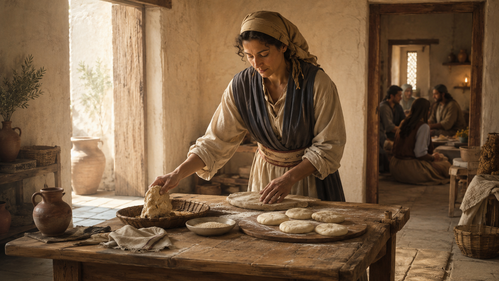
Paul gives us an image that helps us understand what he's driving at: leaven. A small amount works its way through an entire batch of dough. His concern isn't simply that one Christian has sinned. Christians sin, sometimes grievously. His concern is that the church has begun accepting what should lead to repentance.
There's a significant difference between welcoming sinners and celebrating sin. The Church must always be a place where broken people can encounter the grace of Jesus Christ. If sinners aren't welcome, none of us belongs there. But grace doesn't leave us where it found us. The Jesus who forgives us also calls us to follow him, and the Holy Spirit works within us to make us holy.
Paul takes us directly to the source of that grace: "Christ our Passover lamb has been sacrificed" (1 Corinthians 5:7). That's where this chapter must be read. Before Paul tells the Corinthians what needs to be removed from their community, he reminds them what Christ has already done for them.
They've been delivered. They belong to a new people. They're living on the other side of a new Passover. So Paul tells them to live like the people Christ has made them to be, celebrating this new life with "the unleavened bread of sincerity and truth" (5:8).
Holiness begins there. Not with Christians deciding we're morally superior to everyone around us, but with people who have been rescued by grace refusing to make peace with the things Christ is saving us from. And Paul draws an important boundary near the end of the chapter. He's not instructing Christians to police the morality of the surrounding world. "What do I care about judging outsiders?" he asks. God will deal with those outside the church.
Paul's concern is the integrity of the community that bears Christ's name. That's uncomfortable because it means Christian community requires more than friendliness. There are times when love must tell the truth. There are times when brothers and sisters in Christ need to call one another back toward faithfulness. There are even circumstances, as severe as the one in Corinth, when the Church cannot pretend that continuing openly in destructive sin is compatible with Christian discipleship. But we tread carefully here.
Church discipline without humility becomes self-righteousness. Truth without grace becomes cruelty. Grace without truth becomes permission to remain unchanged. We need both. And before we start looking for leaven in someone else's life, we should allow the Holy Spirit to search our own.
Where have I begun excusing something Jesus wants to transform? Where have I renamed compromise as freedom? Where have I quietly decided, "God doesn't really mind this"? Those questions may lead to uncomfortable places. But the One asking them is the One who has already given himself for us.
Christ our Passover lamb has been sacrificed. Grace has already acted. Now that same grace teaches us how to live as a holy people—together, humbly, truthfully, and always dependent upon the Spirit who is still forming us into the likeness of Christ.
Paul is addressing sexual immorality within the Corinthian church, and the particular situation is extreme. A man is living in a sexual relationship with his stepmother, and what troubles Paul almost as much as the behavior itself is that the church seems strangely proud of its willingness to tolerate it.
It would be easy for us to keep this passage at a comfortable distance. To say things like..."Those people were really messed up." Or to seize on the sexual nature of the sin and treat it as though Paul has permitted us to place certain sins in a category above all the others. Neither response lets the passage do its work in us.
Paul's concern throughout these opening chapters has been the spiritual condition of the church. The Corinthians have been dividing themselves around personalities, measuring one another by worldly standards, becoming impressed with their own wisdom, and getting "puffed up." Chapter 5 reveals another expression of the same problem. They have become so confident in themselves that they are tolerating behavior plainly inconsistent with the life of someone who belongs to Christ.
Sexual immorality is the immediate issue, and we shouldn't soften what Paul says about it. But neither should we pretend sexual sin is the only way the old life works its way back into the church. Later in the chapter Paul names greed, idolatry, abusive behavior, drunkenness, and cheating right alongside sexual immorality.
Sin is sin. That doesn't mean every sin has identical earthly consequences. It does mean none of us gets to read this chapter standing safely above the person Paul is confronting. We read it as people who have received grace. That changes the posture completely.
Paul gives us an image that helps us understand what he's driving at: leaven. A small amount works its way through an entire batch of dough. His concern isn't simply that one Christian has sinned. Christians sin, sometimes grievously. His concern is that the church has begun accepting what should lead to repentance.
There's a significant difference between welcoming sinners and celebrating sin. The Church must always be a place where broken people can encounter the grace of Jesus Christ. If sinners aren't welcome, none of us belongs there. But grace doesn't leave us where it found us. The Jesus who forgives us also calls us to follow him, and the Holy Spirit works within us to make us holy.
Paul takes us directly to the source of that grace: "Christ our Passover lamb has been sacrificed" (1 Corinthians 5:7). That's where this chapter must be read. Before Paul tells the Corinthians what needs to be removed from their community, he reminds them what Christ has already done for them.
They've been delivered. They belong to a new people. They're living on the other side of a new Passover. So Paul tells them to live like the people Christ has made them to be, celebrating this new life with "the unleavened bread of sincerity and truth" (5:8).
Holiness begins there. Not with Christians deciding we're morally superior to everyone around us, but with people who have been rescued by grace refusing to make peace with the things Christ is saving us from. And Paul draws an important boundary near the end of the chapter. He's not instructing Christians to police the morality of the surrounding world. "What do I care about judging outsiders?" he asks. God will deal with those outside the church.
Paul's concern is the integrity of the community that bears Christ's name. That's uncomfortable because it means Christian community requires more than friendliness. There are times when love must tell the truth. There are times when brothers and sisters in Christ need to call one another back toward faithfulness. There are even circumstances, as severe as the one in Corinth, when the Church cannot pretend that continuing openly in destructive sin is compatible with Christian discipleship. But we tread carefully here.
Church discipline without humility becomes self-righteousness. Truth without grace becomes cruelty. Grace without truth becomes permission to remain unchanged. We need both. And before we start looking for leaven in someone else's life, we should allow the Holy Spirit to search our own.
Where have I begun excusing something Jesus wants to transform? Where have I renamed compromise as freedom? Where have I quietly decided, "God doesn't really mind this"? Those questions may lead to uncomfortable places. But the One asking them is the One who has already given himself for us.
Christ our Passover lamb has been sacrificed. Grace has already acted. Now that same grace teaches us how to live as a holy people—together, humbly, truthfully, and always dependent upon the Spirit who is still forming us into the likeness of Christ.
Faith In Action
Spend a few quiet minutes today asking the Holy Spirit to reveal one area of your life where you may have become comfortable with something God wants to change. Don't compare yourself with anyone else. Name it honestly before God, receive God's grace, and identify one concrete step of repentance or accountability you can take today.
Today's Prayer
Jesus, you have given yourself for us and welcomed us into a new life we could never create for ourselves. Keep us from using grace as an excuse to remain unchanged, and keep us from using truth as a weapon against others. Search our hearts and show us where we have become comfortable with sin. Give us humility to confess, courage to repent, and grace to help one another become more like you. By your Spirit, form your Church into a people marked by sincerity, truth, holy love, and faithful witness. Amen.
Posted in Bible Reading Plan 2026
Recent
Categories
Archive
2026
January
My Word for the Year... LIGHT2026 Reading Plan Reflections - Day 12026 Reading Plan Reflections - Day 22026 Reading Plan Reflections - Day 32026 Reading Plan Reflections - Day 42026 Reading Plan Reflections - Day 5Welcome to 2026 - New Resources2026 Reading Plan Reflections - Day 62026 Reading Plan Reflections - Day 72026 Reading Plan Reflections - Day 8New Year Prayer Focus2026 Reading Plan Reflections - Day 92026 Reading Plan Reflections - Day 102026 Reading Plan Reflections - Day 112026 Reading Plan Reflections - Day 122026 Reading Plan Reflections - Day 132026 Reading Plan Reflections - Day 142026 Reading Plan Reflections - Day 152026 Reading Plan Reflections - Day 16Darkness and Light2026 Reading Plan Reflections - Day 172026 Reading Plan Reflections - Day 182026 Reading Plan Reflections - Day 192026 Reading Plan Reflections - Day 202026 Reading Plan Reflections - Day 212026 Reading Plan Reflections - Day 222026 Reading Plan Reflections - Day 232026 Reading Plan Reflections - Day 242026 Reading Plan Reflections - Day 252026 Reading Plan Reflections - Day 262026 Reading Plan Reflections - Day 272026 Reading Plan Reflections - Day 282026 Reading Plan Reflections - Day 292026 Reading Plan Reflections - Day 30Together as the Body of Christ2026 Reading Plan Reflections - Day 31
February
2026 Reading Plan Reflections - Day 322026 Reading Plan Reflections - Day 332026 Reading Plan Reflections - Day 342026 Reading Plan Reflections - Day 352026 Reading Plan Reflections - Day 362026 Reading Plan Reflections - Day 37This Shouldn’t Need to Be Said...2026 Reading Plan Reflections - Day 382026 Reading Plan Reflections - Day 392026 Reading Plan Reflections - Day 402026 Reading Plan Reflections - Day 412026 Reading Plan Reflections - Day 422026 Reading Plan Reflections - Day 432026 Reading Plan Reflections - Day 442026 Reading Plan Reflections - Day 452026 Reading Plan Reflections - Day 462026 Reading Plan Reflections - Day 472026 Reading Plan Reflections - Day 482026 Reading Plan Reflections - Day 492026 Reading Plan Reflections - Day 502026 Reading Plan Reflections - Day 512026 Reading Plan Reflections - Day 522026 Reading Plan Reflections - Day 532026 Reading Plan Reflections - Day 542026 Reading Plan Reflections - Day 552026 Reading Plan Reflections - Day 562026 Reading Plan Reflections - Day 572026 Reading Plan Reflections - Day 582026 Reading Plan Reflections - Day 59
March
2026 Reading Plan Reflections - Day 602026 Reading Plan Reflections - Day 612026 Reading Plan Reflections - Day 622026 Reading Plan Reflections - Day 632026 Reading Plan Reflections - Day 642026 Reading Plan Reflections - Day 652026 Reading Plan Reflections - Day 662026 Reading Plan Reflections - Day 672026 Reading Plan Reflections - Day 682026 Reading Plan Reflections - Day 692026 Reading Plan Reflections - Day 702026 Reading Plan Reflections - Day 712026 Reading Plan Reflections - Day 722026 Reading Plan Reflections - Day 732026 Reading Plan Reflections - Day 742026 Reading Plan Reflections - Day 752026 Reading Plan Reflections - Day 762026 Reading Plan Reflections - Day 772026 Reading Plan Reflections - Day 782026 Reading Plan Reflections - Day 792026 Reading Plan Reflections - Day 802026 Reading Plan Reflections - Day 812026 Reading Plan Reflections - Day 822026 Reading Plan Reflections - Day 832026 Reading Plan Reflections - Day 84
April
2026 Reading Plan Reflections - Days 85 & 862026 Reading Plan Reflections - Day 872026 Reading Plan Reflections - Day 882026 Reading Plan Reflections - Day 892026 Reading Plan Reflections - Day 902026 Reading Plan Reflections - Day 912026 Reading Plan Reflections - Day 922026 Reading Plan Reflections - Day 932026 Reading Plan Reflections - Day 942026 Reading Plan Reflections - Day 95
No Comments