
2026 Reading Plan Reflections - Day 240
The Freedom To Give It Up
Freedom for the Gospel
“Although I’m free from all people, I make myself a slave to all people, to recruit more of them.” 1 Corinthians 9:19 CEB
Yesterday, Paul challenged the Corinthians to think differently about freedom. Christian maturity doesn’t ask only, “Am I allowed to do this?” Love also asks what our freedom might do to someone else. In 1 Corinthians 9, Paul takes that argument further by pointing to his own life.
Paul has rights. As an apostle, he has every legitimate reason to expect material support from the churches he serves. He spends considerable time establishing that point, appealing to ordinary work, Scripture, the practice of the other apostles, and even the teaching of Jesus.
Then comes the surprise: Paul has chosen not to use those rights. “We haven’t made use of this right,” he writes, “but we put up with everything so we don’t put any obstacle in the way of the gospel of Christ” (v. 12 CEB).
The issue isn’t whether Paul’s rights are legitimate. They are. The issue is whether exercising them serves the gospel.
That connects directly with yesterday’s reading. In chapter 8, Paul was willing to give up eating meat if his freedom endangered another believer. Now the circle widens. Paul is willing to surrender legitimate freedoms when they might hinder someone from hearing the good news of Jesus. This is what Christian freedom looks like when it has been shaped by the cross.
We often understand freedom as the ability to do whatever we have the right to do. Paul describes something much deeper. Because he is free, he is able to give himself away “Although I’m free from all people, I make myself a slave to all people, to recruit more of them” (v. 19). Paul isn’t changing the gospel to make it more attractive. The message remains centered on Jesus Christ. Paul changes himself. He refuses to insist that everyone accommodate his preferences, culture, habits, or comfort before he will meet them where they are.
“To the Jews I became like a Jew.... To those without the Law, I became like one without the Law... To the weak I became weak... I have become all things to all people, so that I could save some by all possible means” (vv. 20–22).
There is a tremendous difference between changing the gospel to suit people and changing ourselves so people can hear the gospel. One compromises the message. The other looks a lot like love.
Paul’s freedom has become freedom for something: freedom to serve Christ, freedom to love people, freedom to cross barriers, freedom to surrender preferences, freedom to participate in God’s work of drawing people toward salvation. That kind of life requires discipline.
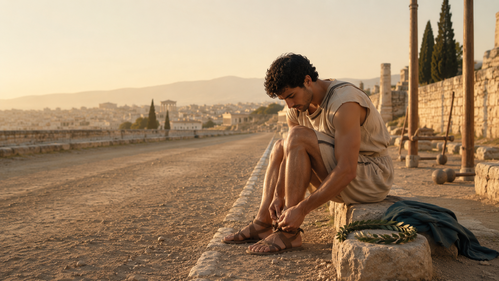
So Paul finishes with the images of runners and boxers. Athletes don’t prepare for competition by doing whatever feels good at the moment. They train. They make choices about what they will eat, how they will spend their time, when they will rest, and what they will refuse because they are pursuing something greater.
“Run like this so that you can win,” Paul tells the Corinthians (v. 24). He isn’t suddenly preaching salvation through greater effort. Paul has spent this whole letter reminding the Corinthians that everything they have comes from God’s grace. But grace doesn’t make discipleship passive. Grace makes a new kind of obedience possible.
The Holy Spirit is forming us into people who can increasingly say no to ourselves so that we can say yes to Christ. That includes our bodies, habits, appetites, preferences, schedules, money, words, and freedoms. Not because those things are necessarily bad. Because sometimes something good must be surrendered for something better.
Paul knows what he is running toward. The gospel is worth the training. People discovering life in Jesus are worth the inconvenience. Becoming the person God intends him to be is worth refusing whatever would pull him away from that purpose.
That gives us a different standard for evaluating our own freedom. We can ask, “Do I have a right to do this?” But disciples of Jesus eventually have to ask another question: Will this help me faithfully carry the gospel?
Sometimes the answer will allow us to enjoy our freedom with gratitude. Sometimes love will lead us to lay that freedom down. Either way, our goal isn’t to defend every right we possess. Our goal is to become more like Jesus and to remove unnecessary obstacles between people and the good news of his kingdom. That's a race worth running.
Paul has rights. As an apostle, he has every legitimate reason to expect material support from the churches he serves. He spends considerable time establishing that point, appealing to ordinary work, Scripture, the practice of the other apostles, and even the teaching of Jesus.
Then comes the surprise: Paul has chosen not to use those rights. “We haven’t made use of this right,” he writes, “but we put up with everything so we don’t put any obstacle in the way of the gospel of Christ” (v. 12 CEB).
The issue isn’t whether Paul’s rights are legitimate. They are. The issue is whether exercising them serves the gospel.
That connects directly with yesterday’s reading. In chapter 8, Paul was willing to give up eating meat if his freedom endangered another believer. Now the circle widens. Paul is willing to surrender legitimate freedoms when they might hinder someone from hearing the good news of Jesus. This is what Christian freedom looks like when it has been shaped by the cross.
We often understand freedom as the ability to do whatever we have the right to do. Paul describes something much deeper. Because he is free, he is able to give himself away “Although I’m free from all people, I make myself a slave to all people, to recruit more of them” (v. 19). Paul isn’t changing the gospel to make it more attractive. The message remains centered on Jesus Christ. Paul changes himself. He refuses to insist that everyone accommodate his preferences, culture, habits, or comfort before he will meet them where they are.
“To the Jews I became like a Jew.... To those without the Law, I became like one without the Law... To the weak I became weak... I have become all things to all people, so that I could save some by all possible means” (vv. 20–22).
There is a tremendous difference between changing the gospel to suit people and changing ourselves so people can hear the gospel. One compromises the message. The other looks a lot like love.
Paul’s freedom has become freedom for something: freedom to serve Christ, freedom to love people, freedom to cross barriers, freedom to surrender preferences, freedom to participate in God’s work of drawing people toward salvation. That kind of life requires discipline.
So Paul finishes with the images of runners and boxers. Athletes don’t prepare for competition by doing whatever feels good at the moment. They train. They make choices about what they will eat, how they will spend their time, when they will rest, and what they will refuse because they are pursuing something greater.
“Run like this so that you can win,” Paul tells the Corinthians (v. 24). He isn’t suddenly preaching salvation through greater effort. Paul has spent this whole letter reminding the Corinthians that everything they have comes from God’s grace. But grace doesn’t make discipleship passive. Grace makes a new kind of obedience possible.
The Holy Spirit is forming us into people who can increasingly say no to ourselves so that we can say yes to Christ. That includes our bodies, habits, appetites, preferences, schedules, money, words, and freedoms. Not because those things are necessarily bad. Because sometimes something good must be surrendered for something better.
Paul knows what he is running toward. The gospel is worth the training. People discovering life in Jesus are worth the inconvenience. Becoming the person God intends him to be is worth refusing whatever would pull him away from that purpose.
That gives us a different standard for evaluating our own freedom. We can ask, “Do I have a right to do this?” But disciples of Jesus eventually have to ask another question: Will this help me faithfully carry the gospel?
Sometimes the answer will allow us to enjoy our freedom with gratitude. Sometimes love will lead us to lay that freedom down. Either way, our goal isn’t to defend every right we possess. Our goal is to become more like Jesus and to remove unnecessary obstacles between people and the good news of his kingdom. That's a race worth running.
Faith In Action
Identify one preference, habit, or freedom you regularly defend. Ask God today, “Does this help me love people and carry the gospel well, or might you be inviting me to hold it more loosely?” Then make one concrete choice in response.
Today's Prayer
Jesus, thank you for the freedom you have given us through your grace. Keep us from turning that freedom inward until our rights and preferences become more important than your mission. By your Holy Spirit, teach us when to receive your gifts gratefully and when love calls us to lay something down. Discipline our desires, shape our habits, and make our lives increasingly useful for your kingdom. Give us courage to meet people where they are without changing the truth of the gospel, and form us into people whose freedom looks like yours—freedom expressed through holy love and faithful service. Amen.
Posted in Bible Reading Plan 2026
Recent
Categories
Archive
2026
January
My Word for the Year... LIGHT2026 Reading Plan Reflections - Day 12026 Reading Plan Reflections - Day 22026 Reading Plan Reflections - Day 32026 Reading Plan Reflections - Day 42026 Reading Plan Reflections - Day 5Welcome to 2026 - New Resources2026 Reading Plan Reflections - Day 62026 Reading Plan Reflections - Day 72026 Reading Plan Reflections - Day 8New Year Prayer Focus2026 Reading Plan Reflections - Day 92026 Reading Plan Reflections - Day 102026 Reading Plan Reflections - Day 112026 Reading Plan Reflections - Day 122026 Reading Plan Reflections - Day 132026 Reading Plan Reflections - Day 142026 Reading Plan Reflections - Day 152026 Reading Plan Reflections - Day 16Darkness and Light2026 Reading Plan Reflections - Day 172026 Reading Plan Reflections - Day 182026 Reading Plan Reflections - Day 192026 Reading Plan Reflections - Day 202026 Reading Plan Reflections - Day 212026 Reading Plan Reflections - Day 222026 Reading Plan Reflections - Day 232026 Reading Plan Reflections - Day 242026 Reading Plan Reflections - Day 252026 Reading Plan Reflections - Day 262026 Reading Plan Reflections - Day 272026 Reading Plan Reflections - Day 282026 Reading Plan Reflections - Day 292026 Reading Plan Reflections - Day 30Together as the Body of Christ2026 Reading Plan Reflections - Day 31
February
2026 Reading Plan Reflections - Day 322026 Reading Plan Reflections - Day 332026 Reading Plan Reflections - Day 342026 Reading Plan Reflections - Day 352026 Reading Plan Reflections - Day 362026 Reading Plan Reflections - Day 37This Shouldn’t Need to Be Said...2026 Reading Plan Reflections - Day 382026 Reading Plan Reflections - Day 392026 Reading Plan Reflections - Day 402026 Reading Plan Reflections - Day 412026 Reading Plan Reflections - Day 422026 Reading Plan Reflections - Day 432026 Reading Plan Reflections - Day 442026 Reading Plan Reflections - Day 452026 Reading Plan Reflections - Day 462026 Reading Plan Reflections - Day 472026 Reading Plan Reflections - Day 482026 Reading Plan Reflections - Day 492026 Reading Plan Reflections - Day 502026 Reading Plan Reflections - Day 512026 Reading Plan Reflections - Day 522026 Reading Plan Reflections - Day 532026 Reading Plan Reflections - Day 542026 Reading Plan Reflections - Day 552026 Reading Plan Reflections - Day 562026 Reading Plan Reflections - Day 572026 Reading Plan Reflections - Day 582026 Reading Plan Reflections - Day 59
March
2026 Reading Plan Reflections - Day 602026 Reading Plan Reflections - Day 612026 Reading Plan Reflections - Day 622026 Reading Plan Reflections - Day 632026 Reading Plan Reflections - Day 642026 Reading Plan Reflections - Day 652026 Reading Plan Reflections - Day 662026 Reading Plan Reflections - Day 672026 Reading Plan Reflections - Day 682026 Reading Plan Reflections - Day 692026 Reading Plan Reflections - Day 702026 Reading Plan Reflections - Day 712026 Reading Plan Reflections - Day 722026 Reading Plan Reflections - Day 732026 Reading Plan Reflections - Day 742026 Reading Plan Reflections - Day 752026 Reading Plan Reflections - Day 762026 Reading Plan Reflections - Day 772026 Reading Plan Reflections - Day 782026 Reading Plan Reflections - Day 792026 Reading Plan Reflections - Day 802026 Reading Plan Reflections - Day 812026 Reading Plan Reflections - Day 822026 Reading Plan Reflections - Day 832026 Reading Plan Reflections - Day 84
April
2026 Reading Plan Reflections - Days 85 & 862026 Reading Plan Reflections - Day 872026 Reading Plan Reflections - Day 882026 Reading Plan Reflections - Day 892026 Reading Plan Reflections - Day 902026 Reading Plan Reflections - Day 912026 Reading Plan Reflections - Day 922026 Reading Plan Reflections - Day 932026 Reading Plan Reflections - Day 942026 Reading Plan Reflections - Day 95
No Comments