
2026 Reading Plan Reflections - Day 242
At The Lord's Table
1 Corinthians 10:14–33
“So, whether you eat or drink, or whatever you do, do everything for the glory of God.” 1 Corinthians 10:31 CEB
Paul has spent several chapters talking about Christian freedom. In today’s passage, he draws a line that freedom cannot cross. “Therefore, my dear friends, run away from the worship of false gods!” (1 Corinthians 10:14 CEB).
There are questions Christians can faithfully wrestle with. There are circumstances where mature believers may reach different conclusions. There are freedoms we may choose to exercise or surrender for the sake of another person. Idolatry isn’t one of those gray areas.
Paul has just reminded the Corinthians about Israel in the wilderness. God had rescued them, provided for them, and remained faithful to them, yet they repeatedly turned their hearts toward other gods. Now Paul tells the Corinthian church not to repeat the same mistake. And his warning goes deeper than avoiding statues.
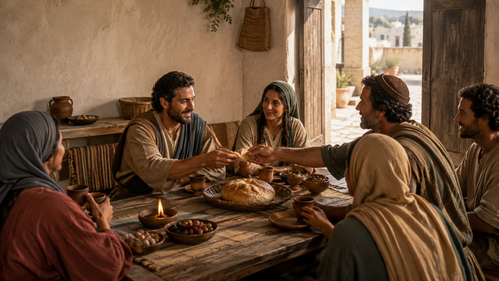
Paul points to the Lord’s Supper. When believers share the cup and break the bread together, they aren’t participating in an empty religious ritual. The meal expresses a real relationship with Jesus Christ and with one another. “The bread that we break, isn’t it a sharing in Christ’s body? Since there is one loaf of bread, we who are many are one body, because we all share the one loaf of bread” (vv. 16–17). We belong at Christ’s table. That belonging makes divided allegiance impossible.
The Corinthians apparently believed they could worship Christ and still participate in meals connected with pagan worship because they knew the idols themselves weren’t real gods. Paul had already agreed that “an idol is nothing” (8:4). But that didn’t make participation harmless.
There is no such thing as casual worship. What we repeatedly give ourselves to shapes us. Our bodies, habits, relationships, choices, and worship belong together. We cannot offer ourselves to Christ on one day and deliberately participate in something opposed to Christ the next, then insist that our spiritual lives remain untouched.
Paul’s instruction is wonderfully direct: run from idolatry. Sometimes holiness requires discernment. Sometimes holiness requires patience with another believer. And sometimes holiness requires leaving something behind.
But notice what happens next. Paul doesn’t turn this warning into fear of everything associated with pagan culture. He tells them they can buy meat from the marketplace without conducting an investigation into its history.
Why? “The earth and all that is in it belong to the Lord” (v. 26). That is an important balance.
Christians don’t need to live suspicious of God’s creation. Everything doesn’t become spiritually contaminated because someone somewhere has used it wrongly. God’s holiness isn’t fragile. The world still belongs to God.
So Paul gives the Corinthians both a firm boundary and generous freedom. Don’t participate in idol worship. But eat the food from the marketplace. Don’t surrender your allegiance to Christ. But don’t invent rules God hasn’t given you either.
Then Paul gives them a principle capable of guiding them through the places where no simple rule exists: “No one should look out for their own advantage, but they should look out for each other” (v. 24).
And finally: “So, whether you eat or drink or whatever you do, you should do it all for God’s glory” (v. 31). That may be the thread holding this entire discussion together. Christian freedom isn’t primarily about asking, “Am I allowed to do this?” It asks something larger.
Can I do this faithfully as someone who belongs to Jesus? Can I receive this with gratitude to God? Will my choice help someone else move toward Christ or make their discipleship more difficult? Does this reflect the God whose glory I want my life to reveal?
There will still be difficult decisions. Paul doesn’t eliminate every gray area, and neither can we. Growing in holiness means learning to discern faithfully within them.
But some things become clearer when we remember whose table we sit at. We have been welcomed by grace into the life of Christ. We share one bread. We belong to one body. Our lives are being shaped by the One who gave himself for us.
Freedom doesn’t mean we belong nowhere. Freedom means we are free to belong completely to Christ.
There are questions Christians can faithfully wrestle with. There are circumstances where mature believers may reach different conclusions. There are freedoms we may choose to exercise or surrender for the sake of another person. Idolatry isn’t one of those gray areas.
Paul has just reminded the Corinthians about Israel in the wilderness. God had rescued them, provided for them, and remained faithful to them, yet they repeatedly turned their hearts toward other gods. Now Paul tells the Corinthian church not to repeat the same mistake. And his warning goes deeper than avoiding statues.
Paul points to the Lord’s Supper. When believers share the cup and break the bread together, they aren’t participating in an empty religious ritual. The meal expresses a real relationship with Jesus Christ and with one another. “The bread that we break, isn’t it a sharing in Christ’s body? Since there is one loaf of bread, we who are many are one body, because we all share the one loaf of bread” (vv. 16–17). We belong at Christ’s table. That belonging makes divided allegiance impossible.
The Corinthians apparently believed they could worship Christ and still participate in meals connected with pagan worship because they knew the idols themselves weren’t real gods. Paul had already agreed that “an idol is nothing” (8:4). But that didn’t make participation harmless.
There is no such thing as casual worship. What we repeatedly give ourselves to shapes us. Our bodies, habits, relationships, choices, and worship belong together. We cannot offer ourselves to Christ on one day and deliberately participate in something opposed to Christ the next, then insist that our spiritual lives remain untouched.
Paul’s instruction is wonderfully direct: run from idolatry. Sometimes holiness requires discernment. Sometimes holiness requires patience with another believer. And sometimes holiness requires leaving something behind.
But notice what happens next. Paul doesn’t turn this warning into fear of everything associated with pagan culture. He tells them they can buy meat from the marketplace without conducting an investigation into its history.
Why? “The earth and all that is in it belong to the Lord” (v. 26). That is an important balance.
Christians don’t need to live suspicious of God’s creation. Everything doesn’t become spiritually contaminated because someone somewhere has used it wrongly. God’s holiness isn’t fragile. The world still belongs to God.
So Paul gives the Corinthians both a firm boundary and generous freedom. Don’t participate in idol worship. But eat the food from the marketplace. Don’t surrender your allegiance to Christ. But don’t invent rules God hasn’t given you either.
Then Paul gives them a principle capable of guiding them through the places where no simple rule exists: “No one should look out for their own advantage, but they should look out for each other” (v. 24).
And finally: “So, whether you eat or drink or whatever you do, you should do it all for God’s glory” (v. 31). That may be the thread holding this entire discussion together. Christian freedom isn’t primarily about asking, “Am I allowed to do this?” It asks something larger.
Can I do this faithfully as someone who belongs to Jesus? Can I receive this with gratitude to God? Will my choice help someone else move toward Christ or make their discipleship more difficult? Does this reflect the God whose glory I want my life to reveal?
There will still be difficult decisions. Paul doesn’t eliminate every gray area, and neither can we. Growing in holiness means learning to discern faithfully within them.
But some things become clearer when we remember whose table we sit at. We have been welcomed by grace into the life of Christ. We share one bread. We belong to one body. Our lives are being shaped by the One who gave himself for us.
Freedom doesn’t mean we belong nowhere. Freedom means we are free to belong completely to Christ.
Faith In Action
Before making one ordinary decision today—what you watch, buy, eat, say, attend, or participate in—pause and ask: “Can I do this for God’s glory and with love for the people around me?” Let your answer shape what you do next.
Today's Prayer
Jesus, thank you for welcoming us to your table and giving us a place in your Body. Keep our hearts from divided loyalties and give us courage to walk away from anything that competes with our devotion to you. Where you have given us freedom, teach us to receive it gratefully without making ourselves the center of our choices. Form us by your grace into people who seek the good of others and whose ordinary lives bring glory to God. Give us wisdom in the gray areas, conviction where the way is clear, and love in everything we do. Amen.
Posted in Bible Reading Plan 2026
Recent
Categories
Archive
2026
January
My Word for the Year... LIGHT2026 Reading Plan Reflections - Day 12026 Reading Plan Reflections - Day 22026 Reading Plan Reflections - Day 32026 Reading Plan Reflections - Day 42026 Reading Plan Reflections - Day 5Welcome to 2026 - New Resources2026 Reading Plan Reflections - Day 62026 Reading Plan Reflections - Day 72026 Reading Plan Reflections - Day 8New Year Prayer Focus2026 Reading Plan Reflections - Day 92026 Reading Plan Reflections - Day 102026 Reading Plan Reflections - Day 112026 Reading Plan Reflections - Day 122026 Reading Plan Reflections - Day 132026 Reading Plan Reflections - Day 142026 Reading Plan Reflections - Day 152026 Reading Plan Reflections - Day 16Darkness and Light2026 Reading Plan Reflections - Day 172026 Reading Plan Reflections - Day 182026 Reading Plan Reflections - Day 192026 Reading Plan Reflections - Day 202026 Reading Plan Reflections - Day 212026 Reading Plan Reflections - Day 222026 Reading Plan Reflections - Day 232026 Reading Plan Reflections - Day 242026 Reading Plan Reflections - Day 252026 Reading Plan Reflections - Day 262026 Reading Plan Reflections - Day 272026 Reading Plan Reflections - Day 282026 Reading Plan Reflections - Day 292026 Reading Plan Reflections - Day 30Together as the Body of Christ2026 Reading Plan Reflections - Day 31
February
2026 Reading Plan Reflections - Day 322026 Reading Plan Reflections - Day 332026 Reading Plan Reflections - Day 342026 Reading Plan Reflections - Day 352026 Reading Plan Reflections - Day 362026 Reading Plan Reflections - Day 37This Shouldn’t Need to Be Said...2026 Reading Plan Reflections - Day 382026 Reading Plan Reflections - Day 392026 Reading Plan Reflections - Day 402026 Reading Plan Reflections - Day 412026 Reading Plan Reflections - Day 422026 Reading Plan Reflections - Day 432026 Reading Plan Reflections - Day 442026 Reading Plan Reflections - Day 452026 Reading Plan Reflections - Day 462026 Reading Plan Reflections - Day 472026 Reading Plan Reflections - Day 482026 Reading Plan Reflections - Day 492026 Reading Plan Reflections - Day 502026 Reading Plan Reflections - Day 512026 Reading Plan Reflections - Day 522026 Reading Plan Reflections - Day 532026 Reading Plan Reflections - Day 542026 Reading Plan Reflections - Day 552026 Reading Plan Reflections - Day 562026 Reading Plan Reflections - Day 572026 Reading Plan Reflections - Day 582026 Reading Plan Reflections - Day 59
March
2026 Reading Plan Reflections - Day 602026 Reading Plan Reflections - Day 612026 Reading Plan Reflections - Day 622026 Reading Plan Reflections - Day 632026 Reading Plan Reflections - Day 642026 Reading Plan Reflections - Day 652026 Reading Plan Reflections - Day 662026 Reading Plan Reflections - Day 672026 Reading Plan Reflections - Day 682026 Reading Plan Reflections - Day 692026 Reading Plan Reflections - Day 702026 Reading Plan Reflections - Day 712026 Reading Plan Reflections - Day 722026 Reading Plan Reflections - Day 732026 Reading Plan Reflections - Day 742026 Reading Plan Reflections - Day 752026 Reading Plan Reflections - Day 762026 Reading Plan Reflections - Day 772026 Reading Plan Reflections - Day 782026 Reading Plan Reflections - Day 792026 Reading Plan Reflections - Day 802026 Reading Plan Reflections - Day 812026 Reading Plan Reflections - Day 822026 Reading Plan Reflections - Day 832026 Reading Plan Reflections - Day 84
April
2026 Reading Plan Reflections - Days 85 & 862026 Reading Plan Reflections - Day 872026 Reading Plan Reflections - Day 882026 Reading Plan Reflections - Day 892026 Reading Plan Reflections - Day 902026 Reading Plan Reflections - Day 912026 Reading Plan Reflections - Day 922026 Reading Plan Reflections - Day 932026 Reading Plan Reflections - Day 942026 Reading Plan Reflections - Day 95
No Comments