
2026 Reading Plan Reflections - Day 243
Honoring One Another
1 Corinthians 11:1–16
“However, woman isn’t independent from man, and man isn’t independent from woman in the Lord. As woman came from man so also man comes from woman. But everything comes from God.” 1 Corinthians 11:11-12 CEB
There are passages of Scripture where we immediately see how the words reach into our lives. This probably isn’t one of them.
Paul’s discussion of head coverings, hairstyles, men, women, angels, authority, and what is considered “natural” can leave us wondering where to begin. Some Christians have taken these verses and created very specific rules for women in worship. Others have decided the whole thing is so tied to ancient Corinth that there’s nothing left for us to hear. Neither approach seems adequate.
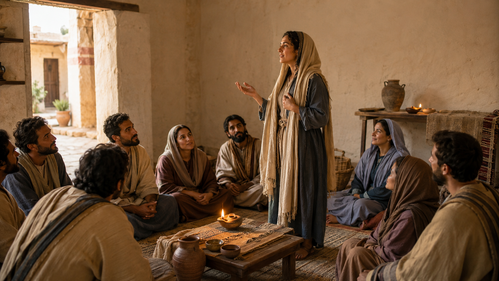
We may not be able to reconstruct every cultural detail behind Paul’s instructions, but one thing becomes clear almost immediately: women are participating in the worship of the church. Paul talks about what happens when a woman “prays or prophesies” in the gathered community. He doesn’t argue about whether she should be doing those things. He assumes that she does – and that’s important.
Whatever else we conclude about this difficult passage, Paul isn't presenting a picture of Christian worship in which women remain silent spectators while men carry out the ministry of the church. Women pray. Women prophesy. Women participate in the Spirit’s work among God’s people.
The controversy concerns how that freedom is being expressed. And that connects this chapter much more closely to what we’ve already been reading than we might initially realize.
For much of this letter, Paul has been teaching the Corinthians that Christian freedom cannot be separated from Christian love. Believers may possess genuine freedom in Christ, but that doesn’t mean every exercise of freedom builds up the church or bears faithful witness to the surrounding community. Now that principle enters the worship gathering.
Apparently, some believers were expressing their freedom in ways that challenged the social customs surrounding gender, honor, and public appearance. We don’t know enough about first-century Corinth to reconstruct every detail confidently, and Paul’s reasoning can be difficult for modern readers to follow. But his larger concern is easier to recognize. Our freedom in Christ is never permission to live as though nobody else matters. Even in worship, we belong to one another.
Near the end of his argument Paul writes: “However, woman isn’t independent from man, and man isn’t independent from woman in the Lord. As woman came from man so also man comes from woman. But everything comes from God” (1 Corinthians 11:11–12 CEB). Those words keep this passage from becoming a simple hierarchy.
Men cannot use Paul’s argument to declare themselves spiritually independent, superior, or more important. Women cannot be pushed to the margins of the worshiping community. Paul insists upon mutual dependence “in the Lord” (v 11).
And then he moves beyond both of them. “Everything comes from God” (v 12). That may be the most important direction for us to follow.
Christian worship is not ultimately about defending our status, asserting our rights, or proving our importance. Worship turns our attention toward the God from whom all of us receive life.
Our gifts come from God. Our place in the Body comes from God. Our freedom comes from God. The grace that makes us one people comes from God. That means nobody enters worship with permission to diminish someone else whom God has called, gifted, and welcomed.
The Church of Jesus Christ needs women and men faithfully responding to the Holy Spirit. We need daughters and sons who will pray. We need women and men who will proclaim the truth of God. We need every member of Christ’s Body offering what grace has entrusted to them for the good of the whole church. At the same time, none of us gets to exercise our freedom without considering how our choices affect the community around us.
Paul is still teaching the lesson we’ve encountered repeatedly in Corinth: maturity isn’t demonstrated by insisting upon everything we are free to do. Mature disciples learn to ask whether our freedom honors God and builds up our brothers and sisters.
Some of the cultural expressions have changed dramatically since Corinth. That principal lesson Paul is sharing with them hasn’t. So maybe the invitation today isn’t to determine the correct Christian hairstyle or establish a dress code for worship. Perhaps it is to examine the way we make room for one another.
Do we recognize the gifts God has placed in people who are different from us? Do we honor the Spirit’s work in women and men alike? Do we sometimes confuse our own cultural expectations with God’s commands? And when we exercise our freedom, are we thinking only about ourselves, or about the Body to which grace has joined us?
In Christ, we are not independent. We belong to God, and because we belong to God, we belong to one another. That changes the way we worship. And it should change the way we honor one another when we gather.
Paul’s discussion of head coverings, hairstyles, men, women, angels, authority, and what is considered “natural” can leave us wondering where to begin. Some Christians have taken these verses and created very specific rules for women in worship. Others have decided the whole thing is so tied to ancient Corinth that there’s nothing left for us to hear. Neither approach seems adequate.
We may not be able to reconstruct every cultural detail behind Paul’s instructions, but one thing becomes clear almost immediately: women are participating in the worship of the church. Paul talks about what happens when a woman “prays or prophesies” in the gathered community. He doesn’t argue about whether she should be doing those things. He assumes that she does – and that’s important.
Whatever else we conclude about this difficult passage, Paul isn't presenting a picture of Christian worship in which women remain silent spectators while men carry out the ministry of the church. Women pray. Women prophesy. Women participate in the Spirit’s work among God’s people.
The controversy concerns how that freedom is being expressed. And that connects this chapter much more closely to what we’ve already been reading than we might initially realize.
For much of this letter, Paul has been teaching the Corinthians that Christian freedom cannot be separated from Christian love. Believers may possess genuine freedom in Christ, but that doesn’t mean every exercise of freedom builds up the church or bears faithful witness to the surrounding community. Now that principle enters the worship gathering.
Apparently, some believers were expressing their freedom in ways that challenged the social customs surrounding gender, honor, and public appearance. We don’t know enough about first-century Corinth to reconstruct every detail confidently, and Paul’s reasoning can be difficult for modern readers to follow. But his larger concern is easier to recognize. Our freedom in Christ is never permission to live as though nobody else matters. Even in worship, we belong to one another.
Near the end of his argument Paul writes: “However, woman isn’t independent from man, and man isn’t independent from woman in the Lord. As woman came from man so also man comes from woman. But everything comes from God” (1 Corinthians 11:11–12 CEB). Those words keep this passage from becoming a simple hierarchy.
Men cannot use Paul’s argument to declare themselves spiritually independent, superior, or more important. Women cannot be pushed to the margins of the worshiping community. Paul insists upon mutual dependence “in the Lord” (v 11).
And then he moves beyond both of them. “Everything comes from God” (v 12). That may be the most important direction for us to follow.
Christian worship is not ultimately about defending our status, asserting our rights, or proving our importance. Worship turns our attention toward the God from whom all of us receive life.
Our gifts come from God. Our place in the Body comes from God. Our freedom comes from God. The grace that makes us one people comes from God. That means nobody enters worship with permission to diminish someone else whom God has called, gifted, and welcomed.
The Church of Jesus Christ needs women and men faithfully responding to the Holy Spirit. We need daughters and sons who will pray. We need women and men who will proclaim the truth of God. We need every member of Christ’s Body offering what grace has entrusted to them for the good of the whole church. At the same time, none of us gets to exercise our freedom without considering how our choices affect the community around us.
Paul is still teaching the lesson we’ve encountered repeatedly in Corinth: maturity isn’t demonstrated by insisting upon everything we are free to do. Mature disciples learn to ask whether our freedom honors God and builds up our brothers and sisters.
Some of the cultural expressions have changed dramatically since Corinth. That principal lesson Paul is sharing with them hasn’t. So maybe the invitation today isn’t to determine the correct Christian hairstyle or establish a dress code for worship. Perhaps it is to examine the way we make room for one another.
Do we recognize the gifts God has placed in people who are different from us? Do we honor the Spirit’s work in women and men alike? Do we sometimes confuse our own cultural expectations with God’s commands? And when we exercise our freedom, are we thinking only about ourselves, or about the Body to which grace has joined us?
In Christ, we are not independent. We belong to God, and because we belong to God, we belong to one another. That changes the way we worship. And it should change the way we honor one another when we gather.
Faith In Action
Pay attention today to one person whose gifts or contribution to the church you might easily overlook. Thank God for the grace at work in them, and find a simple way to encourage their faithful participation in the Body of Christ.
Today's Prayer
Jesus, thank you for calling women and men alike into your Body and giving your people gifts for the building up of the Church. Forgive us when our traditions, preferences, or desire for control keep us from recognizing the grace you have placed in someone else. Teach us to use our freedom with humility and love. By your Spirit, help us honor one another without competing for importance, and make our worship a faithful reflection of the new life you are creating among us. Remind us that everything we have comes from God and that none of us follows you alone. Amen.
Posted in Bible Reading Plan 2026
Recent
Categories
Archive
2026
January
My Word for the Year... LIGHT2026 Reading Plan Reflections - Day 12026 Reading Plan Reflections - Day 22026 Reading Plan Reflections - Day 32026 Reading Plan Reflections - Day 42026 Reading Plan Reflections - Day 5Welcome to 2026 - New Resources2026 Reading Plan Reflections - Day 62026 Reading Plan Reflections - Day 72026 Reading Plan Reflections - Day 8New Year Prayer Focus2026 Reading Plan Reflections - Day 92026 Reading Plan Reflections - Day 102026 Reading Plan Reflections - Day 112026 Reading Plan Reflections - Day 122026 Reading Plan Reflections - Day 132026 Reading Plan Reflections - Day 142026 Reading Plan Reflections - Day 152026 Reading Plan Reflections - Day 16Darkness and Light2026 Reading Plan Reflections - Day 172026 Reading Plan Reflections - Day 182026 Reading Plan Reflections - Day 192026 Reading Plan Reflections - Day 202026 Reading Plan Reflections - Day 212026 Reading Plan Reflections - Day 222026 Reading Plan Reflections - Day 232026 Reading Plan Reflections - Day 242026 Reading Plan Reflections - Day 252026 Reading Plan Reflections - Day 262026 Reading Plan Reflections - Day 272026 Reading Plan Reflections - Day 282026 Reading Plan Reflections - Day 292026 Reading Plan Reflections - Day 30Together as the Body of Christ2026 Reading Plan Reflections - Day 31
February
2026 Reading Plan Reflections - Day 322026 Reading Plan Reflections - Day 332026 Reading Plan Reflections - Day 342026 Reading Plan Reflections - Day 352026 Reading Plan Reflections - Day 362026 Reading Plan Reflections - Day 37This Shouldn’t Need to Be Said...2026 Reading Plan Reflections - Day 382026 Reading Plan Reflections - Day 392026 Reading Plan Reflections - Day 402026 Reading Plan Reflections - Day 412026 Reading Plan Reflections - Day 422026 Reading Plan Reflections - Day 432026 Reading Plan Reflections - Day 442026 Reading Plan Reflections - Day 452026 Reading Plan Reflections - Day 462026 Reading Plan Reflections - Day 472026 Reading Plan Reflections - Day 482026 Reading Plan Reflections - Day 492026 Reading Plan Reflections - Day 502026 Reading Plan Reflections - Day 512026 Reading Plan Reflections - Day 522026 Reading Plan Reflections - Day 532026 Reading Plan Reflections - Day 542026 Reading Plan Reflections - Day 552026 Reading Plan Reflections - Day 562026 Reading Plan Reflections - Day 572026 Reading Plan Reflections - Day 582026 Reading Plan Reflections - Day 59
March
2026 Reading Plan Reflections - Day 602026 Reading Plan Reflections - Day 612026 Reading Plan Reflections - Day 622026 Reading Plan Reflections - Day 632026 Reading Plan Reflections - Day 642026 Reading Plan Reflections - Day 652026 Reading Plan Reflections - Day 662026 Reading Plan Reflections - Day 672026 Reading Plan Reflections - Day 682026 Reading Plan Reflections - Day 692026 Reading Plan Reflections - Day 702026 Reading Plan Reflections - Day 712026 Reading Plan Reflections - Day 722026 Reading Plan Reflections - Day 732026 Reading Plan Reflections - Day 742026 Reading Plan Reflections - Day 752026 Reading Plan Reflections - Day 762026 Reading Plan Reflections - Day 772026 Reading Plan Reflections - Day 782026 Reading Plan Reflections - Day 792026 Reading Plan Reflections - Day 802026 Reading Plan Reflections - Day 812026 Reading Plan Reflections - Day 822026 Reading Plan Reflections - Day 832026 Reading Plan Reflections - Day 84
April
2026 Reading Plan Reflections - Days 85 & 862026 Reading Plan Reflections - Day 872026 Reading Plan Reflections - Day 882026 Reading Plan Reflections - Day 892026 Reading Plan Reflections - Day 902026 Reading Plan Reflections - Day 912026 Reading Plan Reflections - Day 922026 Reading Plan Reflections - Day 932026 Reading Plan Reflections - Day 942026 Reading Plan Reflections - Day 95
No Comments