
2026 Reading Plan Reflections - Day 244
When We Come Together...
1 Corinthians 11:17–34
“Every time you eat this bread and drink this cup, you broadcast the death of the Lord until he comes.” 1 Corinthians 11:26 CEB
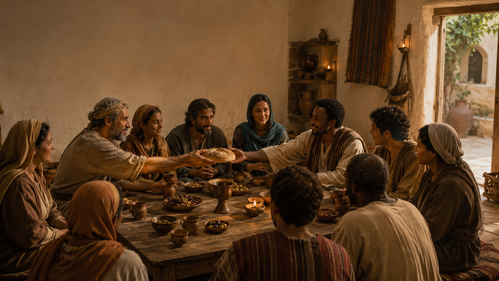
It’s possible to receive Communion and contradict Communion at the same time. That was the problem in Corinth.
When the church gathered for the Lord’s Supper, they weren’t gathering in a church building and receiving a small piece of bread and a cup. The Lord’s Supper was part of an actual shared meal. But instead of that meal revealing the new family Christ had created, the Corinthians were allowing the divisions of their culture to follow them right to the table.
Some had plenty. Others went hungry. Some were treated as important. Others were humiliated. The world around them had clear lines separating rich from poor and powerful from powerless. Those lines were supposed to disappear within the family of God. Instead, the Corinthians were drawing them again around the Lord’s Table.
Paul tells them, “When you meet together, it is not possible to eat the Lord’s Supper” (v. 20 CEB). They could eat the bread and drink the cup. They could repeat the right words. They could call what they were doing the Lord’s Supper. But their life together was denying what the meal proclaimed.
That’s why Paul takes them back to Jesus. “This is my body, which is for you. Do this in remembrance of me... This cup is the new covenant in my blood. Do this, every time you drink it, in remembrance of me.” And then Paul explains, “Every time you eat this bread and drink this cup, you broadcast the death of the Lord until he comes” (vv. 24–26 CEB).
Communion says something. When we gather around the Table, we proclaim that Jesus Christ gave himself for us. We remember a grace none of us earned. We receive together because every one of us comes empty-handed, dependent upon the same crucified and risen Lord. There’s no premium seat at this Table.
No one receives a better portion because they’ve been a Christian longer, know more Scripture, have more money, hold a particular position, or have managed to get their life together. We come by grace.
That helps us understand Paul’s warning about eating and drinking “without correctly understanding the body” (v. 29). We’ve sometimes heard these verses primarily as a warning to look deeply within ourselves and make certain we are spiritually worthy before receiving Communion.
Self-examination certainly belongs here. Paul explicitly tells us to examine ourselves. But the Corinthians’ problem wasn’t that they had forgotten some private sin before taking the bread. They had failed to recognize what Christ had made them together. They were receiving the body of Christ while dishonoring the Body of Christ.
So examination at the Table asks more than, “Have I sinned?” It also asks, “Am I willing for the grace revealed here to reshape how I love the people around me?” That’s especially worth remembering as we prepare to celebrate Communion together this weekend.
John Wesley believed Christians should receive the Lord’s Supper as often as they had opportunity. He understood Communion not as a reward for people who had reached some spiritual standard, but as one of the means through which God gives grace, strengthens faith, and leads us toward holiness. Wesley urged Christians not to neglect the Table because Christ commanded it and because, in his words and theology, God meets us there with mercy that strengthens us to love and obey.
I understand that conviction more and more. Communion isn’t an occasional interruption in the Christian life. It tells the story of the Christian life. Christ gives himself for us. Grace brings us together. We receive what we could never provide for ourselves. And then we are sent to become what we have received: the Body of Christ, given in love for the world.
This weekend, we’ll come to the same Table. Before we do, Paul calls us to examine ourselves—not so that fear keeps us away, but so grace can keep forming us. Are there divisions we’ve allowed the world to teach us that Christ is trying to erase? Is there someone within the Body we’ve dismissed, overlooked, resented, or considered less important?
The bread and cup proclaim that Christ has made us one. When we come together, may our life together say the same thing.
When the church gathered for the Lord’s Supper, they weren’t gathering in a church building and receiving a small piece of bread and a cup. The Lord’s Supper was part of an actual shared meal. But instead of that meal revealing the new family Christ had created, the Corinthians were allowing the divisions of their culture to follow them right to the table.
Some had plenty. Others went hungry. Some were treated as important. Others were humiliated. The world around them had clear lines separating rich from poor and powerful from powerless. Those lines were supposed to disappear within the family of God. Instead, the Corinthians were drawing them again around the Lord’s Table.
Paul tells them, “When you meet together, it is not possible to eat the Lord’s Supper” (v. 20 CEB). They could eat the bread and drink the cup. They could repeat the right words. They could call what they were doing the Lord’s Supper. But their life together was denying what the meal proclaimed.
That’s why Paul takes them back to Jesus. “This is my body, which is for you. Do this in remembrance of me... This cup is the new covenant in my blood. Do this, every time you drink it, in remembrance of me.” And then Paul explains, “Every time you eat this bread and drink this cup, you broadcast the death of the Lord until he comes” (vv. 24–26 CEB).
Communion says something. When we gather around the Table, we proclaim that Jesus Christ gave himself for us. We remember a grace none of us earned. We receive together because every one of us comes empty-handed, dependent upon the same crucified and risen Lord. There’s no premium seat at this Table.
No one receives a better portion because they’ve been a Christian longer, know more Scripture, have more money, hold a particular position, or have managed to get their life together. We come by grace.
That helps us understand Paul’s warning about eating and drinking “without correctly understanding the body” (v. 29). We’ve sometimes heard these verses primarily as a warning to look deeply within ourselves and make certain we are spiritually worthy before receiving Communion.
Self-examination certainly belongs here. Paul explicitly tells us to examine ourselves. But the Corinthians’ problem wasn’t that they had forgotten some private sin before taking the bread. They had failed to recognize what Christ had made them together. They were receiving the body of Christ while dishonoring the Body of Christ.
So examination at the Table asks more than, “Have I sinned?” It also asks, “Am I willing for the grace revealed here to reshape how I love the people around me?” That’s especially worth remembering as we prepare to celebrate Communion together this weekend.
John Wesley believed Christians should receive the Lord’s Supper as often as they had opportunity. He understood Communion not as a reward for people who had reached some spiritual standard, but as one of the means through which God gives grace, strengthens faith, and leads us toward holiness. Wesley urged Christians not to neglect the Table because Christ commanded it and because, in his words and theology, God meets us there with mercy that strengthens us to love and obey.
I understand that conviction more and more. Communion isn’t an occasional interruption in the Christian life. It tells the story of the Christian life. Christ gives himself for us. Grace brings us together. We receive what we could never provide for ourselves. And then we are sent to become what we have received: the Body of Christ, given in love for the world.
This weekend, we’ll come to the same Table. Before we do, Paul calls us to examine ourselves—not so that fear keeps us away, but so grace can keep forming us. Are there divisions we’ve allowed the world to teach us that Christ is trying to erase? Is there someone within the Body we’ve dismissed, overlooked, resented, or considered less important?
The bread and cup proclaim that Christ has made us one. When we come together, may our life together say the same thing.
Faith In Action
Before the end of today, spend a few quiet minutes preparing for Communion. Ask God, “Is there anyone within the Body of Christ I am failing to love as someone for whom Jesus gave himself?” If someone comes to mind, pray for that person and take one concrete step toward love, reconciliation, or renewed fellowship.
Today's Prayer
Jesus, thank you for giving yourself for us and welcoming us to your Table by grace. Examine our hearts and reveal anything within us that contradicts the love we proclaim when we receive the bread and cup. Tear down the divisions we have carried into your Church, and teach us to recognize one another as members of your Body. As we gather at your Table, meet us with the grace we need. Strengthen our faith, deepen our love, make us holy, and form us into a people whose life together faithfully proclaims your death and resurrection until you come. Amen.
Posted in Bible Reading Plan 2026
Recent
Categories
Archive
2026
January
My Word for the Year... LIGHT2026 Reading Plan Reflections - Day 12026 Reading Plan Reflections - Day 22026 Reading Plan Reflections - Day 32026 Reading Plan Reflections - Day 42026 Reading Plan Reflections - Day 5Welcome to 2026 - New Resources2026 Reading Plan Reflections - Day 62026 Reading Plan Reflections - Day 72026 Reading Plan Reflections - Day 8New Year Prayer Focus2026 Reading Plan Reflections - Day 92026 Reading Plan Reflections - Day 102026 Reading Plan Reflections - Day 112026 Reading Plan Reflections - Day 122026 Reading Plan Reflections - Day 132026 Reading Plan Reflections - Day 142026 Reading Plan Reflections - Day 152026 Reading Plan Reflections - Day 16Darkness and Light2026 Reading Plan Reflections - Day 172026 Reading Plan Reflections - Day 182026 Reading Plan Reflections - Day 192026 Reading Plan Reflections - Day 202026 Reading Plan Reflections - Day 212026 Reading Plan Reflections - Day 222026 Reading Plan Reflections - Day 232026 Reading Plan Reflections - Day 242026 Reading Plan Reflections - Day 252026 Reading Plan Reflections - Day 262026 Reading Plan Reflections - Day 272026 Reading Plan Reflections - Day 282026 Reading Plan Reflections - Day 292026 Reading Plan Reflections - Day 30Together as the Body of Christ2026 Reading Plan Reflections - Day 31
February
2026 Reading Plan Reflections - Day 322026 Reading Plan Reflections - Day 332026 Reading Plan Reflections - Day 342026 Reading Plan Reflections - Day 352026 Reading Plan Reflections - Day 362026 Reading Plan Reflections - Day 37This Shouldn’t Need to Be Said...2026 Reading Plan Reflections - Day 382026 Reading Plan Reflections - Day 392026 Reading Plan Reflections - Day 402026 Reading Plan Reflections - Day 412026 Reading Plan Reflections - Day 422026 Reading Plan Reflections - Day 432026 Reading Plan Reflections - Day 442026 Reading Plan Reflections - Day 452026 Reading Plan Reflections - Day 462026 Reading Plan Reflections - Day 472026 Reading Plan Reflections - Day 482026 Reading Plan Reflections - Day 492026 Reading Plan Reflections - Day 502026 Reading Plan Reflections - Day 512026 Reading Plan Reflections - Day 522026 Reading Plan Reflections - Day 532026 Reading Plan Reflections - Day 542026 Reading Plan Reflections - Day 552026 Reading Plan Reflections - Day 562026 Reading Plan Reflections - Day 572026 Reading Plan Reflections - Day 582026 Reading Plan Reflections - Day 59
March
2026 Reading Plan Reflections - Day 602026 Reading Plan Reflections - Day 612026 Reading Plan Reflections - Day 622026 Reading Plan Reflections - Day 632026 Reading Plan Reflections - Day 642026 Reading Plan Reflections - Day 652026 Reading Plan Reflections - Day 662026 Reading Plan Reflections - Day 672026 Reading Plan Reflections - Day 682026 Reading Plan Reflections - Day 692026 Reading Plan Reflections - Day 702026 Reading Plan Reflections - Day 712026 Reading Plan Reflections - Day 722026 Reading Plan Reflections - Day 732026 Reading Plan Reflections - Day 742026 Reading Plan Reflections - Day 752026 Reading Plan Reflections - Day 762026 Reading Plan Reflections - Day 772026 Reading Plan Reflections - Day 782026 Reading Plan Reflections - Day 792026 Reading Plan Reflections - Day 802026 Reading Plan Reflections - Day 812026 Reading Plan Reflections - Day 822026 Reading Plan Reflections - Day 832026 Reading Plan Reflections - Day 84
April
2026 Reading Plan Reflections - Days 85 & 862026 Reading Plan Reflections - Day 872026 Reading Plan Reflections - Day 882026 Reading Plan Reflections - Day 892026 Reading Plan Reflections - Day 902026 Reading Plan Reflections - Day 912026 Reading Plan Reflections - Day 922026 Reading Plan Reflections - Day 932026 Reading Plan Reflections - Day 942026 Reading Plan Reflections - Day 95
No Comments