
2026 Reading Plan Reflections - Day 246
The More Excellent Way
1 Corinthians 13
“You are the body of Christ and parts of each other.” 1 Corinthians 12:27 CEB
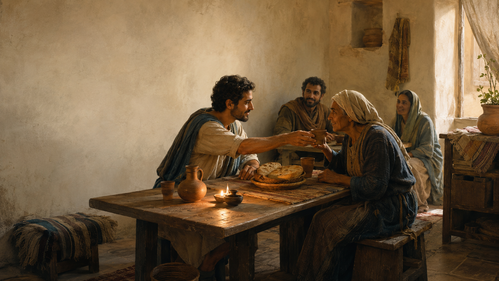
This chapter is so familiar that it can become easy to hear it apart from the argument Paul is actually making. We hear it at weddings. We print its words on signs. We recognize the rhythm of “love is patient, love is kind.” But Paul didn’t originally write these words for a wedding ceremony. He wrote them to a divided church.
The Corinthians have been arguing about status, spiritual gifts, leadership, worship, knowledge, freedom, and who matters most. In chapter 12, Paul reminded them that they are one Body with many members. Different gifts come from the same Spirit, and every member belongs. Then Paul says he will show them “an even better way” (12:31). That way is love.
This means chapter 13 is not a pleasant interruption between two chapters about spiritual gifts. It is the center of the whole discussion. Paul is telling the Corinthians that they can possess remarkable gifts, impressive faith, deep knowledge, and even extraordinary generosity and still completely miss the character of Jesus.
Without love, even the most spiritual-looking life can become empty noise. We can know Scripture and still be impatient. We can speak confidently about truth and still insist on getting our own way. We can serve constantly and quietly resent the people we serve. We can possess gifts that genuinely come from the Holy Spirit and still use them in ways that draw attention toward ourselves rather than build up the Body.
The problem isn't necessarily that the gift is false. The problem is that a genuine gift can be exercised without the Christlike character that should govern it. So Paul describes the kind of love that must shape Christian community.
Love is patient and kind. It isn't jealous, boastful, arrogant, or rude. It doesn't insist on its own way. It isn't irritable. It doesn't keep a record of wrongs. It rejoices with the truth. It bears, trusts, hopes, and endures. Read slowly, that list becomes uncomfortable.
Paul isn't describing warm feelings toward people we already enjoy. He is describing a Spirit-shaped way of living with other people, especially when patience, humility, forgiveness, and endurance actually cost us something. This is holiness becoming visible in relationship.
The Holy Spirit isn't forming us into people who are merely more knowledgeable, more gifted, or more religious. The Spirit is forming us into people who increasingly resemble Jesus. And the clearest evidence of that formation is holy love.
Then Paul turns toward the future. Prophecy will end. Tongues will cease. Knowledge, as we experience it now, is incomplete. These gifts serve an important purpose in the present life of the Church, but they belong to this present age. Love reaches farther.
Paul says that one day we will see “face-to-face.” What we now understand only partially will become clear. God's work will be brought to completion. And love will remain.
That's why Paul calls faith, hope, and love enduring realities and then says that “the greatest of these is love.” Faith trusts the God who has revealed grace to us in Jesus. Hope looks toward the future God has promised through Jesus' resurrection. Love begins living the life of that future kingdom now. In other words, love isn't merely Christian duty. It is preparation for eternity.
God is forming a people whose lives already begin to reflect the world God is bringing to completion: a world without rivalry, resentment, arrogance, division, or the constant struggle to prove who matters most. That makes Paul's words especially important after everything we've been reading in Corinthians.
At the Lord's Table, social divisions were contradicting the gospel. Among the spiritual gifts, people were comparing importance and status. Paul's answer isn't to eliminate differences. It is to teach the Church how grace transforms the way different people belong to one another.
Love is the more excellent way. And this kind of love is not produced by gritting our teeth and trying harder to tolerate difficult people. It grows as we surrender ourselves to the Holy Spirit, who pours God's love into our lives and forms the character of Christ within us.
So perhaps today we shouldn't read this chapter primarily asking, “Who do I wish would love me like this?” We might instead place our own lives underneath Paul's words.
Where is love teaching me patience? Where have I been insisting on my own way? Whose failure am I still keeping carefully recorded? Where is the Spirit inviting me to become more like Jesus?
The gifts God gives us matter. Our knowledge matters. Our service matters. But without love, we can use all of them badly.
Love is what makes the gifts serve their proper purpose. Love is what makes the Body look like Christ. And love is the life God is preparing us to live forever.
The Corinthians have been arguing about status, spiritual gifts, leadership, worship, knowledge, freedom, and who matters most. In chapter 12, Paul reminded them that they are one Body with many members. Different gifts come from the same Spirit, and every member belongs. Then Paul says he will show them “an even better way” (12:31). That way is love.
This means chapter 13 is not a pleasant interruption between two chapters about spiritual gifts. It is the center of the whole discussion. Paul is telling the Corinthians that they can possess remarkable gifts, impressive faith, deep knowledge, and even extraordinary generosity and still completely miss the character of Jesus.
Without love, even the most spiritual-looking life can become empty noise. We can know Scripture and still be impatient. We can speak confidently about truth and still insist on getting our own way. We can serve constantly and quietly resent the people we serve. We can possess gifts that genuinely come from the Holy Spirit and still use them in ways that draw attention toward ourselves rather than build up the Body.
The problem isn't necessarily that the gift is false. The problem is that a genuine gift can be exercised without the Christlike character that should govern it. So Paul describes the kind of love that must shape Christian community.
Love is patient and kind. It isn't jealous, boastful, arrogant, or rude. It doesn't insist on its own way. It isn't irritable. It doesn't keep a record of wrongs. It rejoices with the truth. It bears, trusts, hopes, and endures. Read slowly, that list becomes uncomfortable.
Paul isn't describing warm feelings toward people we already enjoy. He is describing a Spirit-shaped way of living with other people, especially when patience, humility, forgiveness, and endurance actually cost us something. This is holiness becoming visible in relationship.
The Holy Spirit isn't forming us into people who are merely more knowledgeable, more gifted, or more religious. The Spirit is forming us into people who increasingly resemble Jesus. And the clearest evidence of that formation is holy love.
Then Paul turns toward the future. Prophecy will end. Tongues will cease. Knowledge, as we experience it now, is incomplete. These gifts serve an important purpose in the present life of the Church, but they belong to this present age. Love reaches farther.
Paul says that one day we will see “face-to-face.” What we now understand only partially will become clear. God's work will be brought to completion. And love will remain.
That's why Paul calls faith, hope, and love enduring realities and then says that “the greatest of these is love.” Faith trusts the God who has revealed grace to us in Jesus. Hope looks toward the future God has promised through Jesus' resurrection. Love begins living the life of that future kingdom now. In other words, love isn't merely Christian duty. It is preparation for eternity.
God is forming a people whose lives already begin to reflect the world God is bringing to completion: a world without rivalry, resentment, arrogance, division, or the constant struggle to prove who matters most. That makes Paul's words especially important after everything we've been reading in Corinthians.
At the Lord's Table, social divisions were contradicting the gospel. Among the spiritual gifts, people were comparing importance and status. Paul's answer isn't to eliminate differences. It is to teach the Church how grace transforms the way different people belong to one another.
Love is the more excellent way. And this kind of love is not produced by gritting our teeth and trying harder to tolerate difficult people. It grows as we surrender ourselves to the Holy Spirit, who pours God's love into our lives and forms the character of Christ within us.
So perhaps today we shouldn't read this chapter primarily asking, “Who do I wish would love me like this?” We might instead place our own lives underneath Paul's words.
Where is love teaching me patience? Where have I been insisting on my own way? Whose failure am I still keeping carefully recorded? Where is the Spirit inviting me to become more like Jesus?
The gifts God gives us matter. Our knowledge matters. Our service matters. But without love, we can use all of them badly.
Love is what makes the gifts serve their proper purpose. Love is what makes the Body look like Christ. And love is the life God is preparing us to live forever.
Faith In Action
Read 1 Corinthians 13:4–7 slowly today. Choose one description of love that exposes an area where the Holy Spirit is already inviting you to grow. Ask God for grace, then practice that one expression of Christlike love toward someone before the day ends.
Today's Prayer
Jesus, your life shows us what love truly looks like. Forgive us for the ways we can value being right, gifted, recognized, or respected more than becoming like you. Holy Spirit, form your love within us. Make us patient where we are hurried, kind where we are frustrated, humble where we want recognition, and forgiving where we have kept old wounds close. Teach us to use every gift you have given for the good of your Body. Shape our life together so that the Church reflects the coming kingdom even now. Lead us in the more excellent way, until the love we practice imperfectly today is brought to completion in your presence. Amen.
Posted in Bible Reading Plan 2026
Recent
Categories
Archive
2026
January
My Word for the Year... LIGHT2026 Reading Plan Reflections - Day 12026 Reading Plan Reflections - Day 22026 Reading Plan Reflections - Day 32026 Reading Plan Reflections - Day 42026 Reading Plan Reflections - Day 5Welcome to 2026 - New Resources2026 Reading Plan Reflections - Day 62026 Reading Plan Reflections - Day 72026 Reading Plan Reflections - Day 8New Year Prayer Focus2026 Reading Plan Reflections - Day 92026 Reading Plan Reflections - Day 102026 Reading Plan Reflections - Day 112026 Reading Plan Reflections - Day 122026 Reading Plan Reflections - Day 132026 Reading Plan Reflections - Day 142026 Reading Plan Reflections - Day 152026 Reading Plan Reflections - Day 16Darkness and Light2026 Reading Plan Reflections - Day 172026 Reading Plan Reflections - Day 182026 Reading Plan Reflections - Day 192026 Reading Plan Reflections - Day 202026 Reading Plan Reflections - Day 212026 Reading Plan Reflections - Day 222026 Reading Plan Reflections - Day 232026 Reading Plan Reflections - Day 242026 Reading Plan Reflections - Day 252026 Reading Plan Reflections - Day 262026 Reading Plan Reflections - Day 272026 Reading Plan Reflections - Day 282026 Reading Plan Reflections - Day 292026 Reading Plan Reflections - Day 30Together as the Body of Christ2026 Reading Plan Reflections - Day 31
February
2026 Reading Plan Reflections - Day 322026 Reading Plan Reflections - Day 332026 Reading Plan Reflections - Day 342026 Reading Plan Reflections - Day 352026 Reading Plan Reflections - Day 362026 Reading Plan Reflections - Day 37This Shouldn’t Need to Be Said...2026 Reading Plan Reflections - Day 382026 Reading Plan Reflections - Day 392026 Reading Plan Reflections - Day 402026 Reading Plan Reflections - Day 412026 Reading Plan Reflections - Day 422026 Reading Plan Reflections - Day 432026 Reading Plan Reflections - Day 442026 Reading Plan Reflections - Day 452026 Reading Plan Reflections - Day 462026 Reading Plan Reflections - Day 472026 Reading Plan Reflections - Day 482026 Reading Plan Reflections - Day 492026 Reading Plan Reflections - Day 502026 Reading Plan Reflections - Day 512026 Reading Plan Reflections - Day 522026 Reading Plan Reflections - Day 532026 Reading Plan Reflections - Day 542026 Reading Plan Reflections - Day 552026 Reading Plan Reflections - Day 562026 Reading Plan Reflections - Day 572026 Reading Plan Reflections - Day 582026 Reading Plan Reflections - Day 59
March
2026 Reading Plan Reflections - Day 602026 Reading Plan Reflections - Day 612026 Reading Plan Reflections - Day 622026 Reading Plan Reflections - Day 632026 Reading Plan Reflections - Day 642026 Reading Plan Reflections - Day 652026 Reading Plan Reflections - Day 662026 Reading Plan Reflections - Day 672026 Reading Plan Reflections - Day 682026 Reading Plan Reflections - Day 692026 Reading Plan Reflections - Day 702026 Reading Plan Reflections - Day 712026 Reading Plan Reflections - Day 722026 Reading Plan Reflections - Day 732026 Reading Plan Reflections - Day 742026 Reading Plan Reflections - Day 752026 Reading Plan Reflections - Day 762026 Reading Plan Reflections - Day 772026 Reading Plan Reflections - Day 782026 Reading Plan Reflections - Day 792026 Reading Plan Reflections - Day 802026 Reading Plan Reflections - Day 812026 Reading Plan Reflections - Day 822026 Reading Plan Reflections - Day 832026 Reading Plan Reflections - Day 84
April
2026 Reading Plan Reflections - Days 85 & 862026 Reading Plan Reflections - Day 872026 Reading Plan Reflections - Day 882026 Reading Plan Reflections - Day 892026 Reading Plan Reflections - Day 902026 Reading Plan Reflections - Day 912026 Reading Plan Reflections - Day 922026 Reading Plan Reflections - Day 932026 Reading Plan Reflections - Day 942026 Reading Plan Reflections - Day 95
No Comments