
2026 Reading Plan Reflections - Day 247
Built Up Together
1 Corinthians 14:1–19
“Since you are eager for spiritual gifts, strive to excel in them so that you may build up the church.” 1 Corinthians 14:12 CEB
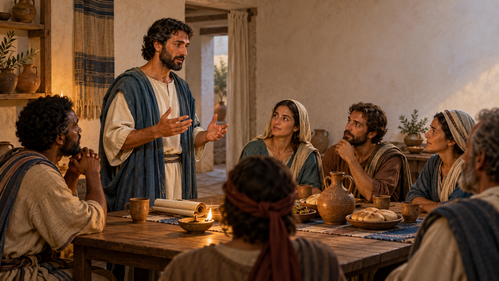
After everything Paul has said about spiritual gifts, he gives the Corinthians a practical standard for judging how those gifts should be used: Does this build up the Church?
That question grows directly out of the previous two chapters. In chapter 12, Paul reminded the Corinthians that the Holy Spirit gives different gifts to different members, but all of them belong to one Body. In chapter 13, he showed them the way that holds all those gifts together: love.
Now Paul brings those truths into the gathered worship of the Church. “Pursue love,” he begins, “and strive for spiritual gifts” (14:1). Paul isn’t suspicious of spiritual gifts. He doesn’t tell the Corinthians to become less spiritual, less passionate, or less open to the work of the Holy Spirit. In fact, he encourages them to desire the Spirit’s gifts. But love changes what we desire those gifts for.
The Corinthians seem to have been especially impressed by speaking in tongues. Paul doesn’t dismiss the gift. He says plainly that he speaks in tongues himself. There is value in a deeply personal expression of prayer and praise to God.
The problem comes when something that strengthens one believer personally becomes the center of public worship while everyone else is left unable to understand. Paul’s concern isn’t, “Did you have a meaningful spiritual experience?” His concern is, “Did the Body of Christ become stronger because you were here?”
That is why he emphasizes prophecy—Spirit-enabled speech that can be understood and can encourage, instruct, strengthen, or comfort the congregation. In gathered worship, understandable words can become grace offered to another person.
Paul illustrates this with music. A flute or stringed instrument can make plenty of noise, but unless the notes are distinct, no one recognizes the melody. Sound alone isn’t music. In the same way, speaking during worship isn’t valuable simply because it sounds spiritual. What is offered should communicate something that helps God’s people become more faithful.
That principle stretches far beyond the particular debate over tongues and prophecy. We can come to worship asking mostly what we received. Did I like the songs? Did the sermon speak to me? Did I feel something? Did worship meet my needs?
Those aren’t always bad questions. God does meet us personally. We need places where our own faith is nourished, our prayers deepen, and our awareness of God grows. But Paul gives us another question to carry into worship: How did my presence help build up the Body?
Maybe we sang when someone beside us struggled to sing. Maybe we listened carefully when another believer shared something important. Maybe we welcomed someone who entered the room uncertain whether they belonged. Maybe we prayed, encouraged, taught, served, gave, or spoke words another person could actually understand and receive.
The Spirit’s work in us is never meant to end with us. That is part of what holiness looks like in community. As the Holy Spirit forms us in Christlike love, our attention begins to move outward. We become less concerned with displaying what God has given us and more concerned with offering it faithfully for the good of others.
Paul also refuses to separate spiritual passion from thoughtful understanding. “I will pray with the spirit, but I will pray with the mind also,” he says. “I will sing praise with the spirit, but I will sing praise with the mind also” (14:15).
Christian maturity doesn’t require us to choose between heartfelt worship and thoughtful worship. God desires the whole person. Mind and spirit. Understanding and affection. Truth and praise.
The Holy Spirit isn’t forming people who leave their minds at the church door, nor disciples whose faith never reaches deeper than intellectual ideas. The Spirit is forming whole people who love God with everything they are and who use everything God has given them to love their neighbors well.
Paul finally makes his priority unmistakable: he would rather speak “five words with my mind, in order to instruct others also, than ten thousand words in a tongue” (14:19). Five understandable words that strengthen another believer are worth more than ten thousand impressive words that serve only ourselves. That’s a challenging measure of spiritual maturity.
The question isn’t how gifted we appear. It’s whether love is making those gifts useful. The Church becomes stronger when the Spirit’s work in each of us becomes grace shared among all of us.
That question grows directly out of the previous two chapters. In chapter 12, Paul reminded the Corinthians that the Holy Spirit gives different gifts to different members, but all of them belong to one Body. In chapter 13, he showed them the way that holds all those gifts together: love.
Now Paul brings those truths into the gathered worship of the Church. “Pursue love,” he begins, “and strive for spiritual gifts” (14:1). Paul isn’t suspicious of spiritual gifts. He doesn’t tell the Corinthians to become less spiritual, less passionate, or less open to the work of the Holy Spirit. In fact, he encourages them to desire the Spirit’s gifts. But love changes what we desire those gifts for.
The Corinthians seem to have been especially impressed by speaking in tongues. Paul doesn’t dismiss the gift. He says plainly that he speaks in tongues himself. There is value in a deeply personal expression of prayer and praise to God.
The problem comes when something that strengthens one believer personally becomes the center of public worship while everyone else is left unable to understand. Paul’s concern isn’t, “Did you have a meaningful spiritual experience?” His concern is, “Did the Body of Christ become stronger because you were here?”
That is why he emphasizes prophecy—Spirit-enabled speech that can be understood and can encourage, instruct, strengthen, or comfort the congregation. In gathered worship, understandable words can become grace offered to another person.
Paul illustrates this with music. A flute or stringed instrument can make plenty of noise, but unless the notes are distinct, no one recognizes the melody. Sound alone isn’t music. In the same way, speaking during worship isn’t valuable simply because it sounds spiritual. What is offered should communicate something that helps God’s people become more faithful.
That principle stretches far beyond the particular debate over tongues and prophecy. We can come to worship asking mostly what we received. Did I like the songs? Did the sermon speak to me? Did I feel something? Did worship meet my needs?
Those aren’t always bad questions. God does meet us personally. We need places where our own faith is nourished, our prayers deepen, and our awareness of God grows. But Paul gives us another question to carry into worship: How did my presence help build up the Body?
Maybe we sang when someone beside us struggled to sing. Maybe we listened carefully when another believer shared something important. Maybe we welcomed someone who entered the room uncertain whether they belonged. Maybe we prayed, encouraged, taught, served, gave, or spoke words another person could actually understand and receive.
The Spirit’s work in us is never meant to end with us. That is part of what holiness looks like in community. As the Holy Spirit forms us in Christlike love, our attention begins to move outward. We become less concerned with displaying what God has given us and more concerned with offering it faithfully for the good of others.
Paul also refuses to separate spiritual passion from thoughtful understanding. “I will pray with the spirit, but I will pray with the mind also,” he says. “I will sing praise with the spirit, but I will sing praise with the mind also” (14:15).
Christian maturity doesn’t require us to choose between heartfelt worship and thoughtful worship. God desires the whole person. Mind and spirit. Understanding and affection. Truth and praise.
The Holy Spirit isn’t forming people who leave their minds at the church door, nor disciples whose faith never reaches deeper than intellectual ideas. The Spirit is forming whole people who love God with everything they are and who use everything God has given them to love their neighbors well.
Paul finally makes his priority unmistakable: he would rather speak “five words with my mind, in order to instruct others also, than ten thousand words in a tongue” (14:19). Five understandable words that strengthen another believer are worth more than ten thousand impressive words that serve only ourselves. That’s a challenging measure of spiritual maturity.
The question isn’t how gifted we appear. It’s whether love is making those gifts useful. The Church becomes stronger when the Spirit’s work in each of us becomes grace shared among all of us.
Faith In Action
Think about the next time you gather with other believers. Identify one specific way your participation can help someone else follow Jesus—an encouraging conversation, attentive listening, a prayer, an act of service, or a clear word of truth. Ask the Holy Spirit to help you offer it in love.
Today's Prayer
Jesus, thank you for making us part of your Body and for giving your Church everything we need through the Holy Spirit. Keep us from treating your gifts as things to display or keep for ourselves. Teach us to pursue love and to use what you have given us for the good of others. Bring our minds, hearts, words, and actions together in worship that honors you. Help us notice the people around us and ask how our presence can strengthen their faith. Form us into a mature and holy people whose life together makes your grace easier to see, hear, and understand. Amen.
Posted in Bible Reading Plan 2026
Recent
Categories
Archive
2026
January
My Word for the Year... LIGHT2026 Reading Plan Reflections - Day 12026 Reading Plan Reflections - Day 22026 Reading Plan Reflections - Day 32026 Reading Plan Reflections - Day 42026 Reading Plan Reflections - Day 5Welcome to 2026 - New Resources2026 Reading Plan Reflections - Day 62026 Reading Plan Reflections - Day 72026 Reading Plan Reflections - Day 8New Year Prayer Focus2026 Reading Plan Reflections - Day 92026 Reading Plan Reflections - Day 102026 Reading Plan Reflections - Day 112026 Reading Plan Reflections - Day 122026 Reading Plan Reflections - Day 132026 Reading Plan Reflections - Day 142026 Reading Plan Reflections - Day 152026 Reading Plan Reflections - Day 16Darkness and Light2026 Reading Plan Reflections - Day 172026 Reading Plan Reflections - Day 182026 Reading Plan Reflections - Day 192026 Reading Plan Reflections - Day 202026 Reading Plan Reflections - Day 212026 Reading Plan Reflections - Day 222026 Reading Plan Reflections - Day 232026 Reading Plan Reflections - Day 242026 Reading Plan Reflections - Day 252026 Reading Plan Reflections - Day 262026 Reading Plan Reflections - Day 272026 Reading Plan Reflections - Day 282026 Reading Plan Reflections - Day 292026 Reading Plan Reflections - Day 30Together as the Body of Christ2026 Reading Plan Reflections - Day 31
February
2026 Reading Plan Reflections - Day 322026 Reading Plan Reflections - Day 332026 Reading Plan Reflections - Day 342026 Reading Plan Reflections - Day 352026 Reading Plan Reflections - Day 362026 Reading Plan Reflections - Day 37This Shouldn’t Need to Be Said...2026 Reading Plan Reflections - Day 382026 Reading Plan Reflections - Day 392026 Reading Plan Reflections - Day 402026 Reading Plan Reflections - Day 412026 Reading Plan Reflections - Day 422026 Reading Plan Reflections - Day 432026 Reading Plan Reflections - Day 442026 Reading Plan Reflections - Day 452026 Reading Plan Reflections - Day 462026 Reading Plan Reflections - Day 472026 Reading Plan Reflections - Day 482026 Reading Plan Reflections - Day 492026 Reading Plan Reflections - Day 502026 Reading Plan Reflections - Day 512026 Reading Plan Reflections - Day 522026 Reading Plan Reflections - Day 532026 Reading Plan Reflections - Day 542026 Reading Plan Reflections - Day 552026 Reading Plan Reflections - Day 562026 Reading Plan Reflections - Day 572026 Reading Plan Reflections - Day 582026 Reading Plan Reflections - Day 59
March
2026 Reading Plan Reflections - Day 602026 Reading Plan Reflections - Day 612026 Reading Plan Reflections - Day 622026 Reading Plan Reflections - Day 632026 Reading Plan Reflections - Day 642026 Reading Plan Reflections - Day 652026 Reading Plan Reflections - Day 662026 Reading Plan Reflections - Day 672026 Reading Plan Reflections - Day 682026 Reading Plan Reflections - Day 692026 Reading Plan Reflections - Day 702026 Reading Plan Reflections - Day 712026 Reading Plan Reflections - Day 722026 Reading Plan Reflections - Day 732026 Reading Plan Reflections - Day 742026 Reading Plan Reflections - Day 752026 Reading Plan Reflections - Day 762026 Reading Plan Reflections - Day 772026 Reading Plan Reflections - Day 782026 Reading Plan Reflections - Day 792026 Reading Plan Reflections - Day 802026 Reading Plan Reflections - Day 812026 Reading Plan Reflections - Day 822026 Reading Plan Reflections - Day 832026 Reading Plan Reflections - Day 84
April
2026 Reading Plan Reflections - Days 85 & 862026 Reading Plan Reflections - Day 872026 Reading Plan Reflections - Day 882026 Reading Plan Reflections - Day 892026 Reading Plan Reflections - Day 902026 Reading Plan Reflections - Day 912026 Reading Plan Reflections - Day 922026 Reading Plan Reflections - Day 932026 Reading Plan Reflections - Day 942026 Reading Plan Reflections - Day 95
No Comments