
2026 Reading Plan Reflections - Day 251
Let Love Guide Us
1 Corinthians 16
“Everything should be done in love.” 1 Corinthians 16:14 CEB
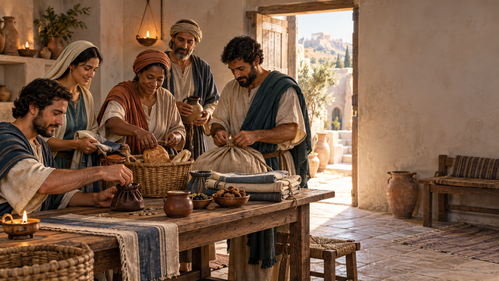
After everything Paul has written to the Corinthians, he closes with a sentence that could almost serve as a summary of the entire letter: “Everything should be done in love” (1 Corinthians 16:14 CEB). That sounds simple enough until we remember what “everything” has included.
Paul has confronted divisions in the church. He has challenged pride, sexual immorality, lawsuits between believers, arguments over marriage and singleness, disputes about food sacrificed to idols, abuses at the Lord’s Table, competition over spiritual gifts, and confusion about the resurrection. This has not been a sentimental letter.
Paul has corrected them sharply because he loves them and because their life together matters. The Church is supposed to become a community in which the life of Jesus is visible. So after all the theological arguments and practical instruction, Paul brings the Corinthians back to the principle that has been underneath it all: Let love guide us.
And in this final chapter, Paul shows us what that kind of love looks like. It looks like generosity.
Paul begins by giving instructions about the collection being gathered for believers in Jerusalem. This isn’t simply an offering for people who happen to be struggling financially. Jewish believers in Jerusalem and Gentile believers scattered throughout the Roman world belonged to the same family in Christ. Sharing their resources was one practical way of living that truth. The Corinthians could say they were one Body. Giving made that unity tangible.
Love does that. It moves beyond good intentions and asks, “What do I have that could become grace in someone else’s life?”
Then Paul talks about his travel plans, and almost casually adds, “if the Lord allows it” (v. 7). Paul plans carefully, but he doesn’t pretend to control the future. He recognizes both opportunity and opposition ahead of him. An open door for ministry doesn’t guarantee an easy road. Love remains faithful there too.
Paul continues by asking the Corinthians to receive Timothy well. Timothy apparently wasn’t the kind of forceful personality the Corinthians might naturally admire. In a church that had already struggled with status, charisma, and impressive leaders, that needed to be said (written).
Paul essentially tells them: Don’t intimidate him. Don’t look down on him. Receive him as someone doing the Lord’s work. Then he mentions Apollos, one of the leaders around whom the Corinthians had previously formed factions. Yet, there is no competition between Paul and Apollos here. Paul had actually encouraged Apollos to visit Corinth.
Again, love is taking visible form. No rivalry. No protecting territory. No treating another servant of Christ as competition.
Then come Paul's strong commands: “Stay awake, stand firm in your faith, be brave, be strong. Everything should be done in love.” (vv. 13–14) We could easily emphasize the first four and overlook the fifth. Be alert. Stand firm. Be courageous. Be strong. Those sound like fighting words. But Christian strength is always governed by Christian love.
Standing firm doesn't give us permission to become cruel. Courage doesn't require arrogance. Strength doesn't justify domination. Faithfulness to truth cannot be separated from becoming like Jesus. Everything should be done in love.
Paul then names people like Stephanas, Fortunatus, Achaicus, Aquila, and Prisca. These aren’t abstract examples. They are people who have served, encouraged, worked, welcomed, and strengthened the Church. This is what love looks like when it becomes ordinary life.
It gives. It welcomes. It serves. It honors others. It refuses rivalry. It remains faithful.
And Paul finally closes the letter with grace and love: “The grace of the Lord Jesus be with you. My love is with all of you in Christ Jesus” (vv. 23–24).
That may be the most fitting ending possible. Paul has corrected these people because he loves them. He believes God's grace can still transform them. Their failures don't have to define their future. The Holy Spirit can form this divided, prideful, sometimes chaotic congregation into the Body of Christ Paul has been describing all along.
The same grace is at work among us. We don’t become a holy people by winning every argument, proving our spiritual maturity, or demonstrating our strength. We become holy as grace teaches us to love God and one another with the love of Christ.
So perhaps the question at the end of 1 Corinthians is wonderfully straightforward: What would change if we really allowed love to guide everything?
Our words. Our disagreements. Our generosity. Our leadership. Our friendships. Our service. Our witness. Everything.
That’s not weakness. It's Christian maturity. And by the grace of Jesus Christ, it is the kind of people the Holy Spirit is forming us to become.
Paul has confronted divisions in the church. He has challenged pride, sexual immorality, lawsuits between believers, arguments over marriage and singleness, disputes about food sacrificed to idols, abuses at the Lord’s Table, competition over spiritual gifts, and confusion about the resurrection. This has not been a sentimental letter.
Paul has corrected them sharply because he loves them and because their life together matters. The Church is supposed to become a community in which the life of Jesus is visible. So after all the theological arguments and practical instruction, Paul brings the Corinthians back to the principle that has been underneath it all: Let love guide us.
And in this final chapter, Paul shows us what that kind of love looks like. It looks like generosity.
Paul begins by giving instructions about the collection being gathered for believers in Jerusalem. This isn’t simply an offering for people who happen to be struggling financially. Jewish believers in Jerusalem and Gentile believers scattered throughout the Roman world belonged to the same family in Christ. Sharing their resources was one practical way of living that truth. The Corinthians could say they were one Body. Giving made that unity tangible.
Love does that. It moves beyond good intentions and asks, “What do I have that could become grace in someone else’s life?”
Then Paul talks about his travel plans, and almost casually adds, “if the Lord allows it” (v. 7). Paul plans carefully, but he doesn’t pretend to control the future. He recognizes both opportunity and opposition ahead of him. An open door for ministry doesn’t guarantee an easy road. Love remains faithful there too.
Paul continues by asking the Corinthians to receive Timothy well. Timothy apparently wasn’t the kind of forceful personality the Corinthians might naturally admire. In a church that had already struggled with status, charisma, and impressive leaders, that needed to be said (written).
Paul essentially tells them: Don’t intimidate him. Don’t look down on him. Receive him as someone doing the Lord’s work. Then he mentions Apollos, one of the leaders around whom the Corinthians had previously formed factions. Yet, there is no competition between Paul and Apollos here. Paul had actually encouraged Apollos to visit Corinth.
Again, love is taking visible form. No rivalry. No protecting territory. No treating another servant of Christ as competition.
Then come Paul's strong commands: “Stay awake, stand firm in your faith, be brave, be strong. Everything should be done in love.” (vv. 13–14) We could easily emphasize the first four and overlook the fifth. Be alert. Stand firm. Be courageous. Be strong. Those sound like fighting words. But Christian strength is always governed by Christian love.
Standing firm doesn't give us permission to become cruel. Courage doesn't require arrogance. Strength doesn't justify domination. Faithfulness to truth cannot be separated from becoming like Jesus. Everything should be done in love.
Paul then names people like Stephanas, Fortunatus, Achaicus, Aquila, and Prisca. These aren’t abstract examples. They are people who have served, encouraged, worked, welcomed, and strengthened the Church. This is what love looks like when it becomes ordinary life.
It gives. It welcomes. It serves. It honors others. It refuses rivalry. It remains faithful.
And Paul finally closes the letter with grace and love: “The grace of the Lord Jesus be with you. My love is with all of you in Christ Jesus” (vv. 23–24).
That may be the most fitting ending possible. Paul has corrected these people because he loves them. He believes God's grace can still transform them. Their failures don't have to define their future. The Holy Spirit can form this divided, prideful, sometimes chaotic congregation into the Body of Christ Paul has been describing all along.
The same grace is at work among us. We don’t become a holy people by winning every argument, proving our spiritual maturity, or demonstrating our strength. We become holy as grace teaches us to love God and one another with the love of Christ.
So perhaps the question at the end of 1 Corinthians is wonderfully straightforward: What would change if we really allowed love to guide everything?
Our words. Our disagreements. Our generosity. Our leadership. Our friendships. Our service. Our witness. Everything.
That’s not weakness. It's Christian maturity. And by the grace of Jesus Christ, it is the kind of people the Holy Spirit is forming us to become.
Faith In Action
Before one conversation or decision today, pause and pray: “Jesus, let love guide what I do next.” Then choose the response that most clearly reflects Christlike love toward the other person.
Today's Prayer
Lord Jesus, thank you for loving us with a grace that corrects, forgives, restores, and transforms. We confess that our pride, fear, preferences, and desire to be right can sometimes speak louder than love. By your Spirit, teach us to be strong without becoming harsh, courageous without becoming arrogant, and faithful without forgetting the people standing beside us. Make your love visible through our generosity, our words, our service, and the way we treat one another. Form us into a Church where everything we do is shaped by your love. Amen.
Posted in Bible Reading Plan 2026
Recent
Categories
Archive
2026
January
My Word for the Year... LIGHT2026 Reading Plan Reflections - Day 12026 Reading Plan Reflections - Day 22026 Reading Plan Reflections - Day 32026 Reading Plan Reflections - Day 42026 Reading Plan Reflections - Day 5Welcome to 2026 - New Resources2026 Reading Plan Reflections - Day 62026 Reading Plan Reflections - Day 72026 Reading Plan Reflections - Day 8New Year Prayer Focus2026 Reading Plan Reflections - Day 92026 Reading Plan Reflections - Day 102026 Reading Plan Reflections - Day 112026 Reading Plan Reflections - Day 122026 Reading Plan Reflections - Day 132026 Reading Plan Reflections - Day 142026 Reading Plan Reflections - Day 152026 Reading Plan Reflections - Day 16Darkness and Light2026 Reading Plan Reflections - Day 172026 Reading Plan Reflections - Day 182026 Reading Plan Reflections - Day 192026 Reading Plan Reflections - Day 202026 Reading Plan Reflections - Day 212026 Reading Plan Reflections - Day 222026 Reading Plan Reflections - Day 232026 Reading Plan Reflections - Day 242026 Reading Plan Reflections - Day 252026 Reading Plan Reflections - Day 262026 Reading Plan Reflections - Day 272026 Reading Plan Reflections - Day 282026 Reading Plan Reflections - Day 292026 Reading Plan Reflections - Day 30Together as the Body of Christ2026 Reading Plan Reflections - Day 31
February
2026 Reading Plan Reflections - Day 322026 Reading Plan Reflections - Day 332026 Reading Plan Reflections - Day 342026 Reading Plan Reflections - Day 352026 Reading Plan Reflections - Day 362026 Reading Plan Reflections - Day 37This Shouldn’t Need to Be Said...2026 Reading Plan Reflections - Day 382026 Reading Plan Reflections - Day 392026 Reading Plan Reflections - Day 402026 Reading Plan Reflections - Day 412026 Reading Plan Reflections - Day 422026 Reading Plan Reflections - Day 432026 Reading Plan Reflections - Day 442026 Reading Plan Reflections - Day 452026 Reading Plan Reflections - Day 462026 Reading Plan Reflections - Day 472026 Reading Plan Reflections - Day 482026 Reading Plan Reflections - Day 492026 Reading Plan Reflections - Day 502026 Reading Plan Reflections - Day 512026 Reading Plan Reflections - Day 522026 Reading Plan Reflections - Day 532026 Reading Plan Reflections - Day 542026 Reading Plan Reflections - Day 552026 Reading Plan Reflections - Day 562026 Reading Plan Reflections - Day 572026 Reading Plan Reflections - Day 582026 Reading Plan Reflections - Day 59
March
2026 Reading Plan Reflections - Day 602026 Reading Plan Reflections - Day 612026 Reading Plan Reflections - Day 622026 Reading Plan Reflections - Day 632026 Reading Plan Reflections - Day 642026 Reading Plan Reflections - Day 652026 Reading Plan Reflections - Day 662026 Reading Plan Reflections - Day 672026 Reading Plan Reflections - Day 682026 Reading Plan Reflections - Day 692026 Reading Plan Reflections - Day 702026 Reading Plan Reflections - Day 712026 Reading Plan Reflections - Day 722026 Reading Plan Reflections - Day 732026 Reading Plan Reflections - Day 742026 Reading Plan Reflections - Day 752026 Reading Plan Reflections - Day 762026 Reading Plan Reflections - Day 772026 Reading Plan Reflections - Day 782026 Reading Plan Reflections - Day 792026 Reading Plan Reflections - Day 802026 Reading Plan Reflections - Day 812026 Reading Plan Reflections - Day 822026 Reading Plan Reflections - Day 832026 Reading Plan Reflections - Day 84
April
2026 Reading Plan Reflections - Days 85 & 862026 Reading Plan Reflections - Day 872026 Reading Plan Reflections - Day 882026 Reading Plan Reflections - Day 892026 Reading Plan Reflections - Day 902026 Reading Plan Reflections - Day 912026 Reading Plan Reflections - Day 922026 Reading Plan Reflections - Day 932026 Reading Plan Reflections - Day 942026 Reading Plan Reflections - Day 95
No Comments