
2026 Reading Plan Reflections - Day 268
The Promise Still Stands
Galatians 3
“Now if you belong to Christ, then indeed you are Abraham’s descendants, heirs according to the promise.” Galatians 3:29 CEB
Paul begins Galatians 3 almost sounding exasperated. The Galatians had heard the good news of Jesus Christ. They had believed. They had received the Holy Spirit. God was already at work among them. And now they were being told that something else was required.
Faith in Christ was apparently not enough. If these Gentile believers really wanted to belong to the people of God, they needed to take another step and place themselves under the requirements of the Jewish law.
Paul’s response is essentially: Think about how this started. You didn’t receive the Spirit because you had finally gotten everything right. You didn’t earn your place in God’s family by proving yourself worthy. God met you with grace. You heard the gospel. You trusted Christ. The Spirit began working among you. So why would you now try to finish through human effort what God began by grace?
Paul reaches all the way back to Abraham. Long before Moses, long before the law, God made a promise: Abraham would have a family, and through that family all the nations of the earth would be blessed. Abraham believed God. The promise came first.
Paul’s opponents seem to be telling the Galatians that they need the law in order to become full members of Abraham’s family. Paul says they have the story backward. God’s promise to Abraham was always moving toward a worldwide family formed through faith. The law had an important place in that story. Paul isn’t dismissing it as evil or suggesting that God made a mistake by giving it. The law guarded and instructed Israel while God’s promise moved toward its fulfillment.
But the law could not give life. Christ could.
Jesus entered the place where sin, condemnation, and the curse had brought humanity and carried that burden to the cross. Through Christ, the blessing promised to Abraham could finally flow outward to the nations, and the promised Spirit could be received through faith.
Everything has been moving toward Christ. That's why Paul’s warning is so strong. Going backward to the law as the basis of belonging would not be spiritual progress. It would mean treating something temporary as though it were the destination.
Paul isn't arguing against obedience. He is arguing against using obedience to establish our standing before God. Those are very different things. As Wesleyans, we speak often about holiness, sanctification, obedience, and becoming like Christ. We should. Grace really does transform us. The Holy Spirit changes our desires, our habits, our relationships, and the way we live. But holiness is never our attempt to graduate beyond grace.
We begin by grace. We grow by grace. We become holy as we cooperate with grace. And whatever Christ forms within us remains the work of grace from beginning to end. Sometimes we can forget that.
We may begin the Christian life trusting Jesus and then slowly start measuring ourselves by other standards. How disciplined have I been? How much Scripture have I read? How much have I served? How well am I doing compared with someone else? Those practices can be wonderful means through which God shapes us. But they make terrible measures of whether we belong.
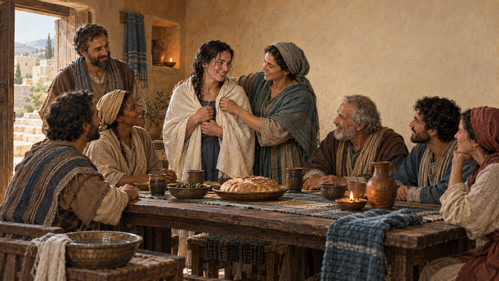
Our confidence is Christ. And because our identity rests in Christ, Paul can make the declaration at the end of the chapter that everyone who belongs to Christ belongs to Abraham’s family and shares in the promise. Jew and Greek. Slave and free. Male and female. The distinctions that so often determine status in the world cannot determine anyone’s standing in the family of God. We are one in Christ.
That doesn’t erase everything distinctive about us. It means that none of those distinctions give one Christian a better place at the table than another. The cross has leveled the ground.
Baptized into Christ, we have “put on Christ.” Our deepest identity is no longer secured by ancestry, accomplishment, social status, or religious performance. We belong because Christ has welcomed us into the family God promised from the beginning. That should shape both the way we see ourselves and the way we see one another.
We don’t need to prove that we deserve our place. And we don’t get to demand that someone else prove they deserve theirs. God’s promise still stands. Christ has fulfilled it. The Spirit is still at work. Our calling is to keep trusting the grace that brought us into the family and allow that same grace to form us into people who increasingly look like Jesus.
Faith in Christ was apparently not enough. If these Gentile believers really wanted to belong to the people of God, they needed to take another step and place themselves under the requirements of the Jewish law.
Paul’s response is essentially: Think about how this started. You didn’t receive the Spirit because you had finally gotten everything right. You didn’t earn your place in God’s family by proving yourself worthy. God met you with grace. You heard the gospel. You trusted Christ. The Spirit began working among you. So why would you now try to finish through human effort what God began by grace?
Paul reaches all the way back to Abraham. Long before Moses, long before the law, God made a promise: Abraham would have a family, and through that family all the nations of the earth would be blessed. Abraham believed God. The promise came first.
Paul’s opponents seem to be telling the Galatians that they need the law in order to become full members of Abraham’s family. Paul says they have the story backward. God’s promise to Abraham was always moving toward a worldwide family formed through faith. The law had an important place in that story. Paul isn’t dismissing it as evil or suggesting that God made a mistake by giving it. The law guarded and instructed Israel while God’s promise moved toward its fulfillment.
But the law could not give life. Christ could.
Jesus entered the place where sin, condemnation, and the curse had brought humanity and carried that burden to the cross. Through Christ, the blessing promised to Abraham could finally flow outward to the nations, and the promised Spirit could be received through faith.
Everything has been moving toward Christ. That's why Paul’s warning is so strong. Going backward to the law as the basis of belonging would not be spiritual progress. It would mean treating something temporary as though it were the destination.
Paul isn't arguing against obedience. He is arguing against using obedience to establish our standing before God. Those are very different things. As Wesleyans, we speak often about holiness, sanctification, obedience, and becoming like Christ. We should. Grace really does transform us. The Holy Spirit changes our desires, our habits, our relationships, and the way we live. But holiness is never our attempt to graduate beyond grace.
We begin by grace. We grow by grace. We become holy as we cooperate with grace. And whatever Christ forms within us remains the work of grace from beginning to end. Sometimes we can forget that.
We may begin the Christian life trusting Jesus and then slowly start measuring ourselves by other standards. How disciplined have I been? How much Scripture have I read? How much have I served? How well am I doing compared with someone else? Those practices can be wonderful means through which God shapes us. But they make terrible measures of whether we belong.
Our confidence is Christ. And because our identity rests in Christ, Paul can make the declaration at the end of the chapter that everyone who belongs to Christ belongs to Abraham’s family and shares in the promise. Jew and Greek. Slave and free. Male and female. The distinctions that so often determine status in the world cannot determine anyone’s standing in the family of God. We are one in Christ.
That doesn’t erase everything distinctive about us. It means that none of those distinctions give one Christian a better place at the table than another. The cross has leveled the ground.
Baptized into Christ, we have “put on Christ.” Our deepest identity is no longer secured by ancestry, accomplishment, social status, or religious performance. We belong because Christ has welcomed us into the family God promised from the beginning. That should shape both the way we see ourselves and the way we see one another.
We don’t need to prove that we deserve our place. And we don’t get to demand that someone else prove they deserve theirs. God’s promise still stands. Christ has fulfilled it. The Spirit is still at work. Our calling is to keep trusting the grace that brought us into the family and allow that same grace to form us into people who increasingly look like Jesus.
Faith In Action
Notice one place today where you are tempted to measure your standing with God by your performance. Name it honestly in prayer, then return to the truth of Galatians 3: you belong to Christ by grace. Ask the Holy Spirit to let obedience grow from that security rather than from the need to prove yourself.
Today's Prayer
Jesus, thank you that I do not have to earn a place in your family. You have met me with grace, carried the weight of sin at the cross, and given the Holy Spirit to continue your work in me. Forgive me when I turn obedience into a way of proving myself or when I use my own standards to judge someone else’s place among your people. Teach me to trust your grace from beginning to end. Shape me into your likeness through the Spirit, and help us become a church where every person who belongs to Christ is welcomed as family. Amen.
Posted in Bible Reading Plan 2026
Recent
Categories
Archive
2026
January
My Word for the Year... LIGHT2026 Reading Plan Reflections - Day 12026 Reading Plan Reflections - Day 22026 Reading Plan Reflections - Day 32026 Reading Plan Reflections - Day 42026 Reading Plan Reflections - Day 5Welcome to 2026 - New Resources2026 Reading Plan Reflections - Day 62026 Reading Plan Reflections - Day 72026 Reading Plan Reflections - Day 8New Year Prayer Focus2026 Reading Plan Reflections - Day 92026 Reading Plan Reflections - Day 102026 Reading Plan Reflections - Day 112026 Reading Plan Reflections - Day 122026 Reading Plan Reflections - Day 132026 Reading Plan Reflections - Day 142026 Reading Plan Reflections - Day 152026 Reading Plan Reflections - Day 16Darkness and Light2026 Reading Plan Reflections - Day 172026 Reading Plan Reflections - Day 182026 Reading Plan Reflections - Day 192026 Reading Plan Reflections - Day 202026 Reading Plan Reflections - Day 212026 Reading Plan Reflections - Day 222026 Reading Plan Reflections - Day 232026 Reading Plan Reflections - Day 242026 Reading Plan Reflections - Day 252026 Reading Plan Reflections - Day 262026 Reading Plan Reflections - Day 272026 Reading Plan Reflections - Day 282026 Reading Plan Reflections - Day 292026 Reading Plan Reflections - Day 30Together as the Body of Christ2026 Reading Plan Reflections - Day 31
February
2026 Reading Plan Reflections - Day 322026 Reading Plan Reflections - Day 332026 Reading Plan Reflections - Day 342026 Reading Plan Reflections - Day 352026 Reading Plan Reflections - Day 362026 Reading Plan Reflections - Day 37This Shouldn’t Need to Be Said...2026 Reading Plan Reflections - Day 382026 Reading Plan Reflections - Day 392026 Reading Plan Reflections - Day 402026 Reading Plan Reflections - Day 412026 Reading Plan Reflections - Day 422026 Reading Plan Reflections - Day 432026 Reading Plan Reflections - Day 442026 Reading Plan Reflections - Day 452026 Reading Plan Reflections - Day 462026 Reading Plan Reflections - Day 472026 Reading Plan Reflections - Day 482026 Reading Plan Reflections - Day 492026 Reading Plan Reflections - Day 502026 Reading Plan Reflections - Day 512026 Reading Plan Reflections - Day 522026 Reading Plan Reflections - Day 532026 Reading Plan Reflections - Day 542026 Reading Plan Reflections - Day 552026 Reading Plan Reflections - Day 562026 Reading Plan Reflections - Day 572026 Reading Plan Reflections - Day 582026 Reading Plan Reflections - Day 59
March
2026 Reading Plan Reflections - Day 602026 Reading Plan Reflections - Day 612026 Reading Plan Reflections - Day 622026 Reading Plan Reflections - Day 632026 Reading Plan Reflections - Day 642026 Reading Plan Reflections - Day 652026 Reading Plan Reflections - Day 662026 Reading Plan Reflections - Day 672026 Reading Plan Reflections - Day 682026 Reading Plan Reflections - Day 692026 Reading Plan Reflections - Day 702026 Reading Plan Reflections - Day 712026 Reading Plan Reflections - Day 722026 Reading Plan Reflections - Day 732026 Reading Plan Reflections - Day 742026 Reading Plan Reflections - Day 752026 Reading Plan Reflections - Day 762026 Reading Plan Reflections - Day 772026 Reading Plan Reflections - Day 782026 Reading Plan Reflections - Day 792026 Reading Plan Reflections - Day 802026 Reading Plan Reflections - Day 812026 Reading Plan Reflections - Day 822026 Reading Plan Reflections - Day 832026 Reading Plan Reflections - Day 84
April
2026 Reading Plan Reflections - Days 85 & 862026 Reading Plan Reflections - Day 872026 Reading Plan Reflections - Day 882026 Reading Plan Reflections - Day 892026 Reading Plan Reflections - Day 902026 Reading Plan Reflections - Day 912026 Reading Plan Reflections - Day 922026 Reading Plan Reflections - Day 932026 Reading Plan Reflections - Day 942026 Reading Plan Reflections - Day 95
No Comments