
2026 Reading Plan Reflections - Day 273
Grace Makes A People
Ephesians 2
“So now you are no longer strangers and aliens. Rather, you are fellow citizens with God’s people, and you belong to God’s household. As God’s household, you are built on the foundation of the apostles and prophets with Christ Jesus himself as the cornerstone. The whole building is joined together in him, and it grows up into a temple that is dedicated to the Lord. Christ is building you into a place where God lives through the Spirit.” Ephesians 2:19–22 CEB
There are few passages more familiar to Christians than Ephesians 2:8–9: “You are saved by God’s grace because of your faith. This salvation is God’s gift. It’s not something you possessed. It’s not something you did that you can be proud of” (CEB). We should know those words. We should cling to them. But if we stop reading there, we can miss just how large Paul’s vision of grace really is.
Ephesians 2 begins in death. “You were dead through the trespasses and sins in which you once lived.” We weren’t basically fine people who needed a little spiritual encouragement. Paul describes something much more serious. Sin had shaped the direction of human life. We had become caught in patterns, desires, and powers that pulled us away from God’s purposes.
Then come two of the most important words in the chapter: “But God…” God, rich in mercy and overflowing with love, acted when we could not rescue ourselves. God “made us alive with Christ.” Before Paul ever tells us what Christians should do, he tells us what God has already done.
Grace comes first. We don’t become holy enough for God to make us alive. We don’t accumulate enough good works to earn salvation. We don’t repair ourselves and then present the finished product to God for approval. God acts in grace. And then, because grace has made us alive, we begin to live differently.
That’s why verse 10 belongs right beside verses 8–9. We aren’t saved by good works, but we are “created in Christ Jesus to do good things.” The grace that rescues us also begins forming a new way of life in us.
Grace is never permission to remain unchanged. The God who graciously comes to us also graciously transforms us. We respond, cooperate, obey, and grow—not to earn the gift, but because the gift has already been given.
But Paul still isn’t finished describing what grace does. The second half of the chapter turns from our relationship with God to our relationships with one another. Gentiles had once been outsiders to Israel’s covenant life—“without hope and without God in the world.” But through Christ they have been “brought near by the blood of Christ.”
“Christ is our peace.” Jesus doesn’t simply negotiate a temporary ceasefire between groups that would rather remain separated. Through the cross, Christ creates “one new humanity.”
The same cross that reconciles us to God reconciles us to one another. That means the gospel can't be reduced to a private transaction between me and God. Grace gives us a new relationship with God, but it also gives us a new family.
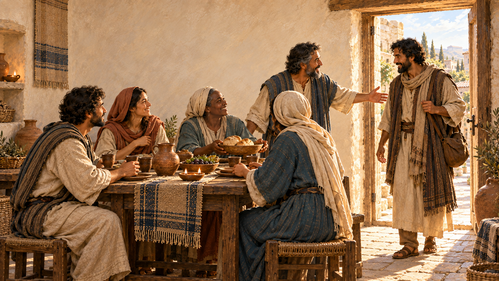
Paul piles one image upon another near the end of the chapter. We are no longer strangers. We are citizens together. We belong to God’s household. We are stones being joined together into a holy temple. And God lives among us through the Spirit. Notice how often Paul speaks in the plural. God isn’t simply constructing isolated little temples scattered around the world. God is building us together. That can be much harder than talking about grace.
We like receiving grace. Living as a community shaped by grace requires something from us. It means old divisions can't be allowed to determine who belongs. It means our preferences, backgrounds, histories, and differences must all be brought under the reconciling lordship of Jesus.
The church will always contain people we would not naturally have chosen for ourselves. That isn’t a flaw in God’s design. It may be one of the clearest signs of it.
Christ takes people who were far away and brings them near. Christ takes people who were separated and makes them family. Christ takes people who were spiritually dead and makes them alive. Then the Holy Spirit begins forming those people together into a place where the presence of God can be seen in the world.
Grace makes us alive. Grace changes how we live. Grace changes who we call family. And grace keeps building us together.
Ephesians 2 begins in death. “You were dead through the trespasses and sins in which you once lived.” We weren’t basically fine people who needed a little spiritual encouragement. Paul describes something much more serious. Sin had shaped the direction of human life. We had become caught in patterns, desires, and powers that pulled us away from God’s purposes.
Then come two of the most important words in the chapter: “But God…” God, rich in mercy and overflowing with love, acted when we could not rescue ourselves. God “made us alive with Christ.” Before Paul ever tells us what Christians should do, he tells us what God has already done.
Grace comes first. We don’t become holy enough for God to make us alive. We don’t accumulate enough good works to earn salvation. We don’t repair ourselves and then present the finished product to God for approval. God acts in grace. And then, because grace has made us alive, we begin to live differently.
That’s why verse 10 belongs right beside verses 8–9. We aren’t saved by good works, but we are “created in Christ Jesus to do good things.” The grace that rescues us also begins forming a new way of life in us.
Grace is never permission to remain unchanged. The God who graciously comes to us also graciously transforms us. We respond, cooperate, obey, and grow—not to earn the gift, but because the gift has already been given.
But Paul still isn’t finished describing what grace does. The second half of the chapter turns from our relationship with God to our relationships with one another. Gentiles had once been outsiders to Israel’s covenant life—“without hope and without God in the world.” But through Christ they have been “brought near by the blood of Christ.”
“Christ is our peace.” Jesus doesn’t simply negotiate a temporary ceasefire between groups that would rather remain separated. Through the cross, Christ creates “one new humanity.”
The same cross that reconciles us to God reconciles us to one another. That means the gospel can't be reduced to a private transaction between me and God. Grace gives us a new relationship with God, but it also gives us a new family.
Paul piles one image upon another near the end of the chapter. We are no longer strangers. We are citizens together. We belong to God’s household. We are stones being joined together into a holy temple. And God lives among us through the Spirit. Notice how often Paul speaks in the plural. God isn’t simply constructing isolated little temples scattered around the world. God is building us together. That can be much harder than talking about grace.
We like receiving grace. Living as a community shaped by grace requires something from us. It means old divisions can't be allowed to determine who belongs. It means our preferences, backgrounds, histories, and differences must all be brought under the reconciling lordship of Jesus.
The church will always contain people we would not naturally have chosen for ourselves. That isn’t a flaw in God’s design. It may be one of the clearest signs of it.
Christ takes people who were far away and brings them near. Christ takes people who were separated and makes them family. Christ takes people who were spiritually dead and makes them alive. Then the Holy Spirit begins forming those people together into a place where the presence of God can be seen in the world.
Grace makes us alive. Grace changes how we live. Grace changes who we call family. And grace keeps building us together.
Faith In Action
Think of one person within the Body of Christ whom you tend to keep at a distance because of differences in personality, background, experience, or perspective. Take one small step toward them today—a conversation, a message, a prayer, or an act of kindness—and ask God to help you live as part of the one household Christ is building.
Today's Prayer
God of mercy and grace, thank you for meeting us when we could not save ourselves and making us alive with Christ. Keep forming us into the people you created us to be. Tear down the walls we are tempted to rebuild, and teach us to receive one another as members of your household. Through the Holy Spirit, make our life together a place where your grace, holiness, peace, and love are visible. Help us walk in the good works you have prepared for us, not to earn your love, but because we have already received it in Christ. Amen.
Posted in Bible Reading Plan 2026
Recent
Categories
Archive
2026
January
My Word for the Year... LIGHT2026 Reading Plan Reflections - Day 12026 Reading Plan Reflections - Day 22026 Reading Plan Reflections - Day 32026 Reading Plan Reflections - Day 42026 Reading Plan Reflections - Day 5Welcome to 2026 - New Resources2026 Reading Plan Reflections - Day 62026 Reading Plan Reflections - Day 72026 Reading Plan Reflections - Day 8New Year Prayer Focus2026 Reading Plan Reflections - Day 92026 Reading Plan Reflections - Day 102026 Reading Plan Reflections - Day 112026 Reading Plan Reflections - Day 122026 Reading Plan Reflections - Day 132026 Reading Plan Reflections - Day 142026 Reading Plan Reflections - Day 152026 Reading Plan Reflections - Day 16Darkness and Light2026 Reading Plan Reflections - Day 172026 Reading Plan Reflections - Day 182026 Reading Plan Reflections - Day 192026 Reading Plan Reflections - Day 202026 Reading Plan Reflections - Day 212026 Reading Plan Reflections - Day 222026 Reading Plan Reflections - Day 232026 Reading Plan Reflections - Day 242026 Reading Plan Reflections - Day 252026 Reading Plan Reflections - Day 262026 Reading Plan Reflections - Day 272026 Reading Plan Reflections - Day 282026 Reading Plan Reflections - Day 292026 Reading Plan Reflections - Day 30Together as the Body of Christ2026 Reading Plan Reflections - Day 31
February
2026 Reading Plan Reflections - Day 322026 Reading Plan Reflections - Day 332026 Reading Plan Reflections - Day 342026 Reading Plan Reflections - Day 352026 Reading Plan Reflections - Day 362026 Reading Plan Reflections - Day 37This Shouldn’t Need to Be Said...2026 Reading Plan Reflections - Day 382026 Reading Plan Reflections - Day 392026 Reading Plan Reflections - Day 402026 Reading Plan Reflections - Day 412026 Reading Plan Reflections - Day 422026 Reading Plan Reflections - Day 432026 Reading Plan Reflections - Day 442026 Reading Plan Reflections - Day 452026 Reading Plan Reflections - Day 462026 Reading Plan Reflections - Day 472026 Reading Plan Reflections - Day 482026 Reading Plan Reflections - Day 492026 Reading Plan Reflections - Day 502026 Reading Plan Reflections - Day 512026 Reading Plan Reflections - Day 522026 Reading Plan Reflections - Day 532026 Reading Plan Reflections - Day 542026 Reading Plan Reflections - Day 552026 Reading Plan Reflections - Day 562026 Reading Plan Reflections - Day 572026 Reading Plan Reflections - Day 582026 Reading Plan Reflections - Day 59
March
2026 Reading Plan Reflections - Day 602026 Reading Plan Reflections - Day 612026 Reading Plan Reflections - Day 622026 Reading Plan Reflections - Day 632026 Reading Plan Reflections - Day 642026 Reading Plan Reflections - Day 652026 Reading Plan Reflections - Day 662026 Reading Plan Reflections - Day 672026 Reading Plan Reflections - Day 682026 Reading Plan Reflections - Day 692026 Reading Plan Reflections - Day 702026 Reading Plan Reflections - Day 712026 Reading Plan Reflections - Day 722026 Reading Plan Reflections - Day 732026 Reading Plan Reflections - Day 742026 Reading Plan Reflections - Day 752026 Reading Plan Reflections - Day 762026 Reading Plan Reflections - Day 772026 Reading Plan Reflections - Day 782026 Reading Plan Reflections - Day 792026 Reading Plan Reflections - Day 802026 Reading Plan Reflections - Day 812026 Reading Plan Reflections - Day 822026 Reading Plan Reflections - Day 832026 Reading Plan Reflections - Day 84
April
2026 Reading Plan Reflections - Days 85 & 862026 Reading Plan Reflections - Day 872026 Reading Plan Reflections - Day 882026 Reading Plan Reflections - Day 892026 Reading Plan Reflections - Day 902026 Reading Plan Reflections - Day 912026 Reading Plan Reflections - Day 922026 Reading Plan Reflections - Day 932026 Reading Plan Reflections - Day 942026 Reading Plan Reflections - Day 95
No Comments