
2026 Reading Plan Reflections - Day 275
Growing Up Into Christ
Ephesians 4
“By speaking the truth with love, let’s grow in every way into Christ, who is the head. The whole body grows from him, as it is joined and held together by all the supporting ligaments. The body makes itself grow in that it builds itself up with love as each one does its part.” Ephesians 4:15–16 CEB
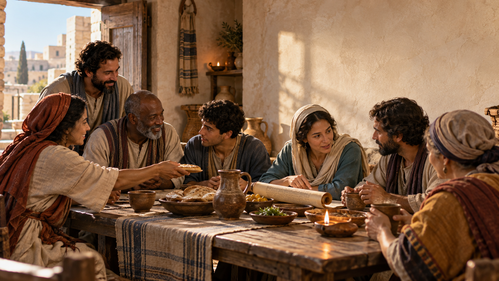
Paul begins Ephesians 4 with a simple appeal: “live your life in a way that is worthy of the call you have received from God” (v. 1, CEB). For the first three chapters, Paul has been describing what God has done. We have been chosen in Christ, saved by grace, brought near through the cross, made members of one household, and joined together as a dwelling place for God through the Spirit.
Now Paul turns toward the question that naturally follows: If this is who we are because of grace, how should we live? His answer doesn’t begin with private spiritual disciplines or individual morality. He begins with how we live with one another: “Conduct yourselves with all humility, gentleness, and patience. Accept each other with love, and make an effort to preserve the unity of the Spirit with the peace that ties you together” (vv. 2–3). The calling we have received creates a people.
There is one body, one Spirit, one hope, one Lord, one faith, one baptism, and one God. Christian unity isn’t something we manufacture by pretending differences don’t exist. It's something God has already created in Christ, and Paul tells us to guard it carefully. But unity does not necessarily mean sameness.
Christ gives different gifts to the church. Apostles, prophets, evangelists, pastors, and teachers are named here, but Paul’s concern isn’t creating a hierarchy of important Christians. Their purpose is “to equip God’s people for the work of serving and building up the body of Christ” (v. 12). The ministry belongs to the whole church.
Pastors aren’t called to do Christianity on everyone else's behalf. Teachers don’t study so everyone else can remain spiritually immature. Christ gives gifts throughout the body so that the entire body can grow.
Growth is the point. Paul says we are to grow toward maturity, becoming increasingly like Christ. Otherwise, we remain vulnerable—“tossed and blown around by every wind that comes from teaching” (v. 14). That image feels especially relevant in a world overflowing with voices claiming to tell us what is true. We can move quickly from teacher to teacher, video to video, controversy to controversy, always reacting to whatever catches our attention next.
Christian maturity gives us roots. It teaches us to recognize the voice and character of Jesus. It helps us test what we hear against Scripture. It forms us into people capable of holding truth and love together. Paul doesn’t tell the church simply to speak truth. We are to speak “the truth in love” so that together we “grow in every way into Christ” (v. 15).
Truth without love can wound. Love without truth can lose its direction. Christlike maturity refuses to separate them. Then Paul makes the calling intensely practical. Growing into Christ means taking off the old way of life and putting on the new.
Tell the truth. Deal honestly with anger. Work so that you can share with someone in need. Use words that build people up. Put away bitterness, rage, shouting, and insults. Be kind. Be compassionate. Forgive as God has forgiven you in Christ.
These aren’t random rules tacked onto a theological letter. They are what the new humanity looks like when grace becomes visible in everyday relationships. This is holiness worked out in community.
God’s grace doesn’t only forgive what we have been. The Holy Spirit renews the way we think, speak, work, respond, forgive, and love. We cooperate with that grace by taking off habits that belong to the old life and practicing ways of living that resemble Jesus. And we do this together.
Paul’s picture of maturity is not a collection of impressive individual Christians standing beside one another. It is a body “joined and held together” in which every part does its work, and the whole body “grows so that it builds itself up with love” (v. 16). That means my growth affects you. Your gifts strengthen someone else. Our words can either weaken the body or help it grow. Our patience, forgiveness, generosity, and kindness are not insignificant acts of personal virtue. They are part of how Christ builds the church.
So living worthy of our calling does not mean proving that we deserve what God has given us. We could never do that. It means allowing the grace we have received to shape the people we are becoming. And Paul gives us the measure of maturity: not accomplishment, influence, knowledge, or reputation. Christ. The goal is that together, by grace, we grow up into him.
Now Paul turns toward the question that naturally follows: If this is who we are because of grace, how should we live? His answer doesn’t begin with private spiritual disciplines or individual morality. He begins with how we live with one another: “Conduct yourselves with all humility, gentleness, and patience. Accept each other with love, and make an effort to preserve the unity of the Spirit with the peace that ties you together” (vv. 2–3). The calling we have received creates a people.
There is one body, one Spirit, one hope, one Lord, one faith, one baptism, and one God. Christian unity isn’t something we manufacture by pretending differences don’t exist. It's something God has already created in Christ, and Paul tells us to guard it carefully. But unity does not necessarily mean sameness.
Christ gives different gifts to the church. Apostles, prophets, evangelists, pastors, and teachers are named here, but Paul’s concern isn’t creating a hierarchy of important Christians. Their purpose is “to equip God’s people for the work of serving and building up the body of Christ” (v. 12). The ministry belongs to the whole church.
Pastors aren’t called to do Christianity on everyone else's behalf. Teachers don’t study so everyone else can remain spiritually immature. Christ gives gifts throughout the body so that the entire body can grow.
Growth is the point. Paul says we are to grow toward maturity, becoming increasingly like Christ. Otherwise, we remain vulnerable—“tossed and blown around by every wind that comes from teaching” (v. 14). That image feels especially relevant in a world overflowing with voices claiming to tell us what is true. We can move quickly from teacher to teacher, video to video, controversy to controversy, always reacting to whatever catches our attention next.
Christian maturity gives us roots. It teaches us to recognize the voice and character of Jesus. It helps us test what we hear against Scripture. It forms us into people capable of holding truth and love together. Paul doesn’t tell the church simply to speak truth. We are to speak “the truth in love” so that together we “grow in every way into Christ” (v. 15).
Truth without love can wound. Love without truth can lose its direction. Christlike maturity refuses to separate them. Then Paul makes the calling intensely practical. Growing into Christ means taking off the old way of life and putting on the new.
Tell the truth. Deal honestly with anger. Work so that you can share with someone in need. Use words that build people up. Put away bitterness, rage, shouting, and insults. Be kind. Be compassionate. Forgive as God has forgiven you in Christ.
These aren’t random rules tacked onto a theological letter. They are what the new humanity looks like when grace becomes visible in everyday relationships. This is holiness worked out in community.
God’s grace doesn’t only forgive what we have been. The Holy Spirit renews the way we think, speak, work, respond, forgive, and love. We cooperate with that grace by taking off habits that belong to the old life and practicing ways of living that resemble Jesus. And we do this together.
Paul’s picture of maturity is not a collection of impressive individual Christians standing beside one another. It is a body “joined and held together” in which every part does its work, and the whole body “grows so that it builds itself up with love” (v. 16). That means my growth affects you. Your gifts strengthen someone else. Our words can either weaken the body or help it grow. Our patience, forgiveness, generosity, and kindness are not insignificant acts of personal virtue. They are part of how Christ builds the church.
So living worthy of our calling does not mean proving that we deserve what God has given us. We could never do that. It means allowing the grace we have received to shape the people we are becoming. And Paul gives us the measure of maturity: not accomplishment, influence, knowledge, or reputation. Christ. The goal is that together, by grace, we grow up into him.
Faith In Action
Choose one relationship today in which you can help build up the body of Christ. Speak one truthful and gracious word, extend forgiveness, offer encouragement, or use one of your gifts to serve that person.
Today's Prayer
Lord Jesus, you have called us into one body and given each of us grace so that we may strengthen one another. Forgive us for the ways our pride, anger, careless words, or unwillingness to forgive have weakened the community you are building. Renew our minds through the Holy Spirit. Teach us to speak truth with love, to use our gifts in service, and to become people marked by kindness, patience, and grace. Grow us beyond spiritual immaturity and form us together into your likeness. May our life with one another show the world what your new creation looks like. Amen.
Posted in Bible Reading Plan 2026
Recent
Categories
Archive
2026
January
My Word for the Year... LIGHT2026 Reading Plan Reflections - Day 12026 Reading Plan Reflections - Day 22026 Reading Plan Reflections - Day 32026 Reading Plan Reflections - Day 42026 Reading Plan Reflections - Day 5Welcome to 2026 - New Resources2026 Reading Plan Reflections - Day 62026 Reading Plan Reflections - Day 72026 Reading Plan Reflections - Day 8New Year Prayer Focus2026 Reading Plan Reflections - Day 92026 Reading Plan Reflections - Day 102026 Reading Plan Reflections - Day 112026 Reading Plan Reflections - Day 122026 Reading Plan Reflections - Day 132026 Reading Plan Reflections - Day 142026 Reading Plan Reflections - Day 152026 Reading Plan Reflections - Day 16Darkness and Light2026 Reading Plan Reflections - Day 172026 Reading Plan Reflections - Day 182026 Reading Plan Reflections - Day 192026 Reading Plan Reflections - Day 202026 Reading Plan Reflections - Day 212026 Reading Plan Reflections - Day 222026 Reading Plan Reflections - Day 232026 Reading Plan Reflections - Day 242026 Reading Plan Reflections - Day 252026 Reading Plan Reflections - Day 262026 Reading Plan Reflections - Day 272026 Reading Plan Reflections - Day 282026 Reading Plan Reflections - Day 292026 Reading Plan Reflections - Day 30Together as the Body of Christ2026 Reading Plan Reflections - Day 31
February
2026 Reading Plan Reflections - Day 322026 Reading Plan Reflections - Day 332026 Reading Plan Reflections - Day 342026 Reading Plan Reflections - Day 352026 Reading Plan Reflections - Day 362026 Reading Plan Reflections - Day 37This Shouldn’t Need to Be Said...2026 Reading Plan Reflections - Day 382026 Reading Plan Reflections - Day 392026 Reading Plan Reflections - Day 402026 Reading Plan Reflections - Day 412026 Reading Plan Reflections - Day 422026 Reading Plan Reflections - Day 432026 Reading Plan Reflections - Day 442026 Reading Plan Reflections - Day 452026 Reading Plan Reflections - Day 462026 Reading Plan Reflections - Day 472026 Reading Plan Reflections - Day 482026 Reading Plan Reflections - Day 492026 Reading Plan Reflections - Day 502026 Reading Plan Reflections - Day 512026 Reading Plan Reflections - Day 522026 Reading Plan Reflections - Day 532026 Reading Plan Reflections - Day 542026 Reading Plan Reflections - Day 552026 Reading Plan Reflections - Day 562026 Reading Plan Reflections - Day 572026 Reading Plan Reflections - Day 582026 Reading Plan Reflections - Day 59
March
2026 Reading Plan Reflections - Day 602026 Reading Plan Reflections - Day 612026 Reading Plan Reflections - Day 622026 Reading Plan Reflections - Day 632026 Reading Plan Reflections - Day 642026 Reading Plan Reflections - Day 652026 Reading Plan Reflections - Day 662026 Reading Plan Reflections - Day 672026 Reading Plan Reflections - Day 682026 Reading Plan Reflections - Day 692026 Reading Plan Reflections - Day 702026 Reading Plan Reflections - Day 712026 Reading Plan Reflections - Day 722026 Reading Plan Reflections - Day 732026 Reading Plan Reflections - Day 742026 Reading Plan Reflections - Day 752026 Reading Plan Reflections - Day 762026 Reading Plan Reflections - Day 772026 Reading Plan Reflections - Day 782026 Reading Plan Reflections - Day 792026 Reading Plan Reflections - Day 802026 Reading Plan Reflections - Day 812026 Reading Plan Reflections - Day 822026 Reading Plan Reflections - Day 832026 Reading Plan Reflections - Day 84
April
2026 Reading Plan Reflections - Days 85 & 862026 Reading Plan Reflections - Day 872026 Reading Plan Reflections - Day 882026 Reading Plan Reflections - Day 892026 Reading Plan Reflections - Day 902026 Reading Plan Reflections - Day 912026 Reading Plan Reflections - Day 922026 Reading Plan Reflections - Day 932026 Reading Plan Reflections - Day 942026 Reading Plan Reflections - Day 95
No Comments