
2026 Reading Plan Reflections - Day 227
Make Room for One Another
Romans 14
“So let’s strive for the things that bring peace and the things that build each other up.” Romans 14:19 CEB
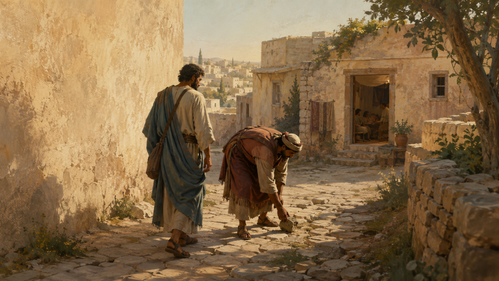
Church would be much easier if everyone saw things exactly the way we do. Of course, that isn’t the church Jesus is building.
Romans 14 gives us a picture of a Christian community trying to work out how people with very different backgrounds and convictions can belong to one another. Some believers felt free to eat anything. Others restricted what they ate. Some observed particular days as holy. Others treated every day alike.
Paul certainly had convictions of his own. He tells us he was convinced nothing was unclean in itself. But his main concern in this chapter isn’t winning the argument over food or special days. It's protecting the fellowship of people who all belong to Jesus.
“Who are you to judge someone else’s servants?” Paul asks. “They stand or fall before their own Lord” (Romans 14:4 CEB). That should change the way we look across the room.
Paul doesn’t divide the congregation neatly into Jewish Christians and Gentile Christians, even though those different backgrounds were probably underneath much of the disagreement. Instead, he keeps bringing everyone back to the same identity: they are servants of the same Lord.
The person whose convictions differ from mine belongs to Jesus. So do I. And Jesus is Lord of both of us.
That doesn’t mean convictions are unimportant. Paul isn't telling Christians to quit discerning right from wrong or to pretend every issue is morally neutral. This chapter concerns matters where faithful Christians may reach different conclusions while sincerely seeking to honor Christ.
One person can despise another for being too restrictive. Another can condemn someone for exercising too much freedom. Before long, the disagreement becomes more important than the relationship, and we begin acting as though we have been appointed to Jesus’ seat as judge. Paul reminds us that we haven’t.
“We will all stand in front of God’s judgment seat,” he writes (14:10). That should produce humility rather than fear. We are accountable to Christ for our lives, which means we don’t need to manage everyone else’s discipleship for them. But it also means Christian freedom can never become an excuse for selfishness.
Paul moves from Don’t judge one another to something much more demanding: Don’t make it harder for one another to follow Jesus. “Decide instead that you will never put a stumbling block or obstacle in the way of your brother or sister” (14:13). That's love taking responsibility for how our lives affect others. I may have the freedom to do something. I may understand perfectly well why it isn’t wrong. I may even be right in the argument. And still choose not to exercise that freedom.
Why? Because my brother or sister matters more than proving that I’m right.
Paul brings everything back into perspective in verse 17: “God’s kingdom isn’t about eating food and drinking but about righteousness, peace, and joy in the Holy Spirit.” What a needed word for the church. We can spend enormous amounts of energy defending preferences, traditions, freedoms, habits, and opinions while giving too little attention to the things that actually reveal God’s kingdom among us.
Are we becoming a people of righteousness? Are we pursuing peace with one another? Is the joy of the Holy Spirit evident in our common life? Those questions are much closer to the heart of Paul’s concern.
Holiness is never only about what I am free to do. The Holy Spirit forms us into people who love God and neighbor so deeply that we willingly consider how our choices affect the people around us. Sometimes grace gives us freedom. Sometimes love teaches us to restrain that freedom for someone else’s sake. That's not weakness... it's Christlikeness.
Jesus didn't insist upon every right that belonged to him. He gave himself for us. Paul reminds the Romans not to destroy someone “for whom Christ died” over something as temporary as food. That puts our disagreements in their proper place.
There will always be differences within the church. We come from different families, cultures, traditions, generations, and experiences. We will not arrive at identical conclusions about every secondary matter. But we can share one Lord. We can receive one another as people Christ has received. We can refuse contempt and condemnation. And by the grace of God, we can make the path toward Jesus easier for one another rather than filling it with obstacles.
Romans 14 gives us a picture of a Christian community trying to work out how people with very different backgrounds and convictions can belong to one another. Some believers felt free to eat anything. Others restricted what they ate. Some observed particular days as holy. Others treated every day alike.
Paul certainly had convictions of his own. He tells us he was convinced nothing was unclean in itself. But his main concern in this chapter isn’t winning the argument over food or special days. It's protecting the fellowship of people who all belong to Jesus.
“Who are you to judge someone else’s servants?” Paul asks. “They stand or fall before their own Lord” (Romans 14:4 CEB). That should change the way we look across the room.
Paul doesn’t divide the congregation neatly into Jewish Christians and Gentile Christians, even though those different backgrounds were probably underneath much of the disagreement. Instead, he keeps bringing everyone back to the same identity: they are servants of the same Lord.
The person whose convictions differ from mine belongs to Jesus. So do I. And Jesus is Lord of both of us.
That doesn’t mean convictions are unimportant. Paul isn't telling Christians to quit discerning right from wrong or to pretend every issue is morally neutral. This chapter concerns matters where faithful Christians may reach different conclusions while sincerely seeking to honor Christ.
One person can despise another for being too restrictive. Another can condemn someone for exercising too much freedom. Before long, the disagreement becomes more important than the relationship, and we begin acting as though we have been appointed to Jesus’ seat as judge. Paul reminds us that we haven’t.
“We will all stand in front of God’s judgment seat,” he writes (14:10). That should produce humility rather than fear. We are accountable to Christ for our lives, which means we don’t need to manage everyone else’s discipleship for them. But it also means Christian freedom can never become an excuse for selfishness.
Paul moves from Don’t judge one another to something much more demanding: Don’t make it harder for one another to follow Jesus. “Decide instead that you will never put a stumbling block or obstacle in the way of your brother or sister” (14:13). That's love taking responsibility for how our lives affect others. I may have the freedom to do something. I may understand perfectly well why it isn’t wrong. I may even be right in the argument. And still choose not to exercise that freedom.
Why? Because my brother or sister matters more than proving that I’m right.
Paul brings everything back into perspective in verse 17: “God’s kingdom isn’t about eating food and drinking but about righteousness, peace, and joy in the Holy Spirit.” What a needed word for the church. We can spend enormous amounts of energy defending preferences, traditions, freedoms, habits, and opinions while giving too little attention to the things that actually reveal God’s kingdom among us.
Are we becoming a people of righteousness? Are we pursuing peace with one another? Is the joy of the Holy Spirit evident in our common life? Those questions are much closer to the heart of Paul’s concern.
Holiness is never only about what I am free to do. The Holy Spirit forms us into people who love God and neighbor so deeply that we willingly consider how our choices affect the people around us. Sometimes grace gives us freedom. Sometimes love teaches us to restrain that freedom for someone else’s sake. That's not weakness... it's Christlikeness.
Jesus didn't insist upon every right that belonged to him. He gave himself for us. Paul reminds the Romans not to destroy someone “for whom Christ died” over something as temporary as food. That puts our disagreements in their proper place.
There will always be differences within the church. We come from different families, cultures, traditions, generations, and experiences. We will not arrive at identical conclusions about every secondary matter. But we can share one Lord. We can receive one another as people Christ has received. We can refuse contempt and condemnation. And by the grace of God, we can make the path toward Jesus easier for one another rather than filling it with obstacles.
Faith In Action
Think of one Christian whose convictions or preferences differ from yours on a secondary issue. Pray for that person by name today, asking the Holy Spirit to help you see them first as someone who belongs to Christ. If your words or actions have made fellowship harder, consider one concrete way you can pursue peace.
Today's Prayer
Lord Jesus, you are Lord of your whole Church, including those who do not think, worship, or make every decision exactly as I do. Forgive me when I have confused my preferences with your authority or treated another believer with contempt. Give me wisdom to hold genuine convictions with humility and freedom with love. By your Spirit, form in us the righteousness, peace, and joy of your kingdom. Teach me to build up rather than tear down, to remove obstacles rather than create them, and to receive my brothers and sisters as people for whom you gave yourself. Amen.
Posted in Bible Reading Plan 2026
Recent
Categories
Archive
2026
January
My Word for the Year... LIGHT2026 Reading Plan Reflections - Day 12026 Reading Plan Reflections - Day 22026 Reading Plan Reflections - Day 32026 Reading Plan Reflections - Day 42026 Reading Plan Reflections - Day 5Welcome to 2026 - New Resources2026 Reading Plan Reflections - Day 62026 Reading Plan Reflections - Day 72026 Reading Plan Reflections - Day 8New Year Prayer Focus2026 Reading Plan Reflections - Day 92026 Reading Plan Reflections - Day 102026 Reading Plan Reflections - Day 112026 Reading Plan Reflections - Day 122026 Reading Plan Reflections - Day 132026 Reading Plan Reflections - Day 142026 Reading Plan Reflections - Day 152026 Reading Plan Reflections - Day 16Darkness and Light2026 Reading Plan Reflections - Day 172026 Reading Plan Reflections - Day 182026 Reading Plan Reflections - Day 192026 Reading Plan Reflections - Day 202026 Reading Plan Reflections - Day 212026 Reading Plan Reflections - Day 222026 Reading Plan Reflections - Day 232026 Reading Plan Reflections - Day 242026 Reading Plan Reflections - Day 252026 Reading Plan Reflections - Day 262026 Reading Plan Reflections - Day 272026 Reading Plan Reflections - Day 282026 Reading Plan Reflections - Day 292026 Reading Plan Reflections - Day 30Together as the Body of Christ2026 Reading Plan Reflections - Day 31
February
2026 Reading Plan Reflections - Day 322026 Reading Plan Reflections - Day 332026 Reading Plan Reflections - Day 342026 Reading Plan Reflections - Day 352026 Reading Plan Reflections - Day 362026 Reading Plan Reflections - Day 37This Shouldn’t Need to Be Said...2026 Reading Plan Reflections - Day 382026 Reading Plan Reflections - Day 392026 Reading Plan Reflections - Day 402026 Reading Plan Reflections - Day 412026 Reading Plan Reflections - Day 422026 Reading Plan Reflections - Day 432026 Reading Plan Reflections - Day 442026 Reading Plan Reflections - Day 452026 Reading Plan Reflections - Day 462026 Reading Plan Reflections - Day 472026 Reading Plan Reflections - Day 482026 Reading Plan Reflections - Day 492026 Reading Plan Reflections - Day 502026 Reading Plan Reflections - Day 512026 Reading Plan Reflections - Day 522026 Reading Plan Reflections - Day 532026 Reading Plan Reflections - Day 542026 Reading Plan Reflections - Day 552026 Reading Plan Reflections - Day 562026 Reading Plan Reflections - Day 572026 Reading Plan Reflections - Day 582026 Reading Plan Reflections - Day 59
March
2026 Reading Plan Reflections - Day 602026 Reading Plan Reflections - Day 612026 Reading Plan Reflections - Day 622026 Reading Plan Reflections - Day 632026 Reading Plan Reflections - Day 642026 Reading Plan Reflections - Day 652026 Reading Plan Reflections - Day 662026 Reading Plan Reflections - Day 672026 Reading Plan Reflections - Day 682026 Reading Plan Reflections - Day 692026 Reading Plan Reflections - Day 702026 Reading Plan Reflections - Day 712026 Reading Plan Reflections - Day 722026 Reading Plan Reflections - Day 732026 Reading Plan Reflections - Day 742026 Reading Plan Reflections - Day 752026 Reading Plan Reflections - Day 762026 Reading Plan Reflections - Day 772026 Reading Plan Reflections - Day 782026 Reading Plan Reflections - Day 792026 Reading Plan Reflections - Day 802026 Reading Plan Reflections - Day 812026 Reading Plan Reflections - Day 822026 Reading Plan Reflections - Day 832026 Reading Plan Reflections - Day 84
April
2026 Reading Plan Reflections - Days 85 & 862026 Reading Plan Reflections - Day 872026 Reading Plan Reflections - Day 882026 Reading Plan Reflections - Day 892026 Reading Plan Reflections - Day 902026 Reading Plan Reflections - Day 912026 Reading Plan Reflections - Day 922026 Reading Plan Reflections - Day 932026 Reading Plan Reflections - Day 942026 Reading Plan Reflections - Day 95
No Comments