
2026 Reading Plan Reflections - Day 231
The Cross at the Center
1 Corinthians 1
“The message of the cross is foolishness to those who are being destroyed. But it is the power of God for those of us who are being saved.” 1 Corinthians 1:18 CEB
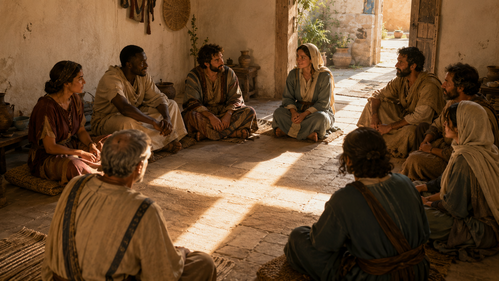
Paul begins his letter to the Corinthians in a way that almost seems surprising once we know what’s coming...
This church has problems. There are divisions among them. They’re arguing over leaders. They’re competing for status. They’re impressed by eloquence, wisdom, and influence. Later in the letter, Paul will confront sexual immorality, lawsuits among believers, confusion about marriage, worship, spiritual gifts, the Lord’s Supper, and even the resurrection. There is plenty to correct.
But Paul begins with Jesus...
Again and again in the opening verses, he names Jesus Christ. The Corinthians have been made holy in Christ. They belong to a larger people who call on the name of Jesus. Grace has been given to them through Christ. They are waiting for Christ’s return. God will strengthen them to the end. They have been called into fellowship with Christ.
Before Paul tells them what’s wrong, he reminds them whose they are. That becomes especially important when Paul reaches the divisions within the church. Some are identifying themselves with Paul. Others prefer Apollos. Others claim Cephas. Still others announce that they belong to Christ, apparently turning even the name of Jesus into another faction.
Paul cuts through all of it with a question: “Has Christ been divided?” (v. 13). Of course not.
Their problem isn’t just that they have different preferences. It's that their preferences have begun to compete with their primary allegiance to Jesus. They’re measuring themselves and one another using the same categories their surrounding culture valued: influence, reputation, impressive teachers, persuasive speech, wisdom, strength, and status.
Paul refuses to play that game. Instead, he points them toward the cross. “For the message of the cross is foolishness to those who are being destroyed. But it is the power of God for those of us who are being saved” (v. 18). The cross overturns nearly every measure of greatness Corinth would have recognized.
Rome used crucifixion to display weakness, humiliation, and defeat. Yet Paul announces that precisely there, in the crucified Christ, the wisdom and power of God have been revealed.
We don’t become God’s people because we found the right teacher, joined the right group, developed enough wisdom, gained influence, or became impressive enough to deserve a place. Paul tells the Corinthians to remember who they were when God called them. By the standards of their society, most of them were not especially powerful, wealthy, well-connected, or important. “But God chose what is foolish in the world to shame the wise. God chose what is weak in the world to shame the strong” (vv. 27). Their life together was a work of grace from beginning to end. So is ours.
That doesn’t mean wisdom, leadership, education, or giftedness are bad. Paul himself was educated, gifted, and capable of powerful argument. Apollos was apparently an excellent teacher. The problem comes when gifts that should serve Christ become ways of measuring ourselves against one another. The Church becomes unhealthy when we begin asking who is most impressive instead of asking whether we are becoming like Jesus.
Who has the strongest following? Who gets the credit? Whose idea won? Whose ministry matters most? Whose voice carries the most weight? Paul takes all of those questions and places them beneath the cross.
Our identity is not ultimately found in the people we admire, the groups we belong to, the accomplishments we can point toward, or the reputation we have built. Paul says that Christ himself has become for us “wisdom from God, righteousness, sanctification, and redemption” (v. 30). Even our holiness begins with Jesus.
God has graciously set us apart as God’s people, and that grace now calls for our response. The Holy Spirit continues shaping a people whose lives increasingly resemble the crucified Christ—humble, loving, faithful, holy, and willing to serve rather than compete for recognition. That kind of community will look foolish to a world obsessed with being somebody. But it looks like Jesus. And Paul says that if we’re going to boast about anything, let us “boast in the Lord.”
The Corinthians had many issues Paul needed to address. But before dealing with any of them, he brought them back to the center. We probably need the same reminder. Jesus is not one loyalty among many. Jesus is the center from which every other part of our lives must find its proper place.
This church has problems. There are divisions among them. They’re arguing over leaders. They’re competing for status. They’re impressed by eloquence, wisdom, and influence. Later in the letter, Paul will confront sexual immorality, lawsuits among believers, confusion about marriage, worship, spiritual gifts, the Lord’s Supper, and even the resurrection. There is plenty to correct.
But Paul begins with Jesus...
Again and again in the opening verses, he names Jesus Christ. The Corinthians have been made holy in Christ. They belong to a larger people who call on the name of Jesus. Grace has been given to them through Christ. They are waiting for Christ’s return. God will strengthen them to the end. They have been called into fellowship with Christ.
Before Paul tells them what’s wrong, he reminds them whose they are. That becomes especially important when Paul reaches the divisions within the church. Some are identifying themselves with Paul. Others prefer Apollos. Others claim Cephas. Still others announce that they belong to Christ, apparently turning even the name of Jesus into another faction.
Paul cuts through all of it with a question: “Has Christ been divided?” (v. 13). Of course not.
Their problem isn’t just that they have different preferences. It's that their preferences have begun to compete with their primary allegiance to Jesus. They’re measuring themselves and one another using the same categories their surrounding culture valued: influence, reputation, impressive teachers, persuasive speech, wisdom, strength, and status.
Paul refuses to play that game. Instead, he points them toward the cross. “For the message of the cross is foolishness to those who are being destroyed. But it is the power of God for those of us who are being saved” (v. 18). The cross overturns nearly every measure of greatness Corinth would have recognized.
Rome used crucifixion to display weakness, humiliation, and defeat. Yet Paul announces that precisely there, in the crucified Christ, the wisdom and power of God have been revealed.
We don’t become God’s people because we found the right teacher, joined the right group, developed enough wisdom, gained influence, or became impressive enough to deserve a place. Paul tells the Corinthians to remember who they were when God called them. By the standards of their society, most of them were not especially powerful, wealthy, well-connected, or important. “But God chose what is foolish in the world to shame the wise. God chose what is weak in the world to shame the strong” (vv. 27). Their life together was a work of grace from beginning to end. So is ours.
That doesn’t mean wisdom, leadership, education, or giftedness are bad. Paul himself was educated, gifted, and capable of powerful argument. Apollos was apparently an excellent teacher. The problem comes when gifts that should serve Christ become ways of measuring ourselves against one another. The Church becomes unhealthy when we begin asking who is most impressive instead of asking whether we are becoming like Jesus.
Who has the strongest following? Who gets the credit? Whose idea won? Whose ministry matters most? Whose voice carries the most weight? Paul takes all of those questions and places them beneath the cross.
Our identity is not ultimately found in the people we admire, the groups we belong to, the accomplishments we can point toward, or the reputation we have built. Paul says that Christ himself has become for us “wisdom from God, righteousness, sanctification, and redemption” (v. 30). Even our holiness begins with Jesus.
God has graciously set us apart as God’s people, and that grace now calls for our response. The Holy Spirit continues shaping a people whose lives increasingly resemble the crucified Christ—humble, loving, faithful, holy, and willing to serve rather than compete for recognition. That kind of community will look foolish to a world obsessed with being somebody. But it looks like Jesus. And Paul says that if we’re going to boast about anything, let us “boast in the Lord.”
The Corinthians had many issues Paul needed to address. But before dealing with any of them, he brought them back to the center. We probably need the same reminder. Jesus is not one loyalty among many. Jesus is the center from which every other part of our lives must find its proper place.
Faith In Action
Pay attention today to one place where you’re tempted to compare yourself with someone else—your influence, ability, recognition, success, or even your spiritual life. Instead of feeding the comparison, thank God for the grace you’ve received and ask how that gift can be used to serve Christ and others.
Today's Prayer
Jesus, bring us back to the center. Forgive us when we measure ourselves and others by influence, success, recognition, or strength. Thank you that our place in your family is a gift of grace, not something we have earned. Keep the cross before us when pride, comparison, or division begins to shape our hearts. Holy Spirit, form us into a people who are humble enough to serve, secure enough to celebrate the gifts of others, and holy enough to reflect the character of Christ together. Let our lives and our church point beyond ourselves to Jesus, in whom we have received everything we need. Amen.
Posted in Bible Reading Plan 2026
Recent
Categories
Archive
2026
January
My Word for the Year... LIGHT2026 Reading Plan Reflections - Day 12026 Reading Plan Reflections - Day 22026 Reading Plan Reflections - Day 32026 Reading Plan Reflections - Day 42026 Reading Plan Reflections - Day 5Welcome to 2026 - New Resources2026 Reading Plan Reflections - Day 62026 Reading Plan Reflections - Day 72026 Reading Plan Reflections - Day 8New Year Prayer Focus2026 Reading Plan Reflections - Day 92026 Reading Plan Reflections - Day 102026 Reading Plan Reflections - Day 112026 Reading Plan Reflections - Day 122026 Reading Plan Reflections - Day 132026 Reading Plan Reflections - Day 142026 Reading Plan Reflections - Day 152026 Reading Plan Reflections - Day 16Darkness and Light2026 Reading Plan Reflections - Day 172026 Reading Plan Reflections - Day 182026 Reading Plan Reflections - Day 192026 Reading Plan Reflections - Day 202026 Reading Plan Reflections - Day 212026 Reading Plan Reflections - Day 222026 Reading Plan Reflections - Day 232026 Reading Plan Reflections - Day 242026 Reading Plan Reflections - Day 252026 Reading Plan Reflections - Day 262026 Reading Plan Reflections - Day 272026 Reading Plan Reflections - Day 282026 Reading Plan Reflections - Day 292026 Reading Plan Reflections - Day 30Together as the Body of Christ2026 Reading Plan Reflections - Day 31
February
2026 Reading Plan Reflections - Day 322026 Reading Plan Reflections - Day 332026 Reading Plan Reflections - Day 342026 Reading Plan Reflections - Day 352026 Reading Plan Reflections - Day 362026 Reading Plan Reflections - Day 37This Shouldn’t Need to Be Said...2026 Reading Plan Reflections - Day 382026 Reading Plan Reflections - Day 392026 Reading Plan Reflections - Day 402026 Reading Plan Reflections - Day 412026 Reading Plan Reflections - Day 422026 Reading Plan Reflections - Day 432026 Reading Plan Reflections - Day 442026 Reading Plan Reflections - Day 452026 Reading Plan Reflections - Day 462026 Reading Plan Reflections - Day 472026 Reading Plan Reflections - Day 482026 Reading Plan Reflections - Day 492026 Reading Plan Reflections - Day 502026 Reading Plan Reflections - Day 512026 Reading Plan Reflections - Day 522026 Reading Plan Reflections - Day 532026 Reading Plan Reflections - Day 542026 Reading Plan Reflections - Day 552026 Reading Plan Reflections - Day 562026 Reading Plan Reflections - Day 572026 Reading Plan Reflections - Day 582026 Reading Plan Reflections - Day 59
March
2026 Reading Plan Reflections - Day 602026 Reading Plan Reflections - Day 612026 Reading Plan Reflections - Day 622026 Reading Plan Reflections - Day 632026 Reading Plan Reflections - Day 642026 Reading Plan Reflections - Day 652026 Reading Plan Reflections - Day 662026 Reading Plan Reflections - Day 672026 Reading Plan Reflections - Day 682026 Reading Plan Reflections - Day 692026 Reading Plan Reflections - Day 702026 Reading Plan Reflections - Day 712026 Reading Plan Reflections - Day 722026 Reading Plan Reflections - Day 732026 Reading Plan Reflections - Day 742026 Reading Plan Reflections - Day 752026 Reading Plan Reflections - Day 762026 Reading Plan Reflections - Day 772026 Reading Plan Reflections - Day 782026 Reading Plan Reflections - Day 792026 Reading Plan Reflections - Day 802026 Reading Plan Reflections - Day 812026 Reading Plan Reflections - Day 822026 Reading Plan Reflections - Day 832026 Reading Plan Reflections - Day 84
April
2026 Reading Plan Reflections - Days 85 & 862026 Reading Plan Reflections - Day 872026 Reading Plan Reflections - Day 882026 Reading Plan Reflections - Day 892026 Reading Plan Reflections - Day 902026 Reading Plan Reflections - Day 912026 Reading Plan Reflections - Day 922026 Reading Plan Reflections - Day 932026 Reading Plan Reflections - Day 942026 Reading Plan Reflections - Day 95
No Comments