
2026 Reading Plan Reflections - Day 267
One Table in Christ
Galatians 2
“I have been crucified with Christ and I no longer live, but Christ lives in me.” Galatians 2:20 CEB
Paul spends much of Galatians 2 talking about circumcision, meetings with church leaders, and an uncomfortable confrontation with Peter. But underneath all of it is one question: What makes someone fully part of the family of God?
For some Jewish believers, the answer still included the familiar identity markers of Israel. Faith in Jesus mattered, of course, but surely Gentile believers also needed to take on the practices that had distinguished God’s covenant people for generations.
Paul understood what was at stake. Titus, a Gentile believer who traveled with him to Jerusalem, became something of a test case. Would Titus need to be circumcised before he could be treated as a full member of the church? Paul refused.
Not because the Jewish heritage was bad. Not because circumcision itself was sinful. The problem was requiring something beyond Christ as the basis for belonging to Christ. Paul writes that he would not give in “even for a moment, so that the truth of the gospel would continue to be with you” (2:5). That phrase helps us understand the entire chapter. The truth of the gospel was at stake.
The leaders in Jerusalem ultimately recognized the grace of God at work through Paul’s ministry. James, Peter, and John extended fellowship to Paul and Barnabas. Their ministries would take them among different people, but they shared the same gospel. Then Peter came to Antioch.
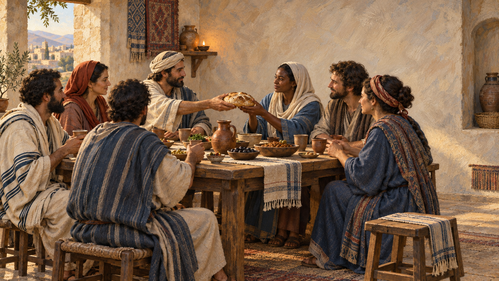
At first, Peter freely ate with Gentile Christians. That may seem like a small detail to us, but shared meals carried enormous significance in the ancient world. Sitting at the same table meant belonging together. Then pressure arrived.
Some Jewish believers came from Jerusalem, and Peter withdrew from the Gentile Christians. Others followed his example. Even Barnabas joined them. Nobody needed to stand up and announce that Gentile Christians were second-class believers. Their seating arrangement said it for them.
Paul confronted Peter because his behavior was contradicting what they both believed. Peter knew that salvation came through Christ. He knew Gentiles had been welcomed by grace. He had already been sharing their table. But fear changed his behavior, and his behavior began rebuilding a division the gospel had torn down.
It is possible to believe the gospel correctly and still live in ways that contradict it. We may confess that salvation is by grace while quietly deciding who belongs most comfortably among us. We may say that every believer is part of the Body of Christ while gravitating only toward people who look, think, speak, worship, vote, work, or live like we do. We can proclaim an open door while maintaining invisible boundaries inside the room.
Paul won't allow that separation between belief and life. His answer reaches its deepest point near the end of the chapter: “I have been crucified with Christ and I no longer live, but Christ lives in me” (2:20). Christian identity begins there.
Our identity is no longer built on our ancestry, accomplishments, social standing, religious résumé, or ability to prove that we belong. We have been united with Christ. His life is being formed in us. That doesn't erase everything that makes us different. Peter remained Jewish. Titus remained Gentile. Paul didn't demand sameness. Grace creates something deeper than sameness: a new family whose common life is found in Christ. This is also where holiness becomes visible.
Holiness is not proving that we are more respectable, disciplined, informed, or religious than someone else. It is Christ living in us—reshaping our loves, loyalties, relationships, habits, and even the people with whom we are willing to share a table. We can't earn that life. Paul closes the chapter by insisting that if righteousness could come through the law, “then Christ died for no purpose” (2:21).
Everything begins with grace. Christ loved us and gave himself for us. Christ welcomes us. Christ gives us a new identity. And the grace that welcomes us begins teaching us how to welcome one another.
So, Galatians 2 leaves us with a very practical question: Does the way we live together tell the same truth as the gospel we proclaim?
There is only one table in Christ’s family. And every seat around it is occupied by someone who is there because of grace.
For some Jewish believers, the answer still included the familiar identity markers of Israel. Faith in Jesus mattered, of course, but surely Gentile believers also needed to take on the practices that had distinguished God’s covenant people for generations.
Paul understood what was at stake. Titus, a Gentile believer who traveled with him to Jerusalem, became something of a test case. Would Titus need to be circumcised before he could be treated as a full member of the church? Paul refused.
Not because the Jewish heritage was bad. Not because circumcision itself was sinful. The problem was requiring something beyond Christ as the basis for belonging to Christ. Paul writes that he would not give in “even for a moment, so that the truth of the gospel would continue to be with you” (2:5). That phrase helps us understand the entire chapter. The truth of the gospel was at stake.
The leaders in Jerusalem ultimately recognized the grace of God at work through Paul’s ministry. James, Peter, and John extended fellowship to Paul and Barnabas. Their ministries would take them among different people, but they shared the same gospel. Then Peter came to Antioch.
At first, Peter freely ate with Gentile Christians. That may seem like a small detail to us, but shared meals carried enormous significance in the ancient world. Sitting at the same table meant belonging together. Then pressure arrived.
Some Jewish believers came from Jerusalem, and Peter withdrew from the Gentile Christians. Others followed his example. Even Barnabas joined them. Nobody needed to stand up and announce that Gentile Christians were second-class believers. Their seating arrangement said it for them.
Paul confronted Peter because his behavior was contradicting what they both believed. Peter knew that salvation came through Christ. He knew Gentiles had been welcomed by grace. He had already been sharing their table. But fear changed his behavior, and his behavior began rebuilding a division the gospel had torn down.
It is possible to believe the gospel correctly and still live in ways that contradict it. We may confess that salvation is by grace while quietly deciding who belongs most comfortably among us. We may say that every believer is part of the Body of Christ while gravitating only toward people who look, think, speak, worship, vote, work, or live like we do. We can proclaim an open door while maintaining invisible boundaries inside the room.
Paul won't allow that separation between belief and life. His answer reaches its deepest point near the end of the chapter: “I have been crucified with Christ and I no longer live, but Christ lives in me” (2:20). Christian identity begins there.
Our identity is no longer built on our ancestry, accomplishments, social standing, religious résumé, or ability to prove that we belong. We have been united with Christ. His life is being formed in us. That doesn't erase everything that makes us different. Peter remained Jewish. Titus remained Gentile. Paul didn't demand sameness. Grace creates something deeper than sameness: a new family whose common life is found in Christ. This is also where holiness becomes visible.
Holiness is not proving that we are more respectable, disciplined, informed, or religious than someone else. It is Christ living in us—reshaping our loves, loyalties, relationships, habits, and even the people with whom we are willing to share a table. We can't earn that life. Paul closes the chapter by insisting that if righteousness could come through the law, “then Christ died for no purpose” (2:21).
Everything begins with grace. Christ loved us and gave himself for us. Christ welcomes us. Christ gives us a new identity. And the grace that welcomes us begins teaching us how to welcome one another.
So, Galatians 2 leaves us with a very practical question: Does the way we live together tell the same truth as the gospel we proclaim?
There is only one table in Christ’s family. And every seat around it is occupied by someone who is there because of grace.
Faith In Action
Think about one person or group of people from whom you naturally keep some distance. Ask God to reveal whether fear, assumption, habit, or pride contributes to that distance. Then take one concrete step toward fellowship today—a conversation, an invitation, a shared meal, or simply choosing to sit together rather than apart.
Today's Prayer
Jesus, you loved us and gave yourself for us. Thank you that our place in your family rests on your grace rather than our ability to prove that we belong. Forgive us when our habits and relationships contradict the gospel we confess. Show us the boundaries we still build and the people we are tempted to keep at a distance. By your Spirit, form your life within us until our churches become communities where your grace can be seen in the way we welcome, serve, and love one another. Teach us to live as one family around one table, with Christ at the center. Amen.
Posted in Bible Reading Plan 2026
Recent
2026 Reading Plan Reflections - Day 267
September 24th, 2026
2026 Reading Plan Reflections - Day 266
September 23rd, 2026
2026 Reading Plan Reflections - Day 265
September 22nd, 2026
2026 Reading Plan Reflections - Day 264
September 21st, 2026
2026 Reading Plan Reflections - Day 262-263
September 19th, 2026
Categories
Archive
2026
January
My Word for the Year... LIGHT2026 Reading Plan Reflections - Day 12026 Reading Plan Reflections - Day 22026 Reading Plan Reflections - Day 32026 Reading Plan Reflections - Day 42026 Reading Plan Reflections - Day 5Welcome to 2026 - New Resources2026 Reading Plan Reflections - Day 62026 Reading Plan Reflections - Day 72026 Reading Plan Reflections - Day 8New Year Prayer Focus2026 Reading Plan Reflections - Day 92026 Reading Plan Reflections - Day 102026 Reading Plan Reflections - Day 112026 Reading Plan Reflections - Day 122026 Reading Plan Reflections - Day 132026 Reading Plan Reflections - Day 142026 Reading Plan Reflections - Day 152026 Reading Plan Reflections - Day 16Darkness and Light2026 Reading Plan Reflections - Day 172026 Reading Plan Reflections - Day 182026 Reading Plan Reflections - Day 192026 Reading Plan Reflections - Day 202026 Reading Plan Reflections - Day 212026 Reading Plan Reflections - Day 222026 Reading Plan Reflections - Day 232026 Reading Plan Reflections - Day 242026 Reading Plan Reflections - Day 252026 Reading Plan Reflections - Day 262026 Reading Plan Reflections - Day 272026 Reading Plan Reflections - Day 282026 Reading Plan Reflections - Day 292026 Reading Plan Reflections - Day 30Together as the Body of Christ2026 Reading Plan Reflections - Day 31
February
2026 Reading Plan Reflections - Day 322026 Reading Plan Reflections - Day 332026 Reading Plan Reflections - Day 342026 Reading Plan Reflections - Day 352026 Reading Plan Reflections - Day 362026 Reading Plan Reflections - Day 37This Shouldn’t Need to Be Said...2026 Reading Plan Reflections - Day 382026 Reading Plan Reflections - Day 392026 Reading Plan Reflections - Day 402026 Reading Plan Reflections - Day 412026 Reading Plan Reflections - Day 422026 Reading Plan Reflections - Day 432026 Reading Plan Reflections - Day 442026 Reading Plan Reflections - Day 452026 Reading Plan Reflections - Day 462026 Reading Plan Reflections - Day 472026 Reading Plan Reflections - Day 482026 Reading Plan Reflections - Day 492026 Reading Plan Reflections - Day 502026 Reading Plan Reflections - Day 512026 Reading Plan Reflections - Day 522026 Reading Plan Reflections - Day 532026 Reading Plan Reflections - Day 542026 Reading Plan Reflections - Day 552026 Reading Plan Reflections - Day 562026 Reading Plan Reflections - Day 572026 Reading Plan Reflections - Day 582026 Reading Plan Reflections - Day 59
March
2026 Reading Plan Reflections - Day 602026 Reading Plan Reflections - Day 612026 Reading Plan Reflections - Day 622026 Reading Plan Reflections - Day 632026 Reading Plan Reflections - Day 642026 Reading Plan Reflections - Day 652026 Reading Plan Reflections - Day 662026 Reading Plan Reflections - Day 672026 Reading Plan Reflections - Day 682026 Reading Plan Reflections - Day 692026 Reading Plan Reflections - Day 702026 Reading Plan Reflections - Day 712026 Reading Plan Reflections - Day 722026 Reading Plan Reflections - Day 732026 Reading Plan Reflections - Day 742026 Reading Plan Reflections - Day 752026 Reading Plan Reflections - Day 762026 Reading Plan Reflections - Day 772026 Reading Plan Reflections - Day 782026 Reading Plan Reflections - Day 792026 Reading Plan Reflections - Day 802026 Reading Plan Reflections - Day 812026 Reading Plan Reflections - Day 822026 Reading Plan Reflections - Day 832026 Reading Plan Reflections - Day 84
April
2026 Reading Plan Reflections - Days 85 & 862026 Reading Plan Reflections - Day 872026 Reading Plan Reflections - Day 882026 Reading Plan Reflections - Day 892026 Reading Plan Reflections - Day 902026 Reading Plan Reflections - Day 912026 Reading Plan Reflections - Day 922026 Reading Plan Reflections - Day 932026 Reading Plan Reflections - Day 942026 Reading Plan Reflections - Day 95
No Comments