
2026 Reading Plan Reflections - Day 221
Shaped for Mercy
Romans 9
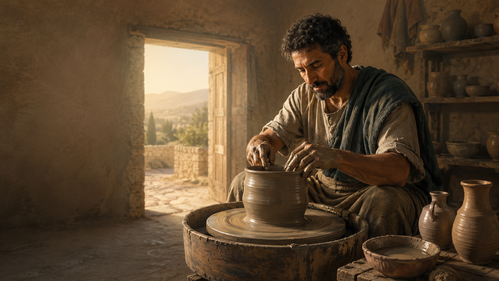
“Who indeed are you—a human being—to argue with God? Will what is formed say to the one who formed it, ‘Why did you make me like this?’ Doesn’t the potter have the right to make from the same lump of clay one container for special use and another for ordinary use? … What if God did this to make the wealth of his glory known to the objects of mercy that he prepared in advance for glory? We are the ones God has called. We don’t come only from the Jews but we also come from the Gentiles.” Romans 9:20-21; 23-24 CEB
Romans 8 ends with one of the most confident declarations in all of Scripture: nothing can separate us from the love of God in Christ Jesus. Then Romans 9 begins with grief.
Paul says he has “great sadness and constant pain” in his heart because so many of his fellow Israelites have not embraced Jesus as Messiah. These are his people. They have received the covenants, the Law, the worship, the promises, and the patriarchs. The Messiah himself came from Israel. So Paul faces a difficult question: Has God’s word failed?
If Israel received all these promises and yet so many Israelites have rejected the Messiah, what does that say about God’s faithfulness? Paul’s answer throughout this chapter is that God has not abandoned the promise. God has been faithfully carrying it forward all along. To explain that, Paul takes us back through Israel’s story: Abraham, Isaac, Jacob, Moses, Pharaoh, the prophets. He reminds us that God’s saving work has never depended upon human achievement or superiority. God called Israel by grace and gave Israel a vocation: to become the people through whom God would bless the world.
That calling was a gift, but it was also a responsibility. That may be one of the most important things for us to hear in this chapter.
Being chosen by God never meant Israel could rest in its identity while resisting God’s purposes. God’s grace wasn’t a declaration that Israel was better than everyone else. God had called Israel for the sake of the world. And when God’s people resisted that calling, God did not abandon the promise. God kept working.
That's where Paul’s image of the potter and clay becomes important. We sometimes read these verses as though Paul has suddenly stepped away from Israel’s story to make an abstract statement about God controlling individual human destinies. But the image comes from the prophets, where God is the potter faithfully working with a people who have resisted the shape God desires for them. The clay is still being worked. The Potter hasn’t walked away. And that gives us an important connection to everything we’ve been considering about holiness.
We’ve spent the last several chapters of Romans talking about what grace does in us. In Romans 6, we discovered that grace brings us from slavery into new life. Romans 7 reminded us that knowing the right way cannot give us the power to walk it. Romans 8 showed us the Holy Spirit leading and empowering God’s children while creation itself waits for the completion of God’s work. Now Romans 9 reminds us that people who have received grace must remain willing to be shaped by grace.
We can't say yes to belonging to God while continually saying no to what God wants to make of us. That’s an uncomfortable truth because most of us would prefer grace to affirm us rather than reshape us. We’re grateful to hear that God loves us. We’re grateful that Christ died for us. We’re grateful that the Spirit dwells within us. But then the Potter’s hands begin working on the places we would rather leave alone... Our desires. Our priorities. Our relationships. Our habits. Our prejudices. Our understanding of who belongs. Our willingness to love and serve people who are different from us.
Holiness means allowing grace to reach those places too. And notice where Paul’s argument eventually goes. God is forming “vessels of mercy” from both Jews and Gentiles. God’s family is becoming larger than many had imagined because the ancient promise to Abraham was always moving outward toward the blessing of the nations.
We aren't shaped by mercy simply so that we can enjoy having received mercy. We are shaped into people through whom God’s mercy can reach the world. That fits the larger story Paul has been telling from the beginning of Romans. Grace creates a new people. The Spirit forms them into the likeness of Christ. And then God sends them into the world as living evidence of what new creation looks like. The Potter is still working.
There may be places in us that still resist the pressure of those hands. There may be assumptions we have carried for years that God wants to reshape. There may be desires we have defended that do not look much like Jesus. There may even be ways we have mistaken familiarity with God for faithfulness to God. But the answer isn’t despair... It's surrender.
The same grace that called us is still shaping us. And the God who began this work is faithful.
Paul says he has “great sadness and constant pain” in his heart because so many of his fellow Israelites have not embraced Jesus as Messiah. These are his people. They have received the covenants, the Law, the worship, the promises, and the patriarchs. The Messiah himself came from Israel. So Paul faces a difficult question: Has God’s word failed?
If Israel received all these promises and yet so many Israelites have rejected the Messiah, what does that say about God’s faithfulness? Paul’s answer throughout this chapter is that God has not abandoned the promise. God has been faithfully carrying it forward all along. To explain that, Paul takes us back through Israel’s story: Abraham, Isaac, Jacob, Moses, Pharaoh, the prophets. He reminds us that God’s saving work has never depended upon human achievement or superiority. God called Israel by grace and gave Israel a vocation: to become the people through whom God would bless the world.
That calling was a gift, but it was also a responsibility. That may be one of the most important things for us to hear in this chapter.
Being chosen by God never meant Israel could rest in its identity while resisting God’s purposes. God’s grace wasn’t a declaration that Israel was better than everyone else. God had called Israel for the sake of the world. And when God’s people resisted that calling, God did not abandon the promise. God kept working.
That's where Paul’s image of the potter and clay becomes important. We sometimes read these verses as though Paul has suddenly stepped away from Israel’s story to make an abstract statement about God controlling individual human destinies. But the image comes from the prophets, where God is the potter faithfully working with a people who have resisted the shape God desires for them. The clay is still being worked. The Potter hasn’t walked away. And that gives us an important connection to everything we’ve been considering about holiness.
We’ve spent the last several chapters of Romans talking about what grace does in us. In Romans 6, we discovered that grace brings us from slavery into new life. Romans 7 reminded us that knowing the right way cannot give us the power to walk it. Romans 8 showed us the Holy Spirit leading and empowering God’s children while creation itself waits for the completion of God’s work. Now Romans 9 reminds us that people who have received grace must remain willing to be shaped by grace.
We can't say yes to belonging to God while continually saying no to what God wants to make of us. That’s an uncomfortable truth because most of us would prefer grace to affirm us rather than reshape us. We’re grateful to hear that God loves us. We’re grateful that Christ died for us. We’re grateful that the Spirit dwells within us. But then the Potter’s hands begin working on the places we would rather leave alone... Our desires. Our priorities. Our relationships. Our habits. Our prejudices. Our understanding of who belongs. Our willingness to love and serve people who are different from us.
Holiness means allowing grace to reach those places too. And notice where Paul’s argument eventually goes. God is forming “vessels of mercy” from both Jews and Gentiles. God’s family is becoming larger than many had imagined because the ancient promise to Abraham was always moving outward toward the blessing of the nations.
We aren't shaped by mercy simply so that we can enjoy having received mercy. We are shaped into people through whom God’s mercy can reach the world. That fits the larger story Paul has been telling from the beginning of Romans. Grace creates a new people. The Spirit forms them into the likeness of Christ. And then God sends them into the world as living evidence of what new creation looks like. The Potter is still working.
There may be places in us that still resist the pressure of those hands. There may be assumptions we have carried for years that God wants to reshape. There may be desires we have defended that do not look much like Jesus. There may even be ways we have mistaken familiarity with God for faithfulness to God. But the answer isn’t despair... It's surrender.
The same grace that called us is still shaping us. And the God who began this work is faithful.
Faith In Action
Ask God today, “Where am I resisting the way you are trying to shape me?” Sit quietly with that question, and name one area you are willing to surrender to the Spirit’s transforming grace.
Today's Prayer
Faithful God, thank you that your purposes do not depend upon our perfection. You have called us by grace, welcomed us through Christ, and given us your Spirit. Forgive us when we become comfortable with receiving your grace while resisting the ways you want to change us. Keep shaping our desires, our relationships, our priorities, and our love for others until the life of Jesus becomes increasingly visible in us. Make us people who do not simply receive mercy, but carry your mercy into the world. Give us humble and willing hearts in the hands of the Potter. Amen.
Posted in Bible Reading Plan 2026
Recent
Categories
Archive
2026
January
My Word for the Year... LIGHT2026 Reading Plan Reflections - Day 12026 Reading Plan Reflections - Day 22026 Reading Plan Reflections - Day 32026 Reading Plan Reflections - Day 42026 Reading Plan Reflections - Day 5Welcome to 2026 - New Resources2026 Reading Plan Reflections - Day 62026 Reading Plan Reflections - Day 72026 Reading Plan Reflections - Day 8New Year Prayer Focus2026 Reading Plan Reflections - Day 92026 Reading Plan Reflections - Day 102026 Reading Plan Reflections - Day 112026 Reading Plan Reflections - Day 122026 Reading Plan Reflections - Day 132026 Reading Plan Reflections - Day 142026 Reading Plan Reflections - Day 152026 Reading Plan Reflections - Day 16Darkness and Light2026 Reading Plan Reflections - Day 172026 Reading Plan Reflections - Day 182026 Reading Plan Reflections - Day 192026 Reading Plan Reflections - Day 202026 Reading Plan Reflections - Day 212026 Reading Plan Reflections - Day 222026 Reading Plan Reflections - Day 232026 Reading Plan Reflections - Day 242026 Reading Plan Reflections - Day 252026 Reading Plan Reflections - Day 262026 Reading Plan Reflections - Day 272026 Reading Plan Reflections - Day 282026 Reading Plan Reflections - Day 292026 Reading Plan Reflections - Day 30Together as the Body of Christ2026 Reading Plan Reflections - Day 31
February
2026 Reading Plan Reflections - Day 322026 Reading Plan Reflections - Day 332026 Reading Plan Reflections - Day 342026 Reading Plan Reflections - Day 352026 Reading Plan Reflections - Day 362026 Reading Plan Reflections - Day 37This Shouldn’t Need to Be Said...2026 Reading Plan Reflections - Day 382026 Reading Plan Reflections - Day 392026 Reading Plan Reflections - Day 402026 Reading Plan Reflections - Day 412026 Reading Plan Reflections - Day 422026 Reading Plan Reflections - Day 432026 Reading Plan Reflections - Day 442026 Reading Plan Reflections - Day 452026 Reading Plan Reflections - Day 462026 Reading Plan Reflections - Day 472026 Reading Plan Reflections - Day 482026 Reading Plan Reflections - Day 492026 Reading Plan Reflections - Day 502026 Reading Plan Reflections - Day 512026 Reading Plan Reflections - Day 522026 Reading Plan Reflections - Day 532026 Reading Plan Reflections - Day 542026 Reading Plan Reflections - Day 552026 Reading Plan Reflections - Day 562026 Reading Plan Reflections - Day 572026 Reading Plan Reflections - Day 582026 Reading Plan Reflections - Day 59
March
2026 Reading Plan Reflections - Day 602026 Reading Plan Reflections - Day 612026 Reading Plan Reflections - Day 622026 Reading Plan Reflections - Day 632026 Reading Plan Reflections - Day 642026 Reading Plan Reflections - Day 652026 Reading Plan Reflections - Day 662026 Reading Plan Reflections - Day 672026 Reading Plan Reflections - Day 682026 Reading Plan Reflections - Day 692026 Reading Plan Reflections - Day 702026 Reading Plan Reflections - Day 712026 Reading Plan Reflections - Day 722026 Reading Plan Reflections - Day 732026 Reading Plan Reflections - Day 742026 Reading Plan Reflections - Day 752026 Reading Plan Reflections - Day 762026 Reading Plan Reflections - Day 772026 Reading Plan Reflections - Day 782026 Reading Plan Reflections - Day 792026 Reading Plan Reflections - Day 802026 Reading Plan Reflections - Day 812026 Reading Plan Reflections - Day 822026 Reading Plan Reflections - Day 832026 Reading Plan Reflections - Day 84
April
2026 Reading Plan Reflections - Days 85 & 862026 Reading Plan Reflections - Day 872026 Reading Plan Reflections - Day 882026 Reading Plan Reflections - Day 892026 Reading Plan Reflections - Day 902026 Reading Plan Reflections - Day 912026 Reading Plan Reflections - Day 922026 Reading Plan Reflections - Day 932026 Reading Plan Reflections - Day 942026 Reading Plan Reflections - Day 95
No Comments