
2026 Reading Plan Reflections - Day 225
A Living Sacrifice
Romans 12
“I encourage you to present your bodies as a living sacrifice that is holy and pleasing to God. This is your appropriate priestly service.” Romans 12:1 CEB
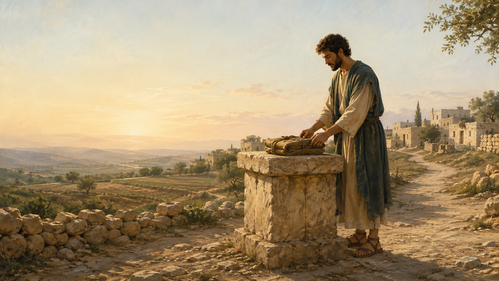
Romans 12 begins with one of Paul’s most familiar appeals: “I encourage you to present your bodies as a living sacrifice that is holy and pleasing to God. This is your appropriate priestly service” (Romans 12:1 CEB).
After eleven chapters describing the mercy and faithfulness of God, Paul finally turns and says, in effect: Now live like people who have received that mercy. Paul doesn’t begin Christian living with a list of demands. He begins with everything God has already done in Jesus Christ. Grace comes first. Our response follows. And the response Paul describes is much bigger than attending worship or believing the right things. He asks us to place our whole lives before God.
A living sacrifice... Our minds, bodies, relationships, gifts, and work. The way we respond when someone hurts us. All of it belongs on the altar.
Paul immediately connects this whole-life surrender with the renewal of our minds: “Don’t be conformed to the patterns of this world, but be transformed by the renewing of your minds" (12:2 CEB). The “world” Paul has in mind is what he elsewhere calls the present age—the world still marked by sin, rebellion, division, and death. But Paul believes something new has already begun through the death and resurrection of Jesus. God’s new creation has broken into the old.
Christians are therefore learning to live according to the life of the coming kingdom while still surrounded by the patterns of the present age. That requires transformation. We can't just absorb whatever our culture teaches us about success, power, identity, relationships, anger, or retaliation and then add a little Christianity on top. The Holy Spirit renews the way we think so that increasingly we can recognize what reflects the character and will of God.
And then Paul shows us what that transformed life actually looks like. It begins with humility. “Don’t think of yourself more highly than you ought to think” (12:3 CEB). We belong to one body, and we need one another. Different people receive different gifts, but none of us possesses every gift. Grace doesn’t make us self-sufficient. Grace gives us something to contribute while teaching us to receive what God has given through others. So teach faithfully, serve diligently, encourage generously, give freely, lead carefully, and show mercy cheerfully.
Then Paul widens the picture beyond our individual gifts: “Love should be shown without pretending. Hate evil, and hold on to what is good” (12:9 CEB). Be devoted to one another. Honor one another. Serve the Lord passionately. Be patient in trouble. Keep praying. Share with people in need. Practice hospitality. This is what renewed people look like.
And then Paul pushes even further. “Bless people who harass you—bless and don’t curse them” (12:14 CEB). The transformation Paul describes reaches even into the place where we have been wounded. The normal pattern of the present age is retaliation: hurt those who hurt you, embarrass those who embarrassed you, defeat those who oppose you. Paul gives us another way.
He doesn’t pretend evil isn’t evil. In fact, he has already told us to hate what is evil. Christian love isn’t denial, passivity, or pretending that wounds don’t matter. But neither are we allowed to let evil determine what we become. “Don’t be defeated by evil, but defeat evil with good” (12:21 CEB). That final command gathers the chapter together.
The renewed mind learns to recognize another way. The surrendered life chooses another way. The Body of Christ practices another way together. And when we are mistreated, the Spirit forms in us the character of Jesus, who answered hatred with love and conquered death not by returning violence for violence, but through the self-giving love of the cross and the victorious life of the resurrection.
Romans 12 gives us a practical picture of holiness. Holiness is not escaping ordinary life. It's offering ordinary life to God. It's allowing grace to reshape the way we think until it changes the way we serve, love, forgive, give, welcome, endure, and respond to those who oppose us. We become living sacrifices—not so that God might love us, but because the mercy of God has already come all the way to us. And as we continually place ourselves before God, the Holy Spirit keeps forming the life of Christ within us.
After eleven chapters describing the mercy and faithfulness of God, Paul finally turns and says, in effect: Now live like people who have received that mercy. Paul doesn’t begin Christian living with a list of demands. He begins with everything God has already done in Jesus Christ. Grace comes first. Our response follows. And the response Paul describes is much bigger than attending worship or believing the right things. He asks us to place our whole lives before God.
A living sacrifice... Our minds, bodies, relationships, gifts, and work. The way we respond when someone hurts us. All of it belongs on the altar.
Paul immediately connects this whole-life surrender with the renewal of our minds: “Don’t be conformed to the patterns of this world, but be transformed by the renewing of your minds" (12:2 CEB). The “world” Paul has in mind is what he elsewhere calls the present age—the world still marked by sin, rebellion, division, and death. But Paul believes something new has already begun through the death and resurrection of Jesus. God’s new creation has broken into the old.
Christians are therefore learning to live according to the life of the coming kingdom while still surrounded by the patterns of the present age. That requires transformation. We can't just absorb whatever our culture teaches us about success, power, identity, relationships, anger, or retaliation and then add a little Christianity on top. The Holy Spirit renews the way we think so that increasingly we can recognize what reflects the character and will of God.
And then Paul shows us what that transformed life actually looks like. It begins with humility. “Don’t think of yourself more highly than you ought to think” (12:3 CEB). We belong to one body, and we need one another. Different people receive different gifts, but none of us possesses every gift. Grace doesn’t make us self-sufficient. Grace gives us something to contribute while teaching us to receive what God has given through others. So teach faithfully, serve diligently, encourage generously, give freely, lead carefully, and show mercy cheerfully.
Then Paul widens the picture beyond our individual gifts: “Love should be shown without pretending. Hate evil, and hold on to what is good” (12:9 CEB). Be devoted to one another. Honor one another. Serve the Lord passionately. Be patient in trouble. Keep praying. Share with people in need. Practice hospitality. This is what renewed people look like.
And then Paul pushes even further. “Bless people who harass you—bless and don’t curse them” (12:14 CEB). The transformation Paul describes reaches even into the place where we have been wounded. The normal pattern of the present age is retaliation: hurt those who hurt you, embarrass those who embarrassed you, defeat those who oppose you. Paul gives us another way.
He doesn’t pretend evil isn’t evil. In fact, he has already told us to hate what is evil. Christian love isn’t denial, passivity, or pretending that wounds don’t matter. But neither are we allowed to let evil determine what we become. “Don’t be defeated by evil, but defeat evil with good” (12:21 CEB). That final command gathers the chapter together.
The renewed mind learns to recognize another way. The surrendered life chooses another way. The Body of Christ practices another way together. And when we are mistreated, the Spirit forms in us the character of Jesus, who answered hatred with love and conquered death not by returning violence for violence, but through the self-giving love of the cross and the victorious life of the resurrection.
Romans 12 gives us a practical picture of holiness. Holiness is not escaping ordinary life. It's offering ordinary life to God. It's allowing grace to reshape the way we think until it changes the way we serve, love, forgive, give, welcome, endure, and respond to those who oppose us. We become living sacrifices—not so that God might love us, but because the mercy of God has already come all the way to us. And as we continually place ourselves before God, the Holy Spirit keeps forming the life of Christ within us.
Faith In Action
Read Romans 12:9–21 slowly today. Choose one command that exposes an area where your normal response needs to be reshaped, and ask the Holy Spirit to help you practice it intentionally before the day ends.
Today's Prayer
Gracious God, you have met us with mercy before we could ever deserve it. Teach us to offer our whole lives back to you in response. Renew our minds so that we recognize the patterns of this age that still shape us, and give us grace to live according to your kingdom instead. Make us humble members of Christ’s Body, faithful with the gifts you have given us and generous toward one another. Where we have been hurt, keep bitterness and revenge from taking root. Form the love of Jesus in us until we learn to overcome evil with good. Make our lives holy and pleasing to you through the transforming work of your Spirit. Amen.
Posted in Bible Reading Plan 2026
Recent
Categories
Archive
2026
January
My Word for the Year... LIGHT2026 Reading Plan Reflections - Day 12026 Reading Plan Reflections - Day 22026 Reading Plan Reflections - Day 32026 Reading Plan Reflections - Day 42026 Reading Plan Reflections - Day 5Welcome to 2026 - New Resources2026 Reading Plan Reflections - Day 62026 Reading Plan Reflections - Day 72026 Reading Plan Reflections - Day 8New Year Prayer Focus2026 Reading Plan Reflections - Day 92026 Reading Plan Reflections - Day 102026 Reading Plan Reflections - Day 112026 Reading Plan Reflections - Day 122026 Reading Plan Reflections - Day 132026 Reading Plan Reflections - Day 142026 Reading Plan Reflections - Day 152026 Reading Plan Reflections - Day 16Darkness and Light2026 Reading Plan Reflections - Day 172026 Reading Plan Reflections - Day 182026 Reading Plan Reflections - Day 192026 Reading Plan Reflections - Day 202026 Reading Plan Reflections - Day 212026 Reading Plan Reflections - Day 222026 Reading Plan Reflections - Day 232026 Reading Plan Reflections - Day 242026 Reading Plan Reflections - Day 252026 Reading Plan Reflections - Day 262026 Reading Plan Reflections - Day 272026 Reading Plan Reflections - Day 282026 Reading Plan Reflections - Day 292026 Reading Plan Reflections - Day 30Together as the Body of Christ2026 Reading Plan Reflections - Day 31
February
2026 Reading Plan Reflections - Day 322026 Reading Plan Reflections - Day 332026 Reading Plan Reflections - Day 342026 Reading Plan Reflections - Day 352026 Reading Plan Reflections - Day 362026 Reading Plan Reflections - Day 37This Shouldn’t Need to Be Said...2026 Reading Plan Reflections - Day 382026 Reading Plan Reflections - Day 392026 Reading Plan Reflections - Day 402026 Reading Plan Reflections - Day 412026 Reading Plan Reflections - Day 422026 Reading Plan Reflections - Day 432026 Reading Plan Reflections - Day 442026 Reading Plan Reflections - Day 452026 Reading Plan Reflections - Day 462026 Reading Plan Reflections - Day 472026 Reading Plan Reflections - Day 482026 Reading Plan Reflections - Day 492026 Reading Plan Reflections - Day 502026 Reading Plan Reflections - Day 512026 Reading Plan Reflections - Day 522026 Reading Plan Reflections - Day 532026 Reading Plan Reflections - Day 542026 Reading Plan Reflections - Day 552026 Reading Plan Reflections - Day 562026 Reading Plan Reflections - Day 572026 Reading Plan Reflections - Day 582026 Reading Plan Reflections - Day 59
March
2026 Reading Plan Reflections - Day 602026 Reading Plan Reflections - Day 612026 Reading Plan Reflections - Day 622026 Reading Plan Reflections - Day 632026 Reading Plan Reflections - Day 642026 Reading Plan Reflections - Day 652026 Reading Plan Reflections - Day 662026 Reading Plan Reflections - Day 672026 Reading Plan Reflections - Day 682026 Reading Plan Reflections - Day 692026 Reading Plan Reflections - Day 702026 Reading Plan Reflections - Day 712026 Reading Plan Reflections - Day 722026 Reading Plan Reflections - Day 732026 Reading Plan Reflections - Day 742026 Reading Plan Reflections - Day 752026 Reading Plan Reflections - Day 762026 Reading Plan Reflections - Day 772026 Reading Plan Reflections - Day 782026 Reading Plan Reflections - Day 792026 Reading Plan Reflections - Day 802026 Reading Plan Reflections - Day 812026 Reading Plan Reflections - Day 822026 Reading Plan Reflections - Day 832026 Reading Plan Reflections - Day 84
April
2026 Reading Plan Reflections - Days 85 & 862026 Reading Plan Reflections - Day 872026 Reading Plan Reflections - Day 882026 Reading Plan Reflections - Day 892026 Reading Plan Reflections - Day 902026 Reading Plan Reflections - Day 912026 Reading Plan Reflections - Day 922026 Reading Plan Reflections - Day 932026 Reading Plan Reflections - Day 942026 Reading Plan Reflections - Day 95
No Comments