
2026 Reading Plan Reflections - Day 228
Welcome That Becomes Worship
Romans 15:1–13
“So welcome each other, in the same way that Christ also welcomed you, for God’s glory.” Romans 15:7 CEB
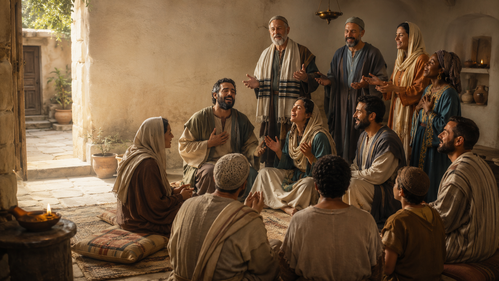
Paul’s discussion about disagreements within the church began back in Romans 14, but he was never interested in helping Christians learn how to tolerate one another from a safe distance. He’s after something far richer. “We who are powerful need to be patient with the weakness of those who don’t have power, and not please ourselves. Each of us should please our neighbors for their good in order to build them up” (Romans 15:1–2, CEB).
Yesterday, Paul warned us not to use our freedom in ways that become stumbling blocks for another believer. Today he pushes the thought further. Christian maturity isn’t measured by how confidently we exercise our rights. Sometimes it’s revealed by what we are willing to surrender for the sake of someone else.
And Paul grounds that way of life in Jesus. “Christ didn’t please himself,” Paul writes in verse 3. Jesus had every right to choose the easier road, yet the shape of his life was self-giving love. He humbled himself. He served. He carried the burdens of others. Ultimately, he gave himself on the cross.
So when Paul asks stronger believers to bear with the weak, he isn’t offering a technique for keeping peace in a difficult congregation. He’s describing Christlikeness.
The goal isn’t a church where everyone carefully avoids controversial subjects so nobody gets upset. Neither is the goal a church where everyone eventually arrives at identical conclusions about every disputed matter. Paul has already acknowledged that sincere Christians may reach different convictions. What must be shared is something deeper: the mind of Christ toward one another.
Paul prays that God will give the believers “the same attitude toward each other, similar to Christ Jesus’ attitude.” Why? “So that you can glorify the God and Father of our Lord Jesus Christ together with one voice” (Romans 15:6, CEB). The destination of this whole discussion is worship.
Think about that. The strong make room for the weak; believers refuse to condemn one another over disputable matters; Christian freedom becomes shaped by love; people from very different backgrounds welcome one another; and eventually all those different voices become one voice of praise. That’s the church Paul can see taking shape.
“Welcome each other, in the same way that Christ also welcomed you, for God’s glory" (Romans 15:7, CEB). We welcome because we have already been welcomed. None of us entered the family of God because we finally became acceptable enough. Christ received us by grace. That same grace now reshapes the way we receive one another.
Paul then widens the lens beyond the particular disagreements in Rome. He reaches throughout Israel’s Scriptures to remind the church that bringing Jews and Gentiles together was never an afterthought in God’s plan. Again and again, the nations are summoned to rejoice, praise, and hope in Israel’s God.
God’s promise through Israel was always moving toward blessing the nations. Jesus, the Messiah from David’s family, has fulfilled those promises, risen from the dead, and opened the family of God to people from every nation. The church in Rome was living evidence that God keeps promises. So are we.
Whenever people who would ordinarily remain divided discover that Christ is greater than the things separating them, the church becomes a living testimony to the gospel. That doesn’t mean our differences disappear. It means they no longer determine who belongs at the table.
Our common life is centered somewhere else. In Christ.
Paul closes this great section of Romans with a prayer: “May the God of hope fill you with all joy and peace in faith so that your hope overflows through the power of the Holy Spirit" (Romans 15:13, CEB). Notice where the power comes from. Paul isn’t asking the Roman Christians to manufacture unity, joy, peace, or hope through sheer determination. The God of hope fills them. The Holy Spirit empowers them. That’s grace at work.
Christ welcomes us. The Spirit forms us. Together, we learn to welcome one another, and a divided collection of people slowly becomes a worshiping family whose shared life points beyond itself to the God who has made us one.
Yesterday, Paul warned us not to use our freedom in ways that become stumbling blocks for another believer. Today he pushes the thought further. Christian maturity isn’t measured by how confidently we exercise our rights. Sometimes it’s revealed by what we are willing to surrender for the sake of someone else.
And Paul grounds that way of life in Jesus. “Christ didn’t please himself,” Paul writes in verse 3. Jesus had every right to choose the easier road, yet the shape of his life was self-giving love. He humbled himself. He served. He carried the burdens of others. Ultimately, he gave himself on the cross.
So when Paul asks stronger believers to bear with the weak, he isn’t offering a technique for keeping peace in a difficult congregation. He’s describing Christlikeness.
The goal isn’t a church where everyone carefully avoids controversial subjects so nobody gets upset. Neither is the goal a church where everyone eventually arrives at identical conclusions about every disputed matter. Paul has already acknowledged that sincere Christians may reach different convictions. What must be shared is something deeper: the mind of Christ toward one another.
Paul prays that God will give the believers “the same attitude toward each other, similar to Christ Jesus’ attitude.” Why? “So that you can glorify the God and Father of our Lord Jesus Christ together with one voice” (Romans 15:6, CEB). The destination of this whole discussion is worship.
Think about that. The strong make room for the weak; believers refuse to condemn one another over disputable matters; Christian freedom becomes shaped by love; people from very different backgrounds welcome one another; and eventually all those different voices become one voice of praise. That’s the church Paul can see taking shape.
“Welcome each other, in the same way that Christ also welcomed you, for God’s glory" (Romans 15:7, CEB). We welcome because we have already been welcomed. None of us entered the family of God because we finally became acceptable enough. Christ received us by grace. That same grace now reshapes the way we receive one another.
Paul then widens the lens beyond the particular disagreements in Rome. He reaches throughout Israel’s Scriptures to remind the church that bringing Jews and Gentiles together was never an afterthought in God’s plan. Again and again, the nations are summoned to rejoice, praise, and hope in Israel’s God.
God’s promise through Israel was always moving toward blessing the nations. Jesus, the Messiah from David’s family, has fulfilled those promises, risen from the dead, and opened the family of God to people from every nation. The church in Rome was living evidence that God keeps promises. So are we.
Whenever people who would ordinarily remain divided discover that Christ is greater than the things separating them, the church becomes a living testimony to the gospel. That doesn’t mean our differences disappear. It means they no longer determine who belongs at the table.
Our common life is centered somewhere else. In Christ.
Paul closes this great section of Romans with a prayer: “May the God of hope fill you with all joy and peace in faith so that your hope overflows through the power of the Holy Spirit" (Romans 15:13, CEB). Notice where the power comes from. Paul isn’t asking the Roman Christians to manufacture unity, joy, peace, or hope through sheer determination. The God of hope fills them. The Holy Spirit empowers them. That’s grace at work.
Christ welcomes us. The Spirit forms us. Together, we learn to welcome one another, and a divided collection of people slowly becomes a worshiping family whose shared life points beyond itself to the God who has made us one.
Faith In Action
Think of one fellow Christian whose perspective, background, or convictions differ from yours. Pray Romans 15:5–7 for your relationship with that person today, then take one concrete step to encourage, serve, or welcome them without trying to change their mind.
Today's Prayer
God of hope, thank you for welcoming us through Jesus Christ when we could never have made ourselves worthy of your welcome. Form in us the mind of Christ. Free us from the need to insist upon our own way, and teach us to use our freedom for the good of one another. Through the Holy Spirit, make your church a people whose differences are held together by a deeper allegiance to Jesus. Fill us with joy and peace as we trust you, and let our hope overflow so that our life together becomes a witness to your grace. May our many voices become one voice of praise for your glory. Amen.
Posted in Bible Reading Plan 2026
Recent
Categories
Archive
2026
January
My Word for the Year... LIGHT2026 Reading Plan Reflections - Day 12026 Reading Plan Reflections - Day 22026 Reading Plan Reflections - Day 32026 Reading Plan Reflections - Day 42026 Reading Plan Reflections - Day 5Welcome to 2026 - New Resources2026 Reading Plan Reflections - Day 62026 Reading Plan Reflections - Day 72026 Reading Plan Reflections - Day 8New Year Prayer Focus2026 Reading Plan Reflections - Day 92026 Reading Plan Reflections - Day 102026 Reading Plan Reflections - Day 112026 Reading Plan Reflections - Day 122026 Reading Plan Reflections - Day 132026 Reading Plan Reflections - Day 142026 Reading Plan Reflections - Day 152026 Reading Plan Reflections - Day 16Darkness and Light2026 Reading Plan Reflections - Day 172026 Reading Plan Reflections - Day 182026 Reading Plan Reflections - Day 192026 Reading Plan Reflections - Day 202026 Reading Plan Reflections - Day 212026 Reading Plan Reflections - Day 222026 Reading Plan Reflections - Day 232026 Reading Plan Reflections - Day 242026 Reading Plan Reflections - Day 252026 Reading Plan Reflections - Day 262026 Reading Plan Reflections - Day 272026 Reading Plan Reflections - Day 282026 Reading Plan Reflections - Day 292026 Reading Plan Reflections - Day 30Together as the Body of Christ2026 Reading Plan Reflections - Day 31
February
2026 Reading Plan Reflections - Day 322026 Reading Plan Reflections - Day 332026 Reading Plan Reflections - Day 342026 Reading Plan Reflections - Day 352026 Reading Plan Reflections - Day 362026 Reading Plan Reflections - Day 37This Shouldn’t Need to Be Said...2026 Reading Plan Reflections - Day 382026 Reading Plan Reflections - Day 392026 Reading Plan Reflections - Day 402026 Reading Plan Reflections - Day 412026 Reading Plan Reflections - Day 422026 Reading Plan Reflections - Day 432026 Reading Plan Reflections - Day 442026 Reading Plan Reflections - Day 452026 Reading Plan Reflections - Day 462026 Reading Plan Reflections - Day 472026 Reading Plan Reflections - Day 482026 Reading Plan Reflections - Day 492026 Reading Plan Reflections - Day 502026 Reading Plan Reflections - Day 512026 Reading Plan Reflections - Day 522026 Reading Plan Reflections - Day 532026 Reading Plan Reflections - Day 542026 Reading Plan Reflections - Day 552026 Reading Plan Reflections - Day 562026 Reading Plan Reflections - Day 572026 Reading Plan Reflections - Day 582026 Reading Plan Reflections - Day 59
March
2026 Reading Plan Reflections - Day 602026 Reading Plan Reflections - Day 612026 Reading Plan Reflections - Day 622026 Reading Plan Reflections - Day 632026 Reading Plan Reflections - Day 642026 Reading Plan Reflections - Day 652026 Reading Plan Reflections - Day 662026 Reading Plan Reflections - Day 672026 Reading Plan Reflections - Day 682026 Reading Plan Reflections - Day 692026 Reading Plan Reflections - Day 702026 Reading Plan Reflections - Day 712026 Reading Plan Reflections - Day 722026 Reading Plan Reflections - Day 732026 Reading Plan Reflections - Day 742026 Reading Plan Reflections - Day 752026 Reading Plan Reflections - Day 762026 Reading Plan Reflections - Day 772026 Reading Plan Reflections - Day 782026 Reading Plan Reflections - Day 792026 Reading Plan Reflections - Day 802026 Reading Plan Reflections - Day 812026 Reading Plan Reflections - Day 822026 Reading Plan Reflections - Day 832026 Reading Plan Reflections - Day 84
April
2026 Reading Plan Reflections - Days 85 & 862026 Reading Plan Reflections - Day 872026 Reading Plan Reflections - Day 882026 Reading Plan Reflections - Day 892026 Reading Plan Reflections - Day 902026 Reading Plan Reflections - Day 912026 Reading Plan Reflections - Day 922026 Reading Plan Reflections - Day 932026 Reading Plan Reflections - Day 942026 Reading Plan Reflections - Day 95
No Comments