
2026 Reading Plan Reflections - Day 248 - Bonus Post
What Does "Silence" Mean?
1 Corinthians 14:34–35
“For God isn’t a God of disorder but of peace.” 1 Corinthians 14:33 CEB
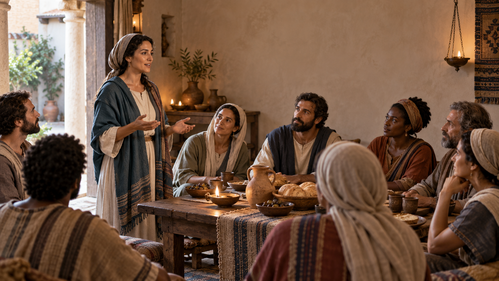
There are two verses in today’s reading that deserve more attention than I could responsibly give them in the main reflection: “Women should be silent in the churches. They aren’t allowed to speak. Instead, they should be submissive, as the Law also says. If they want to learn something, they should ask their husbands at home” (1 Corinthians 14:34–35).
For some Christians, those words seem straightforward: women should not speak or exercise teaching authority in gathered worship. For others, they create an immediate problem. I’m in that second group.
The Church of the Nazarene ordains women, and I believe we are right to do so. But we shouldn’t arrive at that conviction by ignoring passages that seem difficult for our position. Faithful interpretation requires us to let Scripture challenge us, examine the context carefully, and resist pretending certainty where sincere Christians have reached different conclusions.
So what do we do with these verses? First, we have to read them inside the letter Paul actually wrote.
Only three chapters earlier, Paul discusses women praying and prophesying in the gathered church. Whatever questions we may have about the cultural details of head coverings in 1 Corinthians 11, Paul clearly assumes women are speaking in worship. That makes it difficult to read chapter 14 as an absolute prohibition against women ever speaking in church.
There’s also an interesting manuscript question surrounding these verses. In some ancient manuscript traditions, verses 34–35 appear after verse 40 rather than in their familiar location. That has led some scholars to question whether they originated with Paul, although many others believe Paul did write them.
Either way, we should be careful about building an entire theology of women in ministry from two unusually difficult verses without considering the surrounding chapter or the rest of Scripture.
And the surrounding chapter gives us an important clue. Paul has been telling people to be silent throughout this section. If someone speaks in tongues and there’s no interpreter, that person should “keep silent in the church” (v. 28). When prophets speak, they should take turns. If another person receives something to share, “the first one should be silent” (v. 30). Then women are told to be silent in verses 34–35.
Paul clearly isn’t establishing silence as a permanent identity for the first two groups. He’s regulating particular kinds of speech within gathered worship. That strongly suggests we should at least consider whether the instruction concerning women is doing something similar.
What exactly was happening in Corinth? We don’t know.
Perhaps some women were interrupting the gathering with questions because educational opportunities had not prepared them to follow everything being discussed. Perhaps the issue involved the public evaluation of prophetic words and domestic conflict between husbands and wives. Perhaps something else was happening in Corinth that Paul and his original readers understood immediately, but that is no longer obvious to us.
We need humility here. Those possibilities are attempts to reconstruct a situation from limited evidence. We shouldn’t turn an educated possibility into biblical fact.
But we do know what Paul has repeatedly said throughout the chapter: “Everything must be done to build up the church” (v. 26). “God isn’t a God of disorder but of peace” (v. 33) “Everything should be done with dignity and in proper order” (v. 40). Those statements give us solid ground.
Paul is trying to bring order to a congregation where people appear to be speaking over one another, competing for attention, and using genuine spiritual gifts in ways that no longer serve the whole Body. Paul doesn’t solve that problem by eliminating women from Spirit-given ministry.
Earlier in this same letter, he has already acknowledged women praying and prophesying. That matters when we consider the wider New Testament as well. Women are among the first witnesses of the resurrection. Priscilla helps instruct Apollos. Phoebe serves the church and carries Paul’s commendation. Junia is spoken of with extraordinary respect among the apostles. The Holy Spirit is poured out upon sons and daughters, and Peter announces at Pentecost that both will prophesy.
None of that allows us to dismiss 1 Corinthians 14. But neither should two disputed and contextually difficult verses silence the testimony of everything else Scripture shows us about God calling, gifting, and using women for the work of the kingdom.
As Nazarenes, we believe the Holy Spirit calls both women and men into Christian ministry. Our denomination has recognized and ordained women from its earliest history because we believe spiritual gifts and divine calling are given according to the grace of God rather than restricted by gender.
So I read these verses seriously. But I read them together with chapter 11. I read them within Paul’s argument about orderly worship. I read them alongside the women whom Paul himself names as coworkers. And I read them within the larger biblical story of the Holy Spirit poured out upon the whole people of God.
There will continue to be Christians who faithfully study these passages and reach different conclusions. We should be able to disagree without treating one another as enemies or assuming that everyone on the other side simply refuses to take Scripture seriously.
For me, the better reading is that Paul is correcting a particular kind of disruptive speech in Corinth, not establishing a universal prohibition against women proclaiming the gospel or exercising Spirit-given ministry.
And, that brings us right back to Paul’s larger point. Whoever we are, whatever gifts God has entrusted to us, Christian worship isn’t a competition for the microphone.
Women and men alike are called to use what the Spirit has given them in ways that build up the Body, bear faithful witness to Christ, and reflect the peace and holiness of the God we worship.
For some Christians, those words seem straightforward: women should not speak or exercise teaching authority in gathered worship. For others, they create an immediate problem. I’m in that second group.
The Church of the Nazarene ordains women, and I believe we are right to do so. But we shouldn’t arrive at that conviction by ignoring passages that seem difficult for our position. Faithful interpretation requires us to let Scripture challenge us, examine the context carefully, and resist pretending certainty where sincere Christians have reached different conclusions.
So what do we do with these verses? First, we have to read them inside the letter Paul actually wrote.
Only three chapters earlier, Paul discusses women praying and prophesying in the gathered church. Whatever questions we may have about the cultural details of head coverings in 1 Corinthians 11, Paul clearly assumes women are speaking in worship. That makes it difficult to read chapter 14 as an absolute prohibition against women ever speaking in church.
There’s also an interesting manuscript question surrounding these verses. In some ancient manuscript traditions, verses 34–35 appear after verse 40 rather than in their familiar location. That has led some scholars to question whether they originated with Paul, although many others believe Paul did write them.
Either way, we should be careful about building an entire theology of women in ministry from two unusually difficult verses without considering the surrounding chapter or the rest of Scripture.
And the surrounding chapter gives us an important clue. Paul has been telling people to be silent throughout this section. If someone speaks in tongues and there’s no interpreter, that person should “keep silent in the church” (v. 28). When prophets speak, they should take turns. If another person receives something to share, “the first one should be silent” (v. 30). Then women are told to be silent in verses 34–35.
Paul clearly isn’t establishing silence as a permanent identity for the first two groups. He’s regulating particular kinds of speech within gathered worship. That strongly suggests we should at least consider whether the instruction concerning women is doing something similar.
What exactly was happening in Corinth? We don’t know.
Perhaps some women were interrupting the gathering with questions because educational opportunities had not prepared them to follow everything being discussed. Perhaps the issue involved the public evaluation of prophetic words and domestic conflict between husbands and wives. Perhaps something else was happening in Corinth that Paul and his original readers understood immediately, but that is no longer obvious to us.
We need humility here. Those possibilities are attempts to reconstruct a situation from limited evidence. We shouldn’t turn an educated possibility into biblical fact.
But we do know what Paul has repeatedly said throughout the chapter: “Everything must be done to build up the church” (v. 26). “God isn’t a God of disorder but of peace” (v. 33) “Everything should be done with dignity and in proper order” (v. 40). Those statements give us solid ground.
Paul is trying to bring order to a congregation where people appear to be speaking over one another, competing for attention, and using genuine spiritual gifts in ways that no longer serve the whole Body. Paul doesn’t solve that problem by eliminating women from Spirit-given ministry.
Earlier in this same letter, he has already acknowledged women praying and prophesying. That matters when we consider the wider New Testament as well. Women are among the first witnesses of the resurrection. Priscilla helps instruct Apollos. Phoebe serves the church and carries Paul’s commendation. Junia is spoken of with extraordinary respect among the apostles. The Holy Spirit is poured out upon sons and daughters, and Peter announces at Pentecost that both will prophesy.
None of that allows us to dismiss 1 Corinthians 14. But neither should two disputed and contextually difficult verses silence the testimony of everything else Scripture shows us about God calling, gifting, and using women for the work of the kingdom.
As Nazarenes, we believe the Holy Spirit calls both women and men into Christian ministry. Our denomination has recognized and ordained women from its earliest history because we believe spiritual gifts and divine calling are given according to the grace of God rather than restricted by gender.
So I read these verses seriously. But I read them together with chapter 11. I read them within Paul’s argument about orderly worship. I read them alongside the women whom Paul himself names as coworkers. And I read them within the larger biblical story of the Holy Spirit poured out upon the whole people of God.
There will continue to be Christians who faithfully study these passages and reach different conclusions. We should be able to disagree without treating one another as enemies or assuming that everyone on the other side simply refuses to take Scripture seriously.
For me, the better reading is that Paul is correcting a particular kind of disruptive speech in Corinth, not establishing a universal prohibition against women proclaiming the gospel or exercising Spirit-given ministry.
And, that brings us right back to Paul’s larger point. Whoever we are, whatever gifts God has entrusted to us, Christian worship isn’t a competition for the microphone.
Women and men alike are called to use what the Spirit has given them in ways that build up the Body, bear faithful witness to Christ, and reflect the peace and holiness of the God we worship.
Faith In Action
Read 1 Corinthians 11:2–16 and 14:26–40 together today. Rather than beginning with a position you already hold, write down what Paul actually assumes about who speaks in worship and every circumstance in chapter 14 where he commands someone to be silent.
Today's Prayer
Holy Spirit, give us humility when Scripture raises questions that faithful Christians understand differently. Keep us from ignoring difficult passages, but also keep us from isolating individual verses from the larger witness of Scripture. Give your Church wisdom to recognize the gifts you freely give and courage to make room for everyone you call into service. Form women and men alike into humble servants who seek neither status nor control, but the building up of Christ’s Body. Where we disagree, teach us charity. Where we have misunderstood, correct us. Above all, make our life together a faithful witness to Jesus Christ. Amen.
Posted in Bible Reading Plan 2026
Recent
Categories
Archive
2026
January
My Word for the Year... LIGHT2026 Reading Plan Reflections - Day 12026 Reading Plan Reflections - Day 22026 Reading Plan Reflections - Day 32026 Reading Plan Reflections - Day 42026 Reading Plan Reflections - Day 5Welcome to 2026 - New Resources2026 Reading Plan Reflections - Day 62026 Reading Plan Reflections - Day 72026 Reading Plan Reflections - Day 8New Year Prayer Focus2026 Reading Plan Reflections - Day 92026 Reading Plan Reflections - Day 102026 Reading Plan Reflections - Day 112026 Reading Plan Reflections - Day 122026 Reading Plan Reflections - Day 132026 Reading Plan Reflections - Day 142026 Reading Plan Reflections - Day 152026 Reading Plan Reflections - Day 16Darkness and Light2026 Reading Plan Reflections - Day 172026 Reading Plan Reflections - Day 182026 Reading Plan Reflections - Day 192026 Reading Plan Reflections - Day 202026 Reading Plan Reflections - Day 212026 Reading Plan Reflections - Day 222026 Reading Plan Reflections - Day 232026 Reading Plan Reflections - Day 242026 Reading Plan Reflections - Day 252026 Reading Plan Reflections - Day 262026 Reading Plan Reflections - Day 272026 Reading Plan Reflections - Day 282026 Reading Plan Reflections - Day 292026 Reading Plan Reflections - Day 30Together as the Body of Christ2026 Reading Plan Reflections - Day 31
February
2026 Reading Plan Reflections - Day 322026 Reading Plan Reflections - Day 332026 Reading Plan Reflections - Day 342026 Reading Plan Reflections - Day 352026 Reading Plan Reflections - Day 362026 Reading Plan Reflections - Day 37This Shouldn’t Need to Be Said...2026 Reading Plan Reflections - Day 382026 Reading Plan Reflections - Day 392026 Reading Plan Reflections - Day 402026 Reading Plan Reflections - Day 412026 Reading Plan Reflections - Day 422026 Reading Plan Reflections - Day 432026 Reading Plan Reflections - Day 442026 Reading Plan Reflections - Day 452026 Reading Plan Reflections - Day 462026 Reading Plan Reflections - Day 472026 Reading Plan Reflections - Day 482026 Reading Plan Reflections - Day 492026 Reading Plan Reflections - Day 502026 Reading Plan Reflections - Day 512026 Reading Plan Reflections - Day 522026 Reading Plan Reflections - Day 532026 Reading Plan Reflections - Day 542026 Reading Plan Reflections - Day 552026 Reading Plan Reflections - Day 562026 Reading Plan Reflections - Day 572026 Reading Plan Reflections - Day 582026 Reading Plan Reflections - Day 59
March
2026 Reading Plan Reflections - Day 602026 Reading Plan Reflections - Day 612026 Reading Plan Reflections - Day 622026 Reading Plan Reflections - Day 632026 Reading Plan Reflections - Day 642026 Reading Plan Reflections - Day 652026 Reading Plan Reflections - Day 662026 Reading Plan Reflections - Day 672026 Reading Plan Reflections - Day 682026 Reading Plan Reflections - Day 692026 Reading Plan Reflections - Day 702026 Reading Plan Reflections - Day 712026 Reading Plan Reflections - Day 722026 Reading Plan Reflections - Day 732026 Reading Plan Reflections - Day 742026 Reading Plan Reflections - Day 752026 Reading Plan Reflections - Day 762026 Reading Plan Reflections - Day 772026 Reading Plan Reflections - Day 782026 Reading Plan Reflections - Day 792026 Reading Plan Reflections - Day 802026 Reading Plan Reflections - Day 812026 Reading Plan Reflections - Day 822026 Reading Plan Reflections - Day 832026 Reading Plan Reflections - Day 84
April
2026 Reading Plan Reflections - Days 85 & 862026 Reading Plan Reflections - Day 872026 Reading Plan Reflections - Day 882026 Reading Plan Reflections - Day 892026 Reading Plan Reflections - Day 902026 Reading Plan Reflections - Day 912026 Reading Plan Reflections - Day 922026 Reading Plan Reflections - Day 932026 Reading Plan Reflections - Day 942026 Reading Plan Reflections - Day 95
No Comments