
2026 Reading Plan Reflections - Day 270
Free For Love
Galatians 5
“You were called to freedom, brothers and sisters; only don’t let this freedom be an opportunity to indulge your selfish impulses, but serve each other through love.” Galatians 5:13 CEB
Freedom is one of the great words of Galatians. Paul begins this chapter with a declaration: “Christ has set us free for freedom” (Galatians 5:1 CEB). After everything he has written about grace, faith, promise, and the law, he wants the Galatians to understand what Christ has accomplished. They don't need to earn their place in God’s family. They don't need circumcision or any other religious marker to establish that they belong. Christ has set them free.
But Paul knows there is another mistake waiting on the other side of that freedom. We can easily hear “free” and assume it means, “Now I can do whatever I want.” Paul goes in exactly the opposite direction. “You were called to freedom, brothers and sisters; only don’t let this freedom be an opportunity to indulge your selfish impulses, but serve each other through love” (5:13 CEB).
That sounds almost like a contradiction. Christ has freed us from slavery, so now we should become servants? Yes. Because Christian freedom isn’t primarily freedom from having anyone tell us what to do; it's freedom to become the people God created us to be.
Sin curves our lives inward. We become governed by desires, fears, ambitions, resentments, rivalries, and appetites. Paul calls this life according to the flesh. His list includes some things we would quickly recognize as destructive, but it also includes hostility, fighting, jealousy, rage, selfish ambition, division, and envy. Those belong on the same list.
Paul is writing to a congregation being torn apart by arguments about who truly belongs among God’s people. Their theological disagreement is beginning to produce rivalry and division. Paul warns them that if they continue to “bite and devour each other,” eventually they will destroy one another.
Being right about freedom while treating one another terribly would completely miss the freedom Christ has given. So Paul points toward another way. “Live by the Spirit,” he says. The alternative to legalism isn’t lawlessness. The alternative is a life increasingly shaped by the Holy Spirit. That is where this chapter reaches its beautiful and familiar description of the fruit of the Spirit: “love, joy, peace, patience, kindness, goodness, faithfulness, gentleness, and self-control” (5:22–23 CEB).
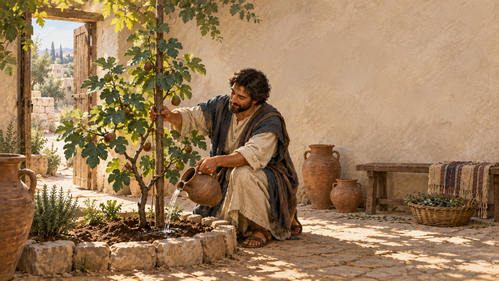
Notice that Paul calls these things fruit. Fruit grows because life is already present in the tree. It still requires nourishment, cultivation, pruning, and time, but we do not manufacture fruit by tying it onto the branches. The same is true of holiness.
We cannot manufacture Christlikeness by trying harder to appear loving, joyful, peaceful, or patient. But Paul doesn't tell us to sit passively and hope these qualities eventually appear. He tells us to “live by the Spirit” and to “follow the Spirit” (5:25). This is the cooperation with grace that sits at the heart of the Christian life.
God’s grace comes first. The Spirit is already at work. Christ has already set us free. And because grace is at work, we can respond. We can surrender old desires. We can practice obedience. We can choose reconciliation over rivalry, service over selfish ambition, gentleness over anger, and love over the need to prove ourselves. Over time, what began as obedience becomes increasingly characteristic of who we are. That is sanctification.
The Holy Spirit forms the life of Christ within us until love becomes more natural than hostility, patience stronger than irritation, gentleness stronger than the need to win, and self-control stronger than whatever appetite once controlled us.
And notice where Paul begins and ends: with life together. “Faith working through love” is what matters in verse 6. “Serve each other through love” comes in verse 13. Then, after describing the fruit of the Spirit, Paul closes by warning against conceit, competition, and jealousy.
The evidence of Christian freedom isn't that nobody can tell us what to do. It's that the things that once ruled us no longer have to. We are free to love. Free to serve. Free to become like Christ. And as the Spirit produces that kind of fruit among us, the church becomes a living picture of what the freedom of God’s kingdom actually looks like.
But Paul knows there is another mistake waiting on the other side of that freedom. We can easily hear “free” and assume it means, “Now I can do whatever I want.” Paul goes in exactly the opposite direction. “You were called to freedom, brothers and sisters; only don’t let this freedom be an opportunity to indulge your selfish impulses, but serve each other through love” (5:13 CEB).
That sounds almost like a contradiction. Christ has freed us from slavery, so now we should become servants? Yes. Because Christian freedom isn’t primarily freedom from having anyone tell us what to do; it's freedom to become the people God created us to be.
Sin curves our lives inward. We become governed by desires, fears, ambitions, resentments, rivalries, and appetites. Paul calls this life according to the flesh. His list includes some things we would quickly recognize as destructive, but it also includes hostility, fighting, jealousy, rage, selfish ambition, division, and envy. Those belong on the same list.
Paul is writing to a congregation being torn apart by arguments about who truly belongs among God’s people. Their theological disagreement is beginning to produce rivalry and division. Paul warns them that if they continue to “bite and devour each other,” eventually they will destroy one another.
Being right about freedom while treating one another terribly would completely miss the freedom Christ has given. So Paul points toward another way. “Live by the Spirit,” he says. The alternative to legalism isn’t lawlessness. The alternative is a life increasingly shaped by the Holy Spirit. That is where this chapter reaches its beautiful and familiar description of the fruit of the Spirit: “love, joy, peace, patience, kindness, goodness, faithfulness, gentleness, and self-control” (5:22–23 CEB).
Notice that Paul calls these things fruit. Fruit grows because life is already present in the tree. It still requires nourishment, cultivation, pruning, and time, but we do not manufacture fruit by tying it onto the branches. The same is true of holiness.
We cannot manufacture Christlikeness by trying harder to appear loving, joyful, peaceful, or patient. But Paul doesn't tell us to sit passively and hope these qualities eventually appear. He tells us to “live by the Spirit” and to “follow the Spirit” (5:25). This is the cooperation with grace that sits at the heart of the Christian life.
God’s grace comes first. The Spirit is already at work. Christ has already set us free. And because grace is at work, we can respond. We can surrender old desires. We can practice obedience. We can choose reconciliation over rivalry, service over selfish ambition, gentleness over anger, and love over the need to prove ourselves. Over time, what began as obedience becomes increasingly characteristic of who we are. That is sanctification.
The Holy Spirit forms the life of Christ within us until love becomes more natural than hostility, patience stronger than irritation, gentleness stronger than the need to win, and self-control stronger than whatever appetite once controlled us.
And notice where Paul begins and ends: with life together. “Faith working through love” is what matters in verse 6. “Serve each other through love” comes in verse 13. Then, after describing the fruit of the Spirit, Paul closes by warning against conceit, competition, and jealousy.
The evidence of Christian freedom isn't that nobody can tell us what to do. It's that the things that once ruled us no longer have to. We are free to love. Free to serve. Free to become like Christ. And as the Spirit produces that kind of fruit among us, the church becomes a living picture of what the freedom of God’s kingdom actually looks like.
Faith In Action
Read Galatians 5:22–23 slowly and ask the Holy Spirit to bring one part of the fruit of the Spirit to your attention. Then look for one concrete opportunity today to cooperate with grace by practicing that quality toward another person.
Today's Prayer
Jesus, thank you for setting us free. Forgive us when we use freedom for ourselves instead of allowing your love to reshape us. Holy Spirit, continue your work within us. Reveal the desires, attitudes, and habits that still compete with your life in us, and give us grace to surrender them. Grow in us the character of Christ—love, joy, peace, patience, kindness, goodness, faithfulness, gentleness, and self-control. Teach us to walk with you so that our freedom becomes love, our strength becomes service, and our lives together reveal the beauty of your kingdom. Amen.
Posted in Bible Reading Plan 2026
Recent
Categories
Archive
2026
January
My Word for the Year... LIGHT2026 Reading Plan Reflections - Day 12026 Reading Plan Reflections - Day 22026 Reading Plan Reflections - Day 32026 Reading Plan Reflections - Day 42026 Reading Plan Reflections - Day 5Welcome to 2026 - New Resources2026 Reading Plan Reflections - Day 62026 Reading Plan Reflections - Day 72026 Reading Plan Reflections - Day 8New Year Prayer Focus2026 Reading Plan Reflections - Day 92026 Reading Plan Reflections - Day 102026 Reading Plan Reflections - Day 112026 Reading Plan Reflections - Day 122026 Reading Plan Reflections - Day 132026 Reading Plan Reflections - Day 142026 Reading Plan Reflections - Day 152026 Reading Plan Reflections - Day 16Darkness and Light2026 Reading Plan Reflections - Day 172026 Reading Plan Reflections - Day 182026 Reading Plan Reflections - Day 192026 Reading Plan Reflections - Day 202026 Reading Plan Reflections - Day 212026 Reading Plan Reflections - Day 222026 Reading Plan Reflections - Day 232026 Reading Plan Reflections - Day 242026 Reading Plan Reflections - Day 252026 Reading Plan Reflections - Day 262026 Reading Plan Reflections - Day 272026 Reading Plan Reflections - Day 282026 Reading Plan Reflections - Day 292026 Reading Plan Reflections - Day 30Together as the Body of Christ2026 Reading Plan Reflections - Day 31
February
2026 Reading Plan Reflections - Day 322026 Reading Plan Reflections - Day 332026 Reading Plan Reflections - Day 342026 Reading Plan Reflections - Day 352026 Reading Plan Reflections - Day 362026 Reading Plan Reflections - Day 37This Shouldn’t Need to Be Said...2026 Reading Plan Reflections - Day 382026 Reading Plan Reflections - Day 392026 Reading Plan Reflections - Day 402026 Reading Plan Reflections - Day 412026 Reading Plan Reflections - Day 422026 Reading Plan Reflections - Day 432026 Reading Plan Reflections - Day 442026 Reading Plan Reflections - Day 452026 Reading Plan Reflections - Day 462026 Reading Plan Reflections - Day 472026 Reading Plan Reflections - Day 482026 Reading Plan Reflections - Day 492026 Reading Plan Reflections - Day 502026 Reading Plan Reflections - Day 512026 Reading Plan Reflections - Day 522026 Reading Plan Reflections - Day 532026 Reading Plan Reflections - Day 542026 Reading Plan Reflections - Day 552026 Reading Plan Reflections - Day 562026 Reading Plan Reflections - Day 572026 Reading Plan Reflections - Day 582026 Reading Plan Reflections - Day 59
March
2026 Reading Plan Reflections - Day 602026 Reading Plan Reflections - Day 612026 Reading Plan Reflections - Day 622026 Reading Plan Reflections - Day 632026 Reading Plan Reflections - Day 642026 Reading Plan Reflections - Day 652026 Reading Plan Reflections - Day 662026 Reading Plan Reflections - Day 672026 Reading Plan Reflections - Day 682026 Reading Plan Reflections - Day 692026 Reading Plan Reflections - Day 702026 Reading Plan Reflections - Day 712026 Reading Plan Reflections - Day 722026 Reading Plan Reflections - Day 732026 Reading Plan Reflections - Day 742026 Reading Plan Reflections - Day 752026 Reading Plan Reflections - Day 762026 Reading Plan Reflections - Day 772026 Reading Plan Reflections - Day 782026 Reading Plan Reflections - Day 792026 Reading Plan Reflections - Day 802026 Reading Plan Reflections - Day 812026 Reading Plan Reflections - Day 822026 Reading Plan Reflections - Day 832026 Reading Plan Reflections - Day 84
April
2026 Reading Plan Reflections - Days 85 & 862026 Reading Plan Reflections - Day 872026 Reading Plan Reflections - Day 882026 Reading Plan Reflections - Day 892026 Reading Plan Reflections - Day 902026 Reading Plan Reflections - Day 912026 Reading Plan Reflections - Day 922026 Reading Plan Reflections - Day 932026 Reading Plan Reflections - Day 942026 Reading Plan Reflections - Day 95
No Comments