
2026 Reading Plan Reflections - Day 289
A Life That Pleases God
1 Thessalonians 4
“Finally, brothers and sisters, we ask and encourage you in the Lord Jesus that, as you learned from us how you ought to live and please God, you should continue to do so even more.” 1 Thessalonians 4:1 CEB
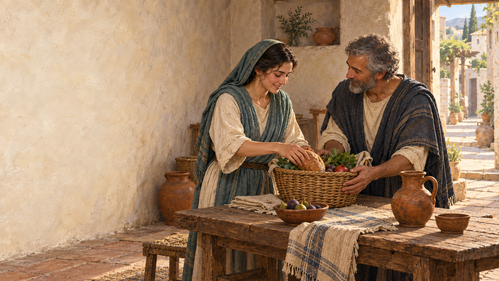
What does a life that pleases God actually look like?
It's a question worth asking, especially when we recognize that following Jesus involves more than believing the right things. Throughout Paul's letters, we've encountered this consistent conviction: God's grace changes us. The new life we receive in Christ is meant to shape the way we live, the way we treat one another, and the way we understand our place in God's unfolding work.
In 1 Thessalonians 4, Paul brings that conviction into some very practical areas of life. He begins by encouraging the Thessalonians to continue living in a way that pleases God, just as they've already been taught. Then he adds a phrase that deserves our attention: "more and more" (v. 1).
Paul isn't addressing a congregation that has abandoned its faith. He's writing to believers who are already growing in Christ. He's encouraged by their faithfulness, but he also recognizes that the work of grace in their lives isn't finished. There's always room to grow. And Paul is direct about where that growth needs to happen. "This is God's will: that you become holy" (v. 3, CEB).
Holiness isn't an optional addition to the Christian life, reserved for especially committed believers. It's God's desire for all of us. But holiness can be misunderstood. We sometimes reduce it to a list of things Christians shouldn't do, as though avoiding enough sinful behavior will eventually make us holy. Paul has something much richer in mind.
Holiness means that our lives are increasingly shaped by the character of the God who has called us. Our desires, decisions, relationships, and actions become places where the transforming work of the Holy Spirit is made visible. That's why Paul addresses sexual behavior so directly. The Thessalonians lived in a culture where sexual practices frequently reflected a very different understanding of personal freedom and responsibility. Paul calls them to exercise self-control, honor one another, and refuse to use others for personal gratification.
These instructions aren't disconnected rules about acceptable behavior. They're expressions of what it means to belong to Christ. Our bodies matter to God. The way we treat other people matters to God. Holiness reaches into the most personal parts of our lives because there is no part of our lives that God's grace cannot transform. And notice how Paul grounds this teaching. God has given us the Holy Spirit (v. 8).
We aren't left to manufacture holiness through determination alone. The Spirit is already at work within us, enabling us to respond to grace and grow into the likeness of Christ.
Paul then moves from personal holiness to the shared life of the church. He celebrates the Thessalonians' love for one another, but once again urges them to grow "more and more" (v. 10). Their love is already extending beyond their own congregation to believers throughout Macedonia. Yet Paul encourages them to continue growing in generosity, to live peacefully, to attend to their responsibilities, and to work faithfully. It's an interesting combination, isn't it?
We might expect Paul to follow his teaching on holiness with something more overtly religious. Instead, he talks about work, responsibility, and ordinary relationships.
But that's precisely the point.
The holiness God desires isn't confined to worship gatherings or moments of prayer. It takes shape in our homes, workplaces, neighborhoods, and relationships. It's revealed in the integrity of our actions and the practical ways we care for others. A holy life is a life increasingly governed by love.
Then, in the final section of the chapter, Paul turns to a very different concern. Some members of the Thessalonian church have died, and those who remain are grieving. They're uncertain about what will happen to their loved ones when Christ returns.
Paul doesn't dismiss their sorrow or suggest that strong faith should eliminate grief. Instead, he reminds them of the foundation of Christian hope. "We believe that Jesus died and rose" (v. 14, CEB).
Because Jesus has been raised from the dead, death doesn't have the final word over those who belong to him. When Christ returns, those who have died in him will not be forgotten or left behind. They will share in the resurrection life God has promised.
Paul uses powerful imagery to describe that coming day, but his purpose isn't to provide a detailed timetable of the end times. He's offering assurance to grieving believers.
The promise at the heart of his teaching is that God's people will be together with the Lord (v. 17). "So encourage each other with these words" (v. 18, CEB). And perhaps this is where the entire chapter comes together. Paul calls the Thessalonians to live holy lives, to grow in love, and to encourage one another with the hope of resurrection. These aren't three unrelated subjects. They're connected by the reality that we belong to Jesus Christ.
Because we belong to Christ, our present lives matter. Because we belong to Christ, our relationships should reflect his love. And because we belong to Christ, even death cannot separate us from the future God has promised.
Christian hope doesn't make holiness less important. It gives our daily faithfulness an eternal perspective. We don't pursue holiness to earn God's acceptance or secure our place in the resurrection. We pursue holiness because God's grace has already welcomed us into a new life, and the Holy Spirit continues shaping us for the life to come.
So what does a life that pleases God look like? It looks like people who are still growing. People learning to love more faithfully, live more responsibly, and trust more deeply in the promises of God. People who, by grace, are becoming more like Christ. More and more...
It's a question worth asking, especially when we recognize that following Jesus involves more than believing the right things. Throughout Paul's letters, we've encountered this consistent conviction: God's grace changes us. The new life we receive in Christ is meant to shape the way we live, the way we treat one another, and the way we understand our place in God's unfolding work.
In 1 Thessalonians 4, Paul brings that conviction into some very practical areas of life. He begins by encouraging the Thessalonians to continue living in a way that pleases God, just as they've already been taught. Then he adds a phrase that deserves our attention: "more and more" (v. 1).
Paul isn't addressing a congregation that has abandoned its faith. He's writing to believers who are already growing in Christ. He's encouraged by their faithfulness, but he also recognizes that the work of grace in their lives isn't finished. There's always room to grow. And Paul is direct about where that growth needs to happen. "This is God's will: that you become holy" (v. 3, CEB).
Holiness isn't an optional addition to the Christian life, reserved for especially committed believers. It's God's desire for all of us. But holiness can be misunderstood. We sometimes reduce it to a list of things Christians shouldn't do, as though avoiding enough sinful behavior will eventually make us holy. Paul has something much richer in mind.
Holiness means that our lives are increasingly shaped by the character of the God who has called us. Our desires, decisions, relationships, and actions become places where the transforming work of the Holy Spirit is made visible. That's why Paul addresses sexual behavior so directly. The Thessalonians lived in a culture where sexual practices frequently reflected a very different understanding of personal freedom and responsibility. Paul calls them to exercise self-control, honor one another, and refuse to use others for personal gratification.
These instructions aren't disconnected rules about acceptable behavior. They're expressions of what it means to belong to Christ. Our bodies matter to God. The way we treat other people matters to God. Holiness reaches into the most personal parts of our lives because there is no part of our lives that God's grace cannot transform. And notice how Paul grounds this teaching. God has given us the Holy Spirit (v. 8).
We aren't left to manufacture holiness through determination alone. The Spirit is already at work within us, enabling us to respond to grace and grow into the likeness of Christ.
Paul then moves from personal holiness to the shared life of the church. He celebrates the Thessalonians' love for one another, but once again urges them to grow "more and more" (v. 10). Their love is already extending beyond their own congregation to believers throughout Macedonia. Yet Paul encourages them to continue growing in generosity, to live peacefully, to attend to their responsibilities, and to work faithfully. It's an interesting combination, isn't it?
We might expect Paul to follow his teaching on holiness with something more overtly religious. Instead, he talks about work, responsibility, and ordinary relationships.
But that's precisely the point.
The holiness God desires isn't confined to worship gatherings or moments of prayer. It takes shape in our homes, workplaces, neighborhoods, and relationships. It's revealed in the integrity of our actions and the practical ways we care for others. A holy life is a life increasingly governed by love.
Then, in the final section of the chapter, Paul turns to a very different concern. Some members of the Thessalonian church have died, and those who remain are grieving. They're uncertain about what will happen to their loved ones when Christ returns.
Paul doesn't dismiss their sorrow or suggest that strong faith should eliminate grief. Instead, he reminds them of the foundation of Christian hope. "We believe that Jesus died and rose" (v. 14, CEB).
Because Jesus has been raised from the dead, death doesn't have the final word over those who belong to him. When Christ returns, those who have died in him will not be forgotten or left behind. They will share in the resurrection life God has promised.
Paul uses powerful imagery to describe that coming day, but his purpose isn't to provide a detailed timetable of the end times. He's offering assurance to grieving believers.
The promise at the heart of his teaching is that God's people will be together with the Lord (v. 17). "So encourage each other with these words" (v. 18, CEB). And perhaps this is where the entire chapter comes together. Paul calls the Thessalonians to live holy lives, to grow in love, and to encourage one another with the hope of resurrection. These aren't three unrelated subjects. They're connected by the reality that we belong to Jesus Christ.
Because we belong to Christ, our present lives matter. Because we belong to Christ, our relationships should reflect his love. And because we belong to Christ, even death cannot separate us from the future God has promised.
Christian hope doesn't make holiness less important. It gives our daily faithfulness an eternal perspective. We don't pursue holiness to earn God's acceptance or secure our place in the resurrection. We pursue holiness because God's grace has already welcomed us into a new life, and the Holy Spirit continues shaping us for the life to come.
So what does a life that pleases God look like? It looks like people who are still growing. People learning to love more faithfully, live more responsibly, and trust more deeply in the promises of God. People who, by grace, are becoming more like Christ. More and more...
Faith In Action
Read 1 Thessalonians 4:1–12 again today. Ask God to reveal one area of your everyday life where the Holy Spirit is inviting you to grow in holiness or love. Identify one specific action you can take today in response to that grace.
Today's Prayer
Gracious God, thank you for calling us into a life that reflects your holiness and love. Forgive us for the times we've treated holiness as a set of rules rather than the transforming work of your grace. Continue shaping our desires, our relationships, and our daily decisions through the presence of the Holy Spirit.
Teach us to love one another more faithfully, to live with integrity, and to recognize the opportunities for holiness in ordinary moments. And when grief or uncertainty weighs upon us, remind us that the resurrection of Jesus is the foundation of our hope.
Keep us growing in Christ, more and more, until the day when all your promises are fulfilled. Amen.
Teach us to love one another more faithfully, to live with integrity, and to recognize the opportunities for holiness in ordinary moments. And when grief or uncertainty weighs upon us, remind us that the resurrection of Jesus is the foundation of our hope.
Keep us growing in Christ, more and more, until the day when all your promises are fulfilled. Amen.
Posted in Bible Reading Plan 2026
Recent
Categories
Archive
2026
January
My Word for the Year... LIGHT2026 Reading Plan Reflections - Day 12026 Reading Plan Reflections - Day 22026 Reading Plan Reflections - Day 32026 Reading Plan Reflections - Day 42026 Reading Plan Reflections - Day 5Welcome to 2026 - New Resources2026 Reading Plan Reflections - Day 62026 Reading Plan Reflections - Day 72026 Reading Plan Reflections - Day 8New Year Prayer Focus2026 Reading Plan Reflections - Day 92026 Reading Plan Reflections - Day 102026 Reading Plan Reflections - Day 112026 Reading Plan Reflections - Day 122026 Reading Plan Reflections - Day 132026 Reading Plan Reflections - Day 142026 Reading Plan Reflections - Day 152026 Reading Plan Reflections - Day 16Darkness and Light2026 Reading Plan Reflections - Day 172026 Reading Plan Reflections - Day 182026 Reading Plan Reflections - Day 192026 Reading Plan Reflections - Day 202026 Reading Plan Reflections - Day 212026 Reading Plan Reflections - Day 222026 Reading Plan Reflections - Day 232026 Reading Plan Reflections - Day 242026 Reading Plan Reflections - Day 252026 Reading Plan Reflections - Day 262026 Reading Plan Reflections - Day 272026 Reading Plan Reflections - Day 282026 Reading Plan Reflections - Day 292026 Reading Plan Reflections - Day 30Together as the Body of Christ2026 Reading Plan Reflections - Day 31
February
2026 Reading Plan Reflections - Day 322026 Reading Plan Reflections - Day 332026 Reading Plan Reflections - Day 342026 Reading Plan Reflections - Day 352026 Reading Plan Reflections - Day 362026 Reading Plan Reflections - Day 37This Shouldn’t Need to Be Said...2026 Reading Plan Reflections - Day 382026 Reading Plan Reflections - Day 392026 Reading Plan Reflections - Day 402026 Reading Plan Reflections - Day 412026 Reading Plan Reflections - Day 422026 Reading Plan Reflections - Day 432026 Reading Plan Reflections - Day 442026 Reading Plan Reflections - Day 452026 Reading Plan Reflections - Day 462026 Reading Plan Reflections - Day 472026 Reading Plan Reflections - Day 482026 Reading Plan Reflections - Day 492026 Reading Plan Reflections - Day 502026 Reading Plan Reflections - Day 512026 Reading Plan Reflections - Day 522026 Reading Plan Reflections - Day 532026 Reading Plan Reflections - Day 542026 Reading Plan Reflections - Day 552026 Reading Plan Reflections - Day 562026 Reading Plan Reflections - Day 572026 Reading Plan Reflections - Day 582026 Reading Plan Reflections - Day 59
March
2026 Reading Plan Reflections - Day 602026 Reading Plan Reflections - Day 612026 Reading Plan Reflections - Day 622026 Reading Plan Reflections - Day 632026 Reading Plan Reflections - Day 642026 Reading Plan Reflections - Day 652026 Reading Plan Reflections - Day 662026 Reading Plan Reflections - Day 672026 Reading Plan Reflections - Day 682026 Reading Plan Reflections - Day 692026 Reading Plan Reflections - Day 702026 Reading Plan Reflections - Day 712026 Reading Plan Reflections - Day 722026 Reading Plan Reflections - Day 732026 Reading Plan Reflections - Day 742026 Reading Plan Reflections - Day 752026 Reading Plan Reflections - Day 762026 Reading Plan Reflections - Day 772026 Reading Plan Reflections - Day 782026 Reading Plan Reflections - Day 792026 Reading Plan Reflections - Day 802026 Reading Plan Reflections - Day 812026 Reading Plan Reflections - Day 822026 Reading Plan Reflections - Day 832026 Reading Plan Reflections - Day 84
April
2026 Reading Plan Reflections - Days 85 & 862026 Reading Plan Reflections - Day 872026 Reading Plan Reflections - Day 882026 Reading Plan Reflections - Day 892026 Reading Plan Reflections - Day 902026 Reading Plan Reflections - Day 912026 Reading Plan Reflections - Day 922026 Reading Plan Reflections - Day 932026 Reading Plan Reflections - Day 942026 Reading Plan Reflections - Day 95
No Comments