
2026 Reading Plan Reflections - Day 290
Children of the Day
1 Thessalonians 5
“You are all children of light and children of the day. We don't belong to night or darkness.” 1 Thessalonians 5:5, CEB
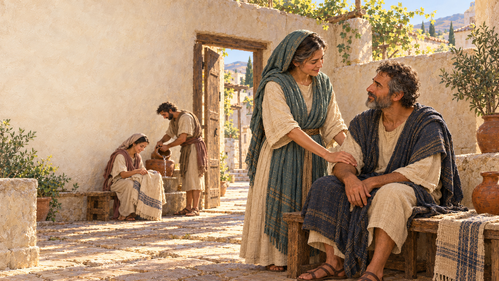
As Paul brings his first letter to the Thessalonians to a close, he returns to a subject that has been woven throughout the letter: the return of Jesus Christ. But notice where he directs their attention. He doesn't offer a timeline, predict a date, or encourage speculation about what the last days might look like. Instead, he reminds the church who they are and calls them to live accordingly.
“You are all children of light and children of the day. We don't belong to night or darkness” (1 Thessalonians 5:5, CEB). Paul is making an important distinction. The world is still marked by darkness, but those who belong to Christ are already living in the light of God's coming kingdom. Through the death and resurrection of Jesus, something new has begun. We don't have to wait until Christ returns to begin experiencing the transforming power of that new life.
We are already children of the day.
And because that's who we are, Paul calls us to remain spiritually awake and alert. His concern isn't that we might miss the signs of Christ's return. It's that we might become so comfortable with the patterns of the world around us that we forget whose we are and how we're called to live.
That's a challenge worth considering. It's possible to believe in Jesus, participate in worship, and know the right things to say while gradually allowing our attitudes, priorities, and relationships to reflect the surrounding culture more than the character of Christ. Paul's answer isn't fear or frantic religious activity. It's a steady, faithful life grounded in faith, love, and hope.
These three qualities have appeared throughout the letter, beginning with Paul's thanksgiving for the Thessalonians in chapter one. Now they become the spiritual protection that enables believers to remain faithful. Our confidence rests in what God has done through Jesus Christ, and that confidence shapes how we live while we await his return. Then Paul turns our attention toward life within the church.
His instructions in verses 12–22 are incredibly practical. Respect those who lead. Live in peace. Correct those who need correction. Encourage the discouraged. Help the weak. Be patient with everyone. Refuse retaliation. Pursue what is good.
These aren't random rules attached to the end of a letter. They're a picture of what life looks like when a community begins to reflect the character of Christ.
Consider how much of this requires us to move beyond ourselves. Encouraging someone means recognizing their discouragement. Helping the weak requires noticing their vulnerability. Patience demands that we make room for people who may not grow or respond as quickly as we'd prefer. Pursuing what is good calls us to actively seek the well-being of others, including those outside the church. This is holiness taking shape in our relationships.
Paul continues with some of the most familiar instructions in the New Testament: “Rejoice always. Pray continually. Give thanks in every situation because this is God's will for you in Christ Jesus” (1 Thessalonians 5:16–18, CEB). We sometimes read these verses as though Paul is asking us to maintain a positive attitude regardless of our circumstances. But remember the people receiving this letter. The Thessalonian believers knew persecution, grief, and uncertainty. Paul wasn't asking them to pretend those struggles didn't exist. Their joy came from belonging to Christ. Their prayers expressed continuing dependence upon God. Their gratitude recognized God's faithfulness even when life remained difficult. And none of this was meant to happen apart from the work of the Holy Spirit. Paul immediately warns them not to suppress the Spirit, reminding the church to remain attentive and discerning as God continues to work among them.
Taken together, these instructions describe a community being formed by grace. The light of Christ becomes visible through the ordinary practices of Christian life: prayer, gratitude, discernment, encouragement, patience, and love. But there's one more important movement in this chapter.
After calling the Thessalonians to live holy lives, Paul offers a prayer that brings the entire letter into focus: “May the God of peace make you holy in every way” (1 Thessalonians 5:23, CEB). Notice who does the sanctifying. Paul doesn't pray that the Thessalonians will somehow make themselves holy through determination or religious discipline. He prays that God will make them holy.
Then comes the promise: “The one who is calling you is faithful and will do this” (1 Thessalonians 5:24, CEB). This is at the heart of our Wesleyan understanding of holiness. God calls us into a life of complete devotion, a life increasingly shaped by the love of Christ. We respond through obedience, prayer, worship, and the everyday practice of loving God and our neighbors. But the power to transform us comes from God's grace, working through the Holy Spirit. Holiness isn't something we manufacture. It's the work of a faithful God to which we are invited to respond.
Paul's prayer reaches beyond individual behavior. He prays for the sanctification of the whole person, and he offers that prayer in the context of the whole church. God's transforming grace reaches into every part of our lives and shapes the way we belong to one another.
As we finish 1 Thessalonians, Paul leaves us with a vision of the church living between the resurrection of Jesus and his promised return. We don't know when Christ will come again. But, we do know who has called us, what kind of people we are becoming, and whose faithfulness makes that transformation possible.
We are children of the day. So let's live in the light we've already received, encouraging one another and allowing God's grace to shape us more fully into the likeness of Christ.
The one who calls us is faithful. And God will do it.
“You are all children of light and children of the day. We don't belong to night or darkness” (1 Thessalonians 5:5, CEB). Paul is making an important distinction. The world is still marked by darkness, but those who belong to Christ are already living in the light of God's coming kingdom. Through the death and resurrection of Jesus, something new has begun. We don't have to wait until Christ returns to begin experiencing the transforming power of that new life.
We are already children of the day.
And because that's who we are, Paul calls us to remain spiritually awake and alert. His concern isn't that we might miss the signs of Christ's return. It's that we might become so comfortable with the patterns of the world around us that we forget whose we are and how we're called to live.
That's a challenge worth considering. It's possible to believe in Jesus, participate in worship, and know the right things to say while gradually allowing our attitudes, priorities, and relationships to reflect the surrounding culture more than the character of Christ. Paul's answer isn't fear or frantic religious activity. It's a steady, faithful life grounded in faith, love, and hope.
These three qualities have appeared throughout the letter, beginning with Paul's thanksgiving for the Thessalonians in chapter one. Now they become the spiritual protection that enables believers to remain faithful. Our confidence rests in what God has done through Jesus Christ, and that confidence shapes how we live while we await his return. Then Paul turns our attention toward life within the church.
His instructions in verses 12–22 are incredibly practical. Respect those who lead. Live in peace. Correct those who need correction. Encourage the discouraged. Help the weak. Be patient with everyone. Refuse retaliation. Pursue what is good.
These aren't random rules attached to the end of a letter. They're a picture of what life looks like when a community begins to reflect the character of Christ.
Consider how much of this requires us to move beyond ourselves. Encouraging someone means recognizing their discouragement. Helping the weak requires noticing their vulnerability. Patience demands that we make room for people who may not grow or respond as quickly as we'd prefer. Pursuing what is good calls us to actively seek the well-being of others, including those outside the church. This is holiness taking shape in our relationships.
Paul continues with some of the most familiar instructions in the New Testament: “Rejoice always. Pray continually. Give thanks in every situation because this is God's will for you in Christ Jesus” (1 Thessalonians 5:16–18, CEB). We sometimes read these verses as though Paul is asking us to maintain a positive attitude regardless of our circumstances. But remember the people receiving this letter. The Thessalonian believers knew persecution, grief, and uncertainty. Paul wasn't asking them to pretend those struggles didn't exist. Their joy came from belonging to Christ. Their prayers expressed continuing dependence upon God. Their gratitude recognized God's faithfulness even when life remained difficult. And none of this was meant to happen apart from the work of the Holy Spirit. Paul immediately warns them not to suppress the Spirit, reminding the church to remain attentive and discerning as God continues to work among them.
Taken together, these instructions describe a community being formed by grace. The light of Christ becomes visible through the ordinary practices of Christian life: prayer, gratitude, discernment, encouragement, patience, and love. But there's one more important movement in this chapter.
After calling the Thessalonians to live holy lives, Paul offers a prayer that brings the entire letter into focus: “May the God of peace make you holy in every way” (1 Thessalonians 5:23, CEB). Notice who does the sanctifying. Paul doesn't pray that the Thessalonians will somehow make themselves holy through determination or religious discipline. He prays that God will make them holy.
Then comes the promise: “The one who is calling you is faithful and will do this” (1 Thessalonians 5:24, CEB). This is at the heart of our Wesleyan understanding of holiness. God calls us into a life of complete devotion, a life increasingly shaped by the love of Christ. We respond through obedience, prayer, worship, and the everyday practice of loving God and our neighbors. But the power to transform us comes from God's grace, working through the Holy Spirit. Holiness isn't something we manufacture. It's the work of a faithful God to which we are invited to respond.
Paul's prayer reaches beyond individual behavior. He prays for the sanctification of the whole person, and he offers that prayer in the context of the whole church. God's transforming grace reaches into every part of our lives and shapes the way we belong to one another.
As we finish 1 Thessalonians, Paul leaves us with a vision of the church living between the resurrection of Jesus and his promised return. We don't know when Christ will come again. But, we do know who has called us, what kind of people we are becoming, and whose faithfulness makes that transformation possible.
We are children of the day. So let's live in the light we've already received, encouraging one another and allowing God's grace to shape us more fully into the likeness of Christ.
The one who calls us is faithful. And God will do it.
Faith In Action
Read 1 Thessalonians 5:12–22 again, slowly. Identify one instruction that challenges the way you're currently relating to someone. Ask the Holy Spirit to help you put that instruction into practice through one specific action today.
Today's Prayer
Faithful God, thank you for calling us out of darkness and into the light of Christ. We confess that we sometimes become comfortable with attitudes and habits that don't reflect the new life you've given us. Awaken us to the work of your Spirit, and help us respond faithfully to your grace. Teach us to encourage the discouraged, support the weak, practice patience, and pursue what is good. Form us into a people whose lives reflect the love and holiness of Jesus. When we grow weary or uncertain, remind us that our hope rests in your faithfulness rather than our strength. Continue your sanctifying work in us, individually and together as your Church. In Jesus' name, Amen.
Posted in Bible Reading Plan 2026
Recent
Categories
Archive
2026
January
My Word for the Year... LIGHT2026 Reading Plan Reflections - Day 12026 Reading Plan Reflections - Day 22026 Reading Plan Reflections - Day 32026 Reading Plan Reflections - Day 42026 Reading Plan Reflections - Day 5Welcome to 2026 - New Resources2026 Reading Plan Reflections - Day 62026 Reading Plan Reflections - Day 72026 Reading Plan Reflections - Day 8New Year Prayer Focus2026 Reading Plan Reflections - Day 92026 Reading Plan Reflections - Day 102026 Reading Plan Reflections - Day 112026 Reading Plan Reflections - Day 122026 Reading Plan Reflections - Day 132026 Reading Plan Reflections - Day 142026 Reading Plan Reflections - Day 152026 Reading Plan Reflections - Day 16Darkness and Light2026 Reading Plan Reflections - Day 172026 Reading Plan Reflections - Day 182026 Reading Plan Reflections - Day 192026 Reading Plan Reflections - Day 202026 Reading Plan Reflections - Day 212026 Reading Plan Reflections - Day 222026 Reading Plan Reflections - Day 232026 Reading Plan Reflections - Day 242026 Reading Plan Reflections - Day 252026 Reading Plan Reflections - Day 262026 Reading Plan Reflections - Day 272026 Reading Plan Reflections - Day 282026 Reading Plan Reflections - Day 292026 Reading Plan Reflections - Day 30Together as the Body of Christ2026 Reading Plan Reflections - Day 31
February
2026 Reading Plan Reflections - Day 322026 Reading Plan Reflections - Day 332026 Reading Plan Reflections - Day 342026 Reading Plan Reflections - Day 352026 Reading Plan Reflections - Day 362026 Reading Plan Reflections - Day 37This Shouldn’t Need to Be Said...2026 Reading Plan Reflections - Day 382026 Reading Plan Reflections - Day 392026 Reading Plan Reflections - Day 402026 Reading Plan Reflections - Day 412026 Reading Plan Reflections - Day 422026 Reading Plan Reflections - Day 432026 Reading Plan Reflections - Day 442026 Reading Plan Reflections - Day 452026 Reading Plan Reflections - Day 462026 Reading Plan Reflections - Day 472026 Reading Plan Reflections - Day 482026 Reading Plan Reflections - Day 492026 Reading Plan Reflections - Day 502026 Reading Plan Reflections - Day 512026 Reading Plan Reflections - Day 522026 Reading Plan Reflections - Day 532026 Reading Plan Reflections - Day 542026 Reading Plan Reflections - Day 552026 Reading Plan Reflections - Day 562026 Reading Plan Reflections - Day 572026 Reading Plan Reflections - Day 582026 Reading Plan Reflections - Day 59
March
2026 Reading Plan Reflections - Day 602026 Reading Plan Reflections - Day 612026 Reading Plan Reflections - Day 622026 Reading Plan Reflections - Day 632026 Reading Plan Reflections - Day 642026 Reading Plan Reflections - Day 652026 Reading Plan Reflections - Day 662026 Reading Plan Reflections - Day 672026 Reading Plan Reflections - Day 682026 Reading Plan Reflections - Day 692026 Reading Plan Reflections - Day 702026 Reading Plan Reflections - Day 712026 Reading Plan Reflections - Day 722026 Reading Plan Reflections - Day 732026 Reading Plan Reflections - Day 742026 Reading Plan Reflections - Day 752026 Reading Plan Reflections - Day 762026 Reading Plan Reflections - Day 772026 Reading Plan Reflections - Day 782026 Reading Plan Reflections - Day 792026 Reading Plan Reflections - Day 802026 Reading Plan Reflections - Day 812026 Reading Plan Reflections - Day 822026 Reading Plan Reflections - Day 832026 Reading Plan Reflections - Day 84
April
2026 Reading Plan Reflections - Days 85 & 862026 Reading Plan Reflections - Day 872026 Reading Plan Reflections - Day 882026 Reading Plan Reflections - Day 892026 Reading Plan Reflections - Day 902026 Reading Plan Reflections - Day 912026 Reading Plan Reflections - Day 922026 Reading Plan Reflections - Day 932026 Reading Plan Reflections - Day 942026 Reading Plan Reflections - Day 95
No Comments