
2026 Reading Plan Reflections - Day 259
Complete This Grace
2 Corinthians 8
“You know the grace of our Lord Jesus Christ. Although he was rich, he became poor for your sakes, so that you could become rich through his poverty.” 2 Corinthians 8:9 CEB
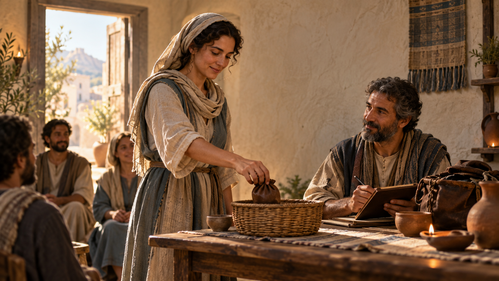
Paul spends an entire chapter talking about money without allowing money to become the main point. Again and again, he calls what is happening grace.
The churches in Macedonia had endured suffering and deep poverty, yet something was happening among them. Their circumstances had not become easy, but God’s grace was producing generosity. Paul says they gave willingly, even beyond what anyone might reasonably have expected, because “they gave themselves first to the Lord” (2 Corinthians 8:5).
Their generosity wasn’t an attempt to prove their devotion to God. It grew out of devotion already given to God. Grace had taken hold of them, and generosity became one of the ways that grace became visible.
Paul wants the Corinthians to experience the same thing. This collection had a very practical purpose. Believers in Jerusalem were in need, and Paul had been organizing support from predominantly Gentile churches. But there was something larger happening through that gift. Jewish and Gentile Christians, separated by history, culture, geography, and plenty of suspicion, were learning to recognize one another as members of the same family in Christ.
A financial gift could become an act of Christian unity. That helps us hear Paul correctly. He isn’t trying to manipulate the Corinthians into giving more. In fact, he specifically says, “I’m not giving an order” (v. 8). He doesn’t want generosity rooted in guilt, pressure, or comparison.
He points them instead to Jesus: “Though he was rich, for your sakes he became poor, so that you by his poverty could become rich.” (v. 9).
There is a pattern underneath this. Jesus gives himself. The grace we receive from Christ begins to reshape what we do with what has been entrusted to us. Our money is part of that, and we shouldn’t spiritualize this passage until the actual financial challenge disappears. But the deeper question is about the kind of people grace is forming us to become.
Are we becoming people who hold everything tightly for ourselves, or people whose lives are increasingly available to God and neighbor? Paul also reminds the Corinthians that they had already begun this work. Their enthusiasm had been real. Now they needed to finish.
That may be one of the quieter challenges in this chapter. Beginning is often easier than continuing. We can feel deeply moved by a need. We can make a commitment, volunteer, pledge support, offer help, or tell someone, “I’ll take care of that.” Then ordinary life continues. Other needs appear. Enthusiasm fades.
Paul tells the Corinthians to allow their original willingness to become completed faithfulness.
Grace doesn’t only inspire beginnings. Grace can teach us to follow through. And Paul is careful to explain that Christian generosity is not supposed to ruin one person so that another can live comfortably. “The point isn’t that others should have it easy while you are burdened” (v. 13), he tells them. The goal is that the abundance of one part of the Body can meet the need of another.
This is what life together looks like when we actually believe we belong to one another. And because money can easily become a source of mistrust, Paul takes another important step. He arranges for Titus and other trusted believers to participate in administering the gift. He wants everything handled honorably “not only in the Lord’s eyes, but also in the eyes of other people” (v. 21).
Generosity and accountability belong together. Good intentions do not eliminate the need for wise stewardship. The church should be generous, and the church should be trustworthy. Both reflect the character of the gospel we proclaim. That makes 2 Corinthians 8 much bigger than a chapter about fundraising. It is a picture of grace becoming visible.
Grace turns people toward God. Grace loosens our grip on what we possess. Grace teaches us to notice the needs of others. Grace moves us from good intentions toward completed faithfulness. Grace builds unity across differences. And grace teaches the church to handle what has been entrusted to us with integrity.
Paul’s invitation to the Corinthians is still worth hearing: “excel in this grace too” (v. 7). Not because God needs us to prove our faith by giving enough. Because the grace of Jesus Christ is forming a people who increasingly resemble the One who gave himself for us.
The churches in Macedonia had endured suffering and deep poverty, yet something was happening among them. Their circumstances had not become easy, but God’s grace was producing generosity. Paul says they gave willingly, even beyond what anyone might reasonably have expected, because “they gave themselves first to the Lord” (2 Corinthians 8:5).
Their generosity wasn’t an attempt to prove their devotion to God. It grew out of devotion already given to God. Grace had taken hold of them, and generosity became one of the ways that grace became visible.
Paul wants the Corinthians to experience the same thing. This collection had a very practical purpose. Believers in Jerusalem were in need, and Paul had been organizing support from predominantly Gentile churches. But there was something larger happening through that gift. Jewish and Gentile Christians, separated by history, culture, geography, and plenty of suspicion, were learning to recognize one another as members of the same family in Christ.
A financial gift could become an act of Christian unity. That helps us hear Paul correctly. He isn’t trying to manipulate the Corinthians into giving more. In fact, he specifically says, “I’m not giving an order” (v. 8). He doesn’t want generosity rooted in guilt, pressure, or comparison.
He points them instead to Jesus: “Though he was rich, for your sakes he became poor, so that you by his poverty could become rich.” (v. 9).
There is a pattern underneath this. Jesus gives himself. The grace we receive from Christ begins to reshape what we do with what has been entrusted to us. Our money is part of that, and we shouldn’t spiritualize this passage until the actual financial challenge disappears. But the deeper question is about the kind of people grace is forming us to become.
Are we becoming people who hold everything tightly for ourselves, or people whose lives are increasingly available to God and neighbor? Paul also reminds the Corinthians that they had already begun this work. Their enthusiasm had been real. Now they needed to finish.
That may be one of the quieter challenges in this chapter. Beginning is often easier than continuing. We can feel deeply moved by a need. We can make a commitment, volunteer, pledge support, offer help, or tell someone, “I’ll take care of that.” Then ordinary life continues. Other needs appear. Enthusiasm fades.
Paul tells the Corinthians to allow their original willingness to become completed faithfulness.
Grace doesn’t only inspire beginnings. Grace can teach us to follow through. And Paul is careful to explain that Christian generosity is not supposed to ruin one person so that another can live comfortably. “The point isn’t that others should have it easy while you are burdened” (v. 13), he tells them. The goal is that the abundance of one part of the Body can meet the need of another.
This is what life together looks like when we actually believe we belong to one another. And because money can easily become a source of mistrust, Paul takes another important step. He arranges for Titus and other trusted believers to participate in administering the gift. He wants everything handled honorably “not only in the Lord’s eyes, but also in the eyes of other people” (v. 21).
Generosity and accountability belong together. Good intentions do not eliminate the need for wise stewardship. The church should be generous, and the church should be trustworthy. Both reflect the character of the gospel we proclaim. That makes 2 Corinthians 8 much bigger than a chapter about fundraising. It is a picture of grace becoming visible.
Grace turns people toward God. Grace loosens our grip on what we possess. Grace teaches us to notice the needs of others. Grace moves us from good intentions toward completed faithfulness. Grace builds unity across differences. And grace teaches the church to handle what has been entrusted to us with integrity.
Paul’s invitation to the Corinthians is still worth hearing: “excel in this grace too” (v. 7). Not because God needs us to prove our faith by giving enough. Because the grace of Jesus Christ is forming a people who increasingly resemble the One who gave himself for us.
Faith In Action
Think of one commitment to generosity you have already considered or begun—financial support, helping someone in need, supporting a ministry, or sharing another resource God has entrusted to you. Take one concrete step today to complete what you began, according to what you genuinely have to give.
Today's Prayer
Lord Jesus, everything we have is already touched by your grace. You gave yourself for us, and through your poverty you have made us rich in mercy, forgiveness, hope, and new life. Keep forming that same generosity in us. Free us from fear, selfishness, and unfinished intentions. Give us wisdom to recognize the needs around us, willingness to share what you have entrusted to us, and integrity in the way we handle every gift. Shape your Church into a family where abundance meets need and where our life together reflects your self-giving love. By your grace, help us complete the good work you have begun in us. Amen.
Posted in Bible Reading Plan 2026
Recent
Categories
Archive
2026
January
My Word for the Year... LIGHT2026 Reading Plan Reflections - Day 12026 Reading Plan Reflections - Day 22026 Reading Plan Reflections - Day 32026 Reading Plan Reflections - Day 42026 Reading Plan Reflections - Day 5Welcome to 2026 - New Resources2026 Reading Plan Reflections - Day 62026 Reading Plan Reflections - Day 72026 Reading Plan Reflections - Day 8New Year Prayer Focus2026 Reading Plan Reflections - Day 92026 Reading Plan Reflections - Day 102026 Reading Plan Reflections - Day 112026 Reading Plan Reflections - Day 122026 Reading Plan Reflections - Day 132026 Reading Plan Reflections - Day 142026 Reading Plan Reflections - Day 152026 Reading Plan Reflections - Day 16Darkness and Light2026 Reading Plan Reflections - Day 172026 Reading Plan Reflections - Day 182026 Reading Plan Reflections - Day 192026 Reading Plan Reflections - Day 202026 Reading Plan Reflections - Day 212026 Reading Plan Reflections - Day 222026 Reading Plan Reflections - Day 232026 Reading Plan Reflections - Day 242026 Reading Plan Reflections - Day 252026 Reading Plan Reflections - Day 262026 Reading Plan Reflections - Day 272026 Reading Plan Reflections - Day 282026 Reading Plan Reflections - Day 292026 Reading Plan Reflections - Day 30Together as the Body of Christ2026 Reading Plan Reflections - Day 31
February
2026 Reading Plan Reflections - Day 322026 Reading Plan Reflections - Day 332026 Reading Plan Reflections - Day 342026 Reading Plan Reflections - Day 352026 Reading Plan Reflections - Day 362026 Reading Plan Reflections - Day 37This Shouldn’t Need to Be Said...2026 Reading Plan Reflections - Day 382026 Reading Plan Reflections - Day 392026 Reading Plan Reflections - Day 402026 Reading Plan Reflections - Day 412026 Reading Plan Reflections - Day 422026 Reading Plan Reflections - Day 432026 Reading Plan Reflections - Day 442026 Reading Plan Reflections - Day 452026 Reading Plan Reflections - Day 462026 Reading Plan Reflections - Day 472026 Reading Plan Reflections - Day 482026 Reading Plan Reflections - Day 492026 Reading Plan Reflections - Day 502026 Reading Plan Reflections - Day 512026 Reading Plan Reflections - Day 522026 Reading Plan Reflections - Day 532026 Reading Plan Reflections - Day 542026 Reading Plan Reflections - Day 552026 Reading Plan Reflections - Day 562026 Reading Plan Reflections - Day 572026 Reading Plan Reflections - Day 582026 Reading Plan Reflections - Day 59
March
2026 Reading Plan Reflections - Day 602026 Reading Plan Reflections - Day 612026 Reading Plan Reflections - Day 622026 Reading Plan Reflections - Day 632026 Reading Plan Reflections - Day 642026 Reading Plan Reflections - Day 652026 Reading Plan Reflections - Day 662026 Reading Plan Reflections - Day 672026 Reading Plan Reflections - Day 682026 Reading Plan Reflections - Day 692026 Reading Plan Reflections - Day 702026 Reading Plan Reflections - Day 712026 Reading Plan Reflections - Day 722026 Reading Plan Reflections - Day 732026 Reading Plan Reflections - Day 742026 Reading Plan Reflections - Day 752026 Reading Plan Reflections - Day 762026 Reading Plan Reflections - Day 772026 Reading Plan Reflections - Day 782026 Reading Plan Reflections - Day 792026 Reading Plan Reflections - Day 802026 Reading Plan Reflections - Day 812026 Reading Plan Reflections - Day 822026 Reading Plan Reflections - Day 832026 Reading Plan Reflections - Day 84
April
2026 Reading Plan Reflections - Days 85 & 862026 Reading Plan Reflections - Day 872026 Reading Plan Reflections - Day 882026 Reading Plan Reflections - Day 892026 Reading Plan Reflections - Day 902026 Reading Plan Reflections - Day 912026 Reading Plan Reflections - Day 922026 Reading Plan Reflections - Day 932026 Reading Plan Reflections - Day 942026 Reading Plan Reflections - Day 95
No Comments